
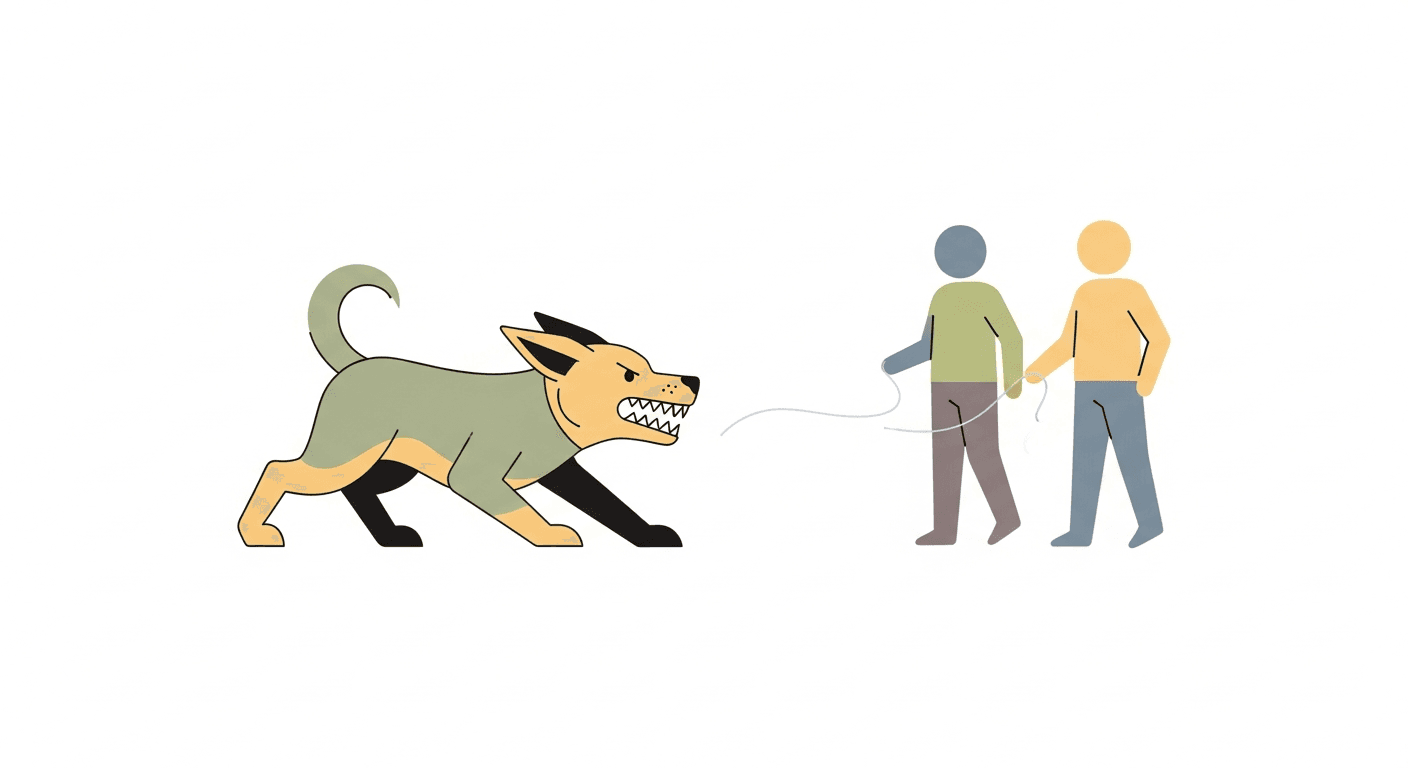
What Causes Dog Aggression Toward Visitors?
Aggression toward visitors is one of the most concerning behavioral problems in dogs — and one that poses real liability and safety risks. Understanding the underlying motivation matters enormously, because it determines the right approach. Fear-based aggression is the most common type: the dog is fundamentally frightened of strangers and uses aggression as a distance-creating behavior ("if I act scary, they'll go away"). Territorial aggression occurs in some dogs who react to "intruders" on their perceived territory. Resource-guarding extends to guarding the owner. True predatory or dominant aggression toward humans is rarer but more dangerous. Proper assessment and management requires working with a professional.
First 3 Steps You Can Take at Home
- Prevent the next incident immediately: Your first priority is safety — for your visitors and your dog (a dog that bites may face serious legal consequences). When you have visitors, put your dog in a separate room or behind a secure gate or crate before guests arrive. This prevents practice of the aggressive behavior (every successful aggressive response reinforces the behavior) and keeps everyone safe while you work on the problem. This is management, not training — but it's non-negotiable while a training program is in progress.
- Stop punishing the growl: This is counterintuitive but critical. A growling dog is communicating — they're using the warning system correctly. If you punish growling, you remove the warning sign without removing the fear or aggression that caused it. You create a dog that bites without warning, which is far more dangerous. Instead, respond to growling as information: "my dog is uncomfortable with this situation" → remove the dog from the situation. Then work on the underlying comfort level separately.
- Begin a counter-conditioning program: Fear-based visitor aggression responds well to systematic desensitization and counter-conditioning. The idea: pair the presence of strangers with extremely high-value things your dog loves (favourite treats, toys). Start at a distance that doesn't trigger a reaction — stranger visible from across the room, dog eating treats freely. Gradually decrease the distance over many sessions. Progress is measured in weeks, not days. This should be done under guidance from a certified animal behaviorist or trainer experienced in aggression cases.
When to Go to the Vet Immediately
- Dog has bitten someone — even a minor bite needs documentation and vet assessment to rule out pain-based aggression
- Aggression that appeared suddenly in a previously friendly adult dog — may signal a medical cause (pain, neurological change, thyroid disease)
Follow-Up Care Checklist
- ☐ Management: keep dog secured before and during all visitor interactions
- ☐ Consult a certified professional — Royal College of Veterinary Surgeons list, International Association of Animal Behavior Consultants, or similar
- ☐ Ask your vet about whether medication could help reduce the anxiety baseline while behavior modification proceeds
- ☐ Brief all household members on the management plan — consistency is essential
- ☐ Never use punishment-based techniques — they worsen fear-based aggression
📋 Log This With TailRounds
Log aggression incidents in the TailRounds daily log — circumstances, triggers, level of reaction, and what resolved it. This behavioral diary is invaluable data for a professional behavior assessment.
Start Free →Book a Vet Appointment
Visitor aggression — especially biting — is serious enough to warrant a vet check to rule out pain or medical contributors, plus a referral to a certified animal behaviorist. Book an appointment at Happy Paws Veterinary Clinic — same-week slots are usually available.
Summary for Your Clinic
Pet concern: Dog Aggression Toward Visitors
History: [growling/lunging/biting], first incident: [age/circumstances]
Pattern: [all strangers / specific types / only in specific contexts]
Current management: [gates/crating/isolation]
Questions for vet: Is there a medical component? Who can you refer us to for behavior modification?
Related Articles
Continue Reading
 🐕 Dog Health
Dog Anxiety When Left Alone: Practical Solutions
Understanding and managing dog separation anxiety — from mild distress to severe panic, with practical strategies that actually work.
 🎾 Dog Training
Stopping Excessive Barking: What Works and What Doesn't
Understand why your dog barks excessively and learn proven training strategies to reduce nuisance barking without punishment.
 🦴 Dog Care
Dog Resource Guarding Explained
Understanding dog resource guarding — why dogs guard food, toys, and spaces, and the safe, effective way to address it.
 🦴 Dog Care
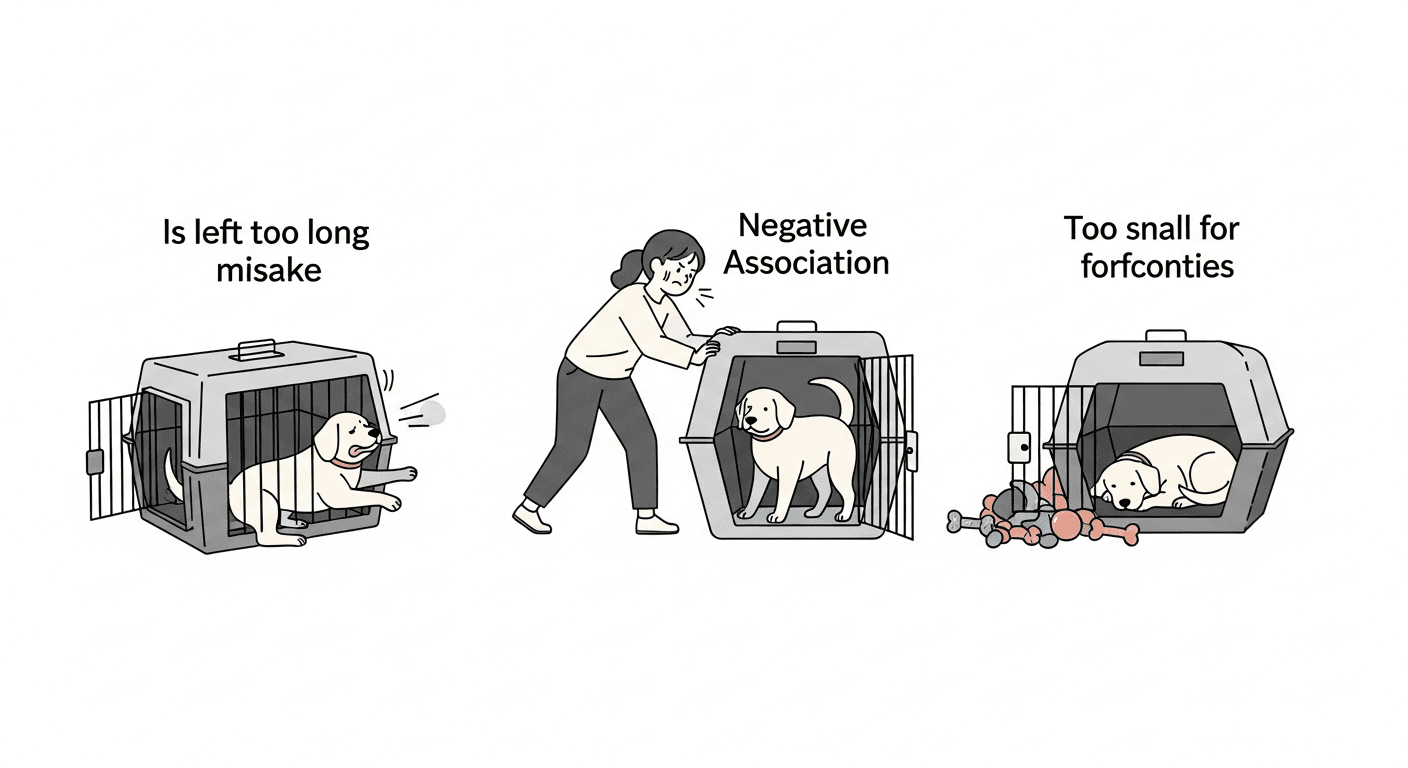
Dog Crate Training Mistakes to Avoid
The most common mistakes owners make with crate training and how to build genuine crate comfort that helps your dog feel safe, not trapped.