
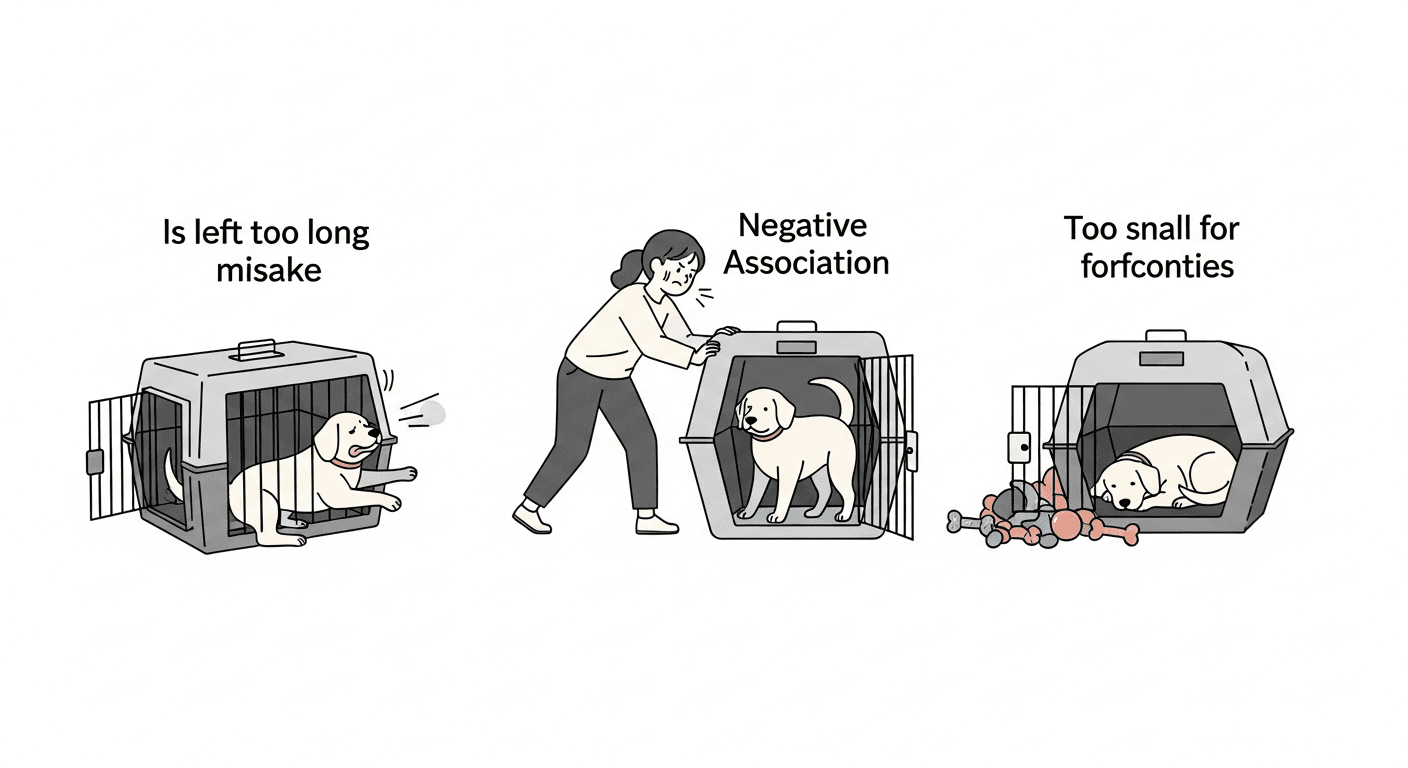
Why Crate Training Matters and Where It Goes Wrong
A crate, when introduced correctly, is a dog's own private den — a safe space they choose to rest in rather than an enclosure they dread. Crate training is invaluable for house training, for dogs recovering from surgery, for travel, and for managing anxiety-related behaviors. But the mistakes owners make during introduction often create dogs who panic in the crate, which not only defeats the purpose but worsens anxiety. The single biggest error is using the crate as punishment, which transforms it from sanctuary to prison in your dog's mind. The second biggest: moving too fast through the introduction phases.
First 3 Steps You Can Take at Home
- Make the crate the best place in the house — first: Before ever closing the crate door, spend 1–2 weeks making the crate irresistible. Place the crate in a busy area of the home (not isolated), put the dog's favorite bedding inside, hide high-value treats in it randomly throughout the day. Feed meals near the crate, then just inside the door, then gradually further back. Your dog should be walking in and out freely, choosing to lie in the crate voluntarily, before you ever consider closing the door. This phase cannot be skipped.
- Build up closed-door time in tiny increments: Once your dog is comfortable entering willingly, start with the door closed for 5 seconds while you're present and immediately visible. Then 15 seconds. Then a minute. Always open the door before the dog shows anxiety. If your dog whines or paws at the door, you've moved too fast — go back to shorter durations. Build to 10, 20, 30 minutes with you in the room, then with you out of the room, before ever attempting to crate overnight or when leaving. This phase takes days to weeks depending on the dog.
- Never use the crate as punishment: Ever. If your dog chews something they shouldn't and you put them in the crate immediately after, they don't connect the crating to the chewing — they connect it to whatever just happened (your angry energy, your voice). The crate must only ever be associated with good things: meals, stuffed Kongs, rest, safety. The moment it becomes punishment, you've undone the positive association that makes crate training work.
When to Go to the Vet Immediately
- Severe panic in the crate despite gradual introduction — may need anxiety medication support to allow training to progress
- Self-injury (broken teeth, bleeding from paws) attempting to escape the crate
Follow-Up Care Checklist
- ☐ Right-size the crate — big enough to stand, turn, and lie stretched out; not so big it becomes a bathroom corner
- ☐ Never leave a dog crated more than 4–5 hours without a break (less for puppies)
- ☐ Always give a Kong or chew when crating so the dog has something to do
- ☐ Keep the crate in a social area, not an isolated room
- ☐ Maintain the positive association lifelong — occasional treat placement keeps the crate a happy place
📋 Log This With TailRounds
Log daily crate training sessions and durations in the TailRounds daily log. Tracking progress through the introduction phases keeps you accountable and helps you avoid rushing the process.
Start Free →Book a Vet Appointment
If crate anxiety is severe — your dog panics at any stage of introduction — a vet consultation can assess whether a short-term anti-anxiety supplement or medication would help the crate training stick. Book an appointment at Happy Paws Veterinary Clinic — same-week slots are usually available.
Summary for Your Clinic
Pet concern: Crate Training
Current situation: [dog won't enter/panics with door closed/self-injury attempts]
Introduction method used: [gradual/rushed/used as punishment]
Questions for vet: Could anti-anxiety medication help during the training process?
Related Articles
Continue Reading
 🐕 Dog Health
Dog Anxiety When Left Alone: Practical Solutions
Understanding and managing dog separation anxiety — from mild distress to severe panic, with practical strategies that actually work.
 🦴 Dog Care
Dog House-Training Regression
Why a previously house-trained dog starts having accidents indoors — the common causes and how to retrain effectively.
 🦴 Dog Care
Puppy Biting: How to Manage It
Why puppies bite and nip, what's normal vs. concerning, and the most effective techniques for teaching bite inhibition.