
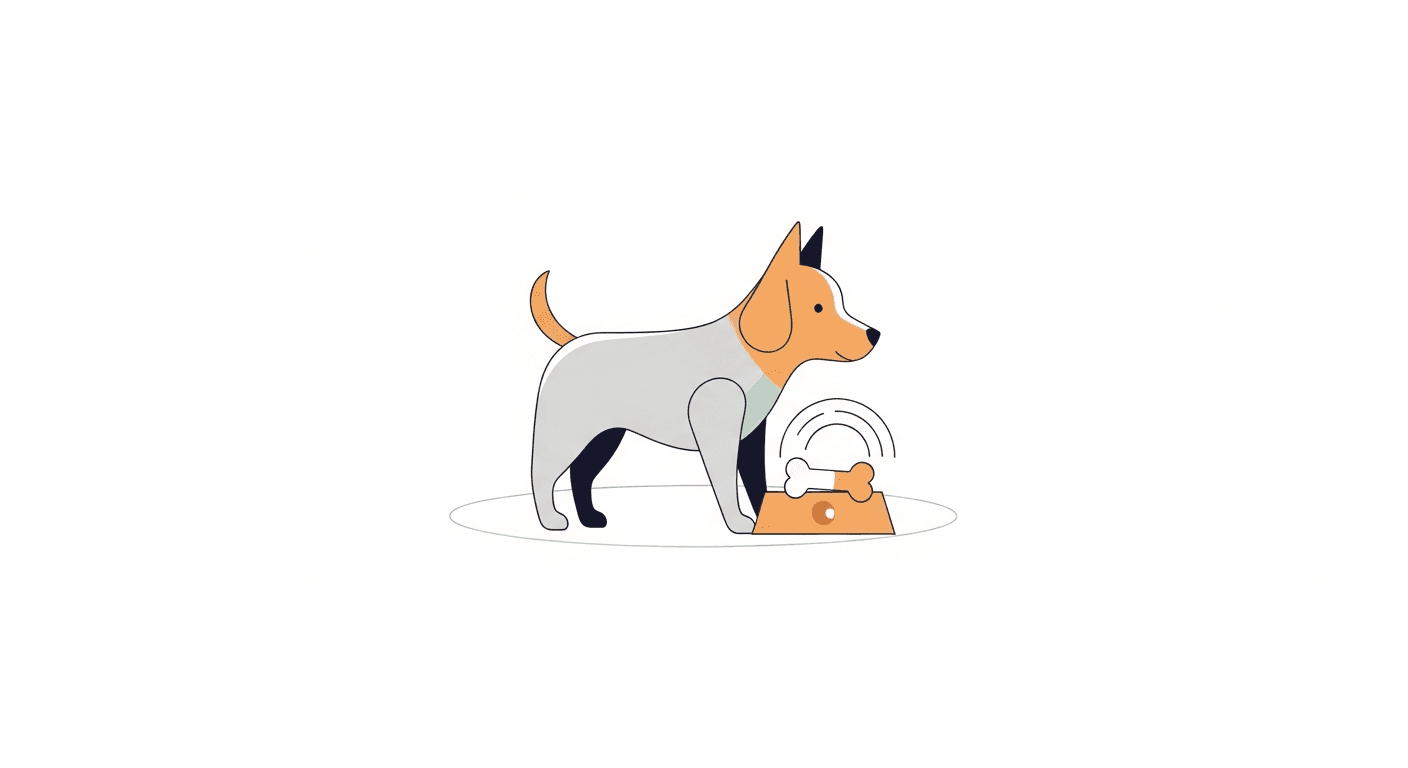
What Is Dog Resource Guarding?
Resource guarding is a normal canine behavior — in the wild, protecting food from competitors is adaptive. In a household context, it becomes problematic when a dog growls, snaps, or bites at people who approach their food bowl, high-value treats, toys, sleeping spots, or even their owner. Guarding is driven by anxiety ("if I don't defend this, I'll lose it"), not dominance. This distinction matters enormously for treatment: punishment-based responses increase anxiety and make guarding worse and more dangerous, while treatment focuses on changing the dog's emotional state around the resource — teaching them that approach predicts good things, not loss.
First 3 Steps You Can Take at Home
- Manage the situation safely right now: Don't challenge, punish, or attempt to remove resources from a dog that is guarding — this triggers the bite. Instead, prevent access to the guarded items as a short-term management measure. Feed in a crate or separate room. Pick up high-value toys when not in direct play. Don't allow access to sleeping spots where guarding occurs. Remove all opportunities for guarding incidents while you begin a behavior modification program — every guarding incident reinforces the behavior.
- Teach a reliable "trade" behavior: The most foundational exercise for resource guarding is the trade: you approach the dog with something even better than what they have. Walk toward the dog with a super-tasty treat visible, say "trade," let them sniff the treat, and when they drop or move away from the guarded item, give the treat enthusiastically. Do NOT take the item after the trade — just give it back, or let the dog return to it. This teaches the dog that your approach to their resources predicts getting MORE, not getting things taken away. This exercise must be started with very low-value items and only scaled up to high-value items over many repetitions.
- Engage a certified professional: Resource guarding that involves growling, snapping, or biting at family members requires professional behavioral support. This is not a problem to YouTube-train alone — the risk of escalation is real. Look for a certified applied animal behaviorist (CAAB, DACVB) or a certified professional dog trainer with specific experience in aggression. Ask your vet for referrals.
When to Go to the Vet Immediately
- Any bite — even minor — related to resource guarding needs same-day documentation
- Sudden onset of guarding in a dog with no previous history — possible medical cause
Follow-Up Care Checklist
- ☐ Management first: prevent all guarding incidents while training is in progress
- ☐ Never use punishment for guarding — it will make the problem worse
- ☐ Practice low-key approach-and-retreat exercises multiple times daily
- ☐ Engage a professional for cases involving growling or snapping
- ☐ Ensure all family members, especially children, are following the same protocol
📋 Log This With TailRounds
Log guarding incidents — what was guarded, who triggered it, and the severity of the response — in the TailRounds daily log. This baseline data helps measure progress through behavior modification.
Start Free →Book a Vet Appointment
Resource guarding with biting warrants both a vet check (to rule out pain-related aggression) and a behaviorist referral. A combined approach of behavior modification and short-term anxiety management medication is sometimes the most effective pathway. Book an appointment at Happy Paws Veterinary Clinic — same-week slots are usually available.
Summary for Your Clinic
Pet concern: Dog Resource Guarding
What is guarded: [food/toys/sleeping spots/owner], worst reaction: [growl/snap/bite]
Who triggers: [all people/specific family members/strangers], history: [how long has this been occurring]
Questions for vet: Could pain be a factor? Can you refer to a behaviorist?
Related Articles
Continue Reading
 🦴 Dog Care
Dog Aggression Toward Visitors
Why some dogs become aggressive around unfamiliar people, and a practical step-by-step approach to managing and reducing this behavior.
 🐕 Dog Health
Dog Anxiety When Left Alone: Practical Solutions
Understanding and managing dog separation anxiety — from mild distress to severe panic, with practical strategies that actually work.
 🎾 Dog Training
Stopping Excessive Barking: What Works and What Doesn't
Understand why your dog barks excessively and learn proven training strategies to reduce nuisance barking without punishment.