
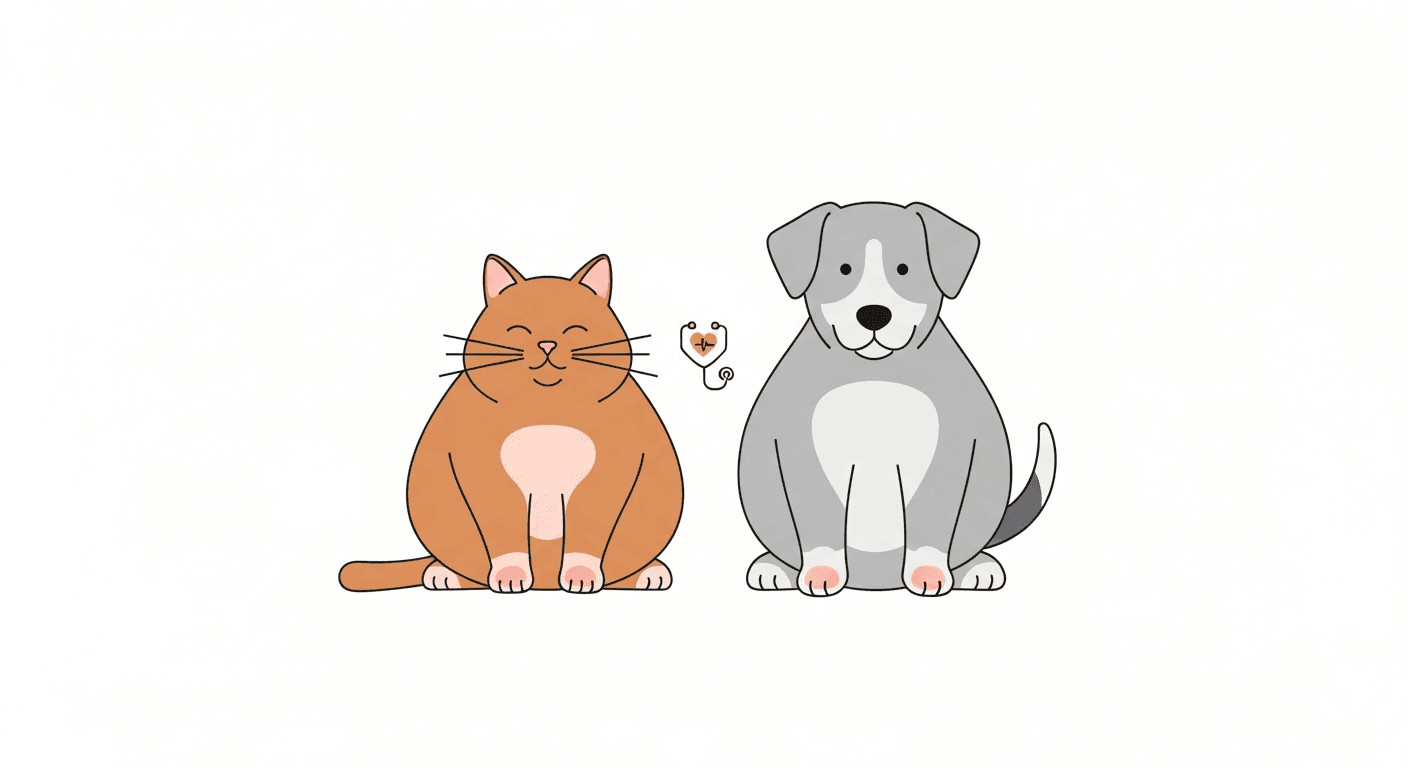
The Pet Obesity Crisis
Pet obesity has reached epidemic proportions. Studies by the Association for Pet Obesity Prevention consistently find that more than 50% of dogs and cats in developed countries are overweight or obese — making obesity the single most common preventable health condition in companion animals. Despite this, many pet owners either do not recognize that their pet is overweight or underestimate the health risks associated with excess body weight.
Obesity is not simply an aesthetic issue — it is a complex, inflammatory disease that reduces life expectancy, accelerates joint disease, predisposes to diabetes, and significantly diminishes quality of life. Overweight pets are less active, play less, tire more easily, suffer more pain, and are at higher risk during anesthesia and surgery. The good news is that, unlike most diseases on this list, obesity is almost entirely preventable and reversible with owner commitment.
Causes and Risk Factors
At its core, obesity results from energy intake exceeding energy expenditure. Contributing factors include:
- Overfeeding — the most common cause; free-feeding, overgenerous portions, and excessive treats
- High-calorie or inappropriate diets — calorie-dense foods without adequate portion control
- Insufficient exercise — sedentary indoor lifestyle without adequate activity
- Neutering — reduces metabolic rate by approximately 20–30%; caloric needs decrease but feeding often does not
- Age — metabolic rate declines with age
- Breed predisposition — Labrador Retrievers, Golden Retrievers, Beagles, Cocker Spaniels, Dachshunds, Cairn Terriers; Domestic Shorthair and Mixed-breed cats
- Medical conditions — hypothyroidism, Cushing's disease, insulinoma can promote weight gain
- Owner factors — using food as a primary way to bond with pets; anthropomorphizing hunger
Warning Signs and Symptoms
How to know if your pet is overweight — the Body Condition Score (BCS) is the gold standard:
- Can you feel the ribs? — You should be able to feel them easily with gentle finger pressure, like the back of your hand. If you need to press firmly or cannot feel them at all, the pet is overweight
- Can you see a waist? — Viewed from above, there should be a visible narrowing behind the ribs. No waist = overweight
- Abdominal tuck — From the side, the abdomen should tuck up behind the rib cage. A sagging belly = overweight
- Weight-related symptoms:
- Exercise intolerance — tires very quickly on walks
- Labored or heavy breathing during mild activity
- Reluctance to play or move
- Difficulty grooming (cats) — obese cats cannot reach their lower back and rear end
- Waddling gait
- Heat intolerance
- Accelerated joint pain and stiffness
When to Go to the Vet
A veterinary weight assessment should be part of every annual wellness visit. Book an appointment sooner if:
- Your pet is gaining weight despite normal feeding
- Your pet shows exercise intolerance, labored breathing, or joint stiffness
- Your pet has been diagnosed with a weight-sensitive condition (diabetes, arthritis, respiratory disease)
- You want to start a weight loss program — veterinary guidance prevents too-rapid weight loss, which can cause hepatic lipidosis in cats
Book at Book a vet appointment at Happy Paws and use the TailRounds AI Triage to assess weight-related symptoms between appointments.
At-Home Care and Weight Management
Effective weight loss requires a calorie deficit achieved through both dietary restriction and increased activity:
- Measure every meal — use a kitchen scale or measuring cup; do not estimate
- Prescription weight loss diets — high-protein, high-fiber, lower-calorie formulas help pets feel full while losing weight
- Reduce treats — treats should represent no more than 10% of daily calories; use vegetables (carrots, cucumber) as low-calorie treats for dogs
- Increase activity gradually — longer walks, active play sessions, food puzzles and feeding toys (slows eating and provides mental stimulation)
- Aim for slow, steady loss — 1–2% of body weight per week for dogs; 0.5–1% per week for cats (faster loss risks hepatic lipidosis in cats)
- Weigh regularly — weekly or biweekly weight checks track progress objectively
- All family members must commit — one person undermining the diet with treats can stall progress entirely
Log daily food intake and weekly weight measurements using the TailRounds Daily Log. Bring this record to veterinary weight check appointments.
Prevention and Long-Term Management
- Adjust feeding portions after neutering — reduce by 20–25%
- Adjust portions as your pet ages — senior pets need fewer calories
- Maintain healthy weight throughout life — preventing obesity is far easier than reversing it
- Annual body condition scoring at every wellness visit
- Treat food as fuel, not affection — bond through play and interaction, not food
- Rule out medical causes if a pet gains weight despite appropriate feeding
Build a Healthier Future with TailRounds
Daily logging is the most powerful tool in weight management. Track every meal, treat, and weekly weight with the TailRounds Daily Log. Schedule regular weight checks and dietary counseling at Book a vet appointment at Happy Paws. Find a Clinic Near You for local veterinary nutrition consultations, and use the TailRounds AI Triage if exercise intolerance or other weight-related symptoms concern you.
Continue Reading
 🩺 Diseases & Symptoms
Diabetes in Dogs: Signs, Insulin Management, and Daily Care
Diabetes in dogs requires lifelong management but is very livable with the right approach. Learn the signs, how insulin works, and what daily care looks like.
 🩺 Diseases & Symptoms
Hip Dysplasia in Dogs: Symptoms, Management, and Quality of Life
Hip dysplasia is a common joint condition in large breed dogs. Learn how to identify it early, manage pain, and give your dog the best quality of life.
 🩺 Diseases & Symptoms
Diabetes in Cats: Symptoms, Insulin, and the Path to Remission
Feline diabetes is unique — many cats can achieve remission with proper management. Learn the signs, treatment options, and how diet and insulin work together for cats.
 🩺 Diseases & Symptoms
Dental Disease in Dogs and Cats: The Silent Epidemic in Pet Health
Over 80% of pets over 3 years have dental disease. Learn how to recognize it, what happens without treatment, and how dental care at home and at the vet prevents pain.