
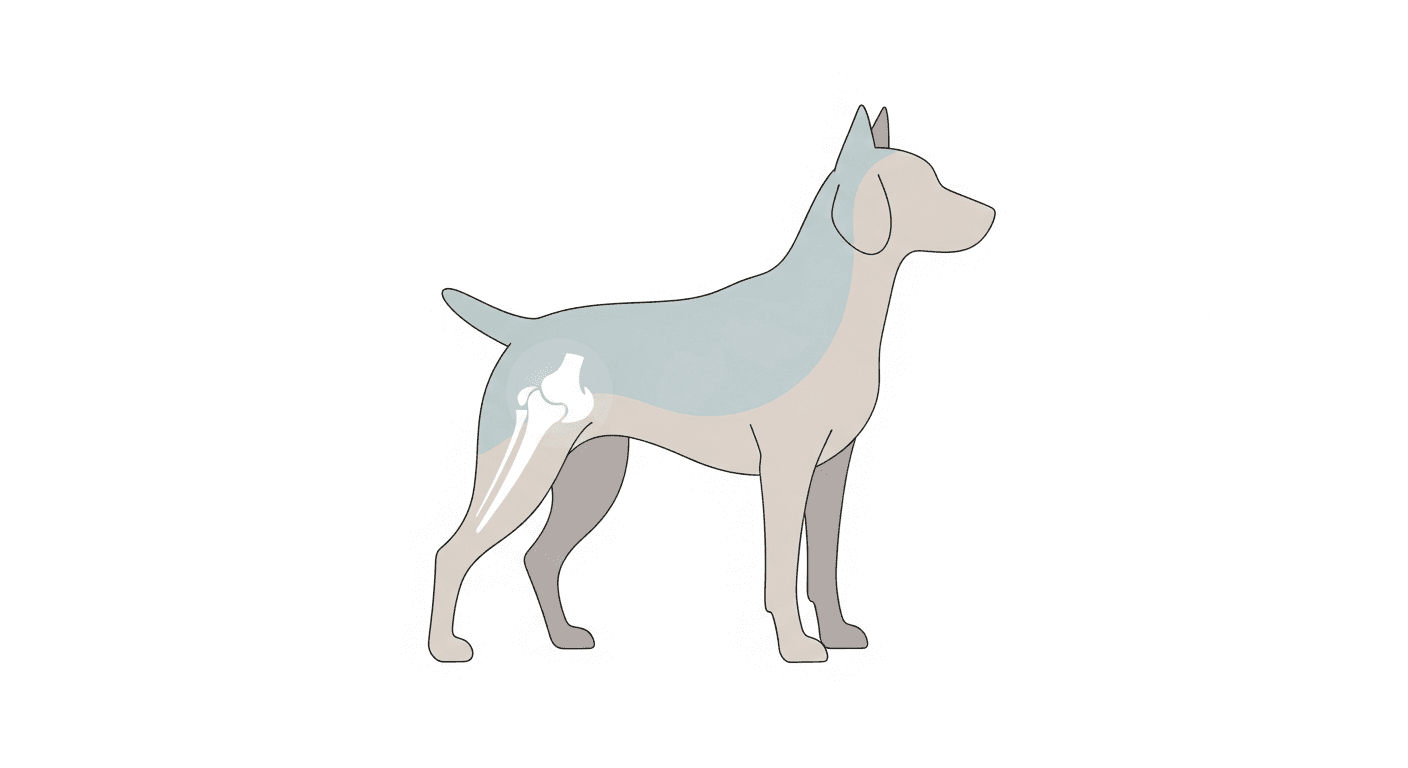
What Is Hip Dysplasia in Dogs?
Hip dysplasia is a skeletal condition in which the hip joint — a ball-and-socket joint — develops abnormally, causing the ball (femoral head) and socket (acetabulum) to fit together poorly. Instead of sliding smoothly, the joint grinds and moves loosely. Over time, this abnormal movement causes the cartilage to wear away, leading to pain, inflammation, and eventually debilitating arthritis. It is one of the most common orthopedic conditions in dogs, especially large and giant breeds.
The condition is both genetic and environmental in origin. A dog can inherit a predisposition to developing hip dysplasia, but environmental factors — nutrition, growth rate, exercise type, and body weight — can dramatically affect how severely the disease develops and progresses. This means that even genetically predisposed dogs can have a good outcome with the right management.
Causes and Risk Factors
Hip dysplasia is strongly influenced by genetics but shaped by environment. Risk factors include:
- Breed — German Shepherds, Labrador Retrievers, Golden Retrievers, Rottweilers, Great Danes, Saint Bernards, and Bulldogs are among the most commonly affected
- Genetics — puppies from affected parents are at much higher risk
- Rapid growth — overfeeding puppies of large breeds to accelerate growth stresses developing joints
- Obesity — excess weight dramatically increases stress on the hip joint
- Excessive or inappropriate exercise in puppies — repetitive impact on immature joints
- Slippery flooring — can worsen joint development in young dogs
- Calcium and phosphorus imbalances during growth
Warning Signs and Symptoms
Hip dysplasia can manifest at any age, from young puppies to elderly dogs. Common signs include:
- Difficulty rising from a lying position
- Reluctance to climb stairs, jump, or get into vehicles
- "Bunny hopping" gait — using both hind legs together when running
- Swaying or wobbly gait in the hind end
- Decreased activity and obvious reluctance to exercise
- Muscle mass loss in the hindquarters with compensatory over-development of front muscles
- Pain when the hips are extended or palpated
- Audible clicking or popping from the hip area
- Behavioral changes — irritability, reduced playfulness, reluctance to be touched near the back end
When to Go to the Vet Immediately
While hip dysplasia is a chronic condition rather than an emergency, certain situations warrant prompt veterinary care:
- Sudden inability to use one or both hind legs
- Acute worsening of pain — crying, snapping when touched
- Complete collapse of the hind end
- Signs in a young puppy (under 6 months) — early intervention dramatically improves outcomes
- Any deterioration in a managed patient despite medication
Diagnosis is confirmed through physical examination and X-rays. Early X-ray screening (PennHIP methodology) can identify hip laxity in puppies as young as 16 weeks. Schedule a screening if your dog is a high-risk breed using the TailRounds AI Triage to discuss your concerns first.
At-Home Care and Monitoring
Most dogs with hip dysplasia are managed medically and through lifestyle modification. Effective home care strategies include:
- Weight management — reducing body weight to the ideal range is one of the most impactful interventions
- Low-impact exercise — swimming and short, frequent leash walks maintain muscle tone without joint stress
- Orthopedic bedding — memory foam or orthopedic beds reduce pressure on sore joints
- Non-slip surfaces — rugs and yoga mats on slippery floors prevent painful slips
- Ramps and steps — help the dog access furniture and vehicles without jumping
- Joint supplements — omega-3 fatty acids, glucosamine, and chondroitin can provide modest pain relief; discuss dosing with your vet
- Pain medications as prescribed — NSAIDs, Librela (monoclonal antibody), or other pain management as recommended by your vet
Daily logging of activity levels, gait observations, and pain indicators in the TailRounds Daily Log helps track disease progression and informs veterinary decisions.
Prevention and Long-Term Management
Prevention strategies are most effective during puppyhood:
- Purchase large-breed puppies from OFA (Orthopedic Foundation for Animals) or PennHIP certified parents
- Feed a breed-appropriate, large-breed puppy food to control growth rate
- Maintain lean body weight throughout life
- Avoid high-impact exercise (jumping, running on hard surfaces) in puppies under 12–18 months
- Regular veterinary assessments of body condition score and gait
Surgical options exist for severe cases — juvenile pubic symphysiodesis (in very young dogs), triple pelvic osteotomy, femoral head and neck ostectomy (FHO), and total hip replacement. Discuss surgical candidacy with a veterinary orthopedic specialist.
Support Your Dog's Mobility with TailRounds
Managing hip dysplasia is a long-term commitment, but the right approach gives dogs years of comfortable, active life. Track your dog's mobility and pain levels daily with the TailRounds Daily Log. Schedule regular pain management and gait assessments by booking at Book a vet appointment at Happy Paws. Find a Clinic Near You for specialists in your area, and use the TailRounds AI Triage whenever you notice sudden changes in your dog's movement.
Continue Reading
 🩺 Diseases & Symptoms
Obesity in Dogs and Cats: The Most Preventable Disease in Pets
Over 50% of pets are overweight. Learn how obesity affects your pet's health, how to assess body condition score, and practical strategies to achieve and maintain a healthy weight.
 🩺 Diseases & Symptoms
Lyme Disease in Dogs: Tick-Borne Risk, Symptoms, and Prevention
Lyme disease in dogs can cause joint pain, kidney damage, and serious illness. Learn how to spot symptoms, treat it effectively, and prevent tick bites.
 🩺 Diseases & Symptoms
Diabetes in Dogs: Signs, Insulin Management, and Daily Care
Diabetes in dogs requires lifelong management but is very livable with the right approach. Learn the signs, how insulin works, and what daily care looks like.
 🩺 Diseases & Symptoms
Dental Disease in Dogs and Cats: The Silent Epidemic in Pet Health
Over 80% of pets over 3 years have dental disease. Learn how to recognize it, what happens without treatment, and how dental care at home and at the vet prevents pain.