
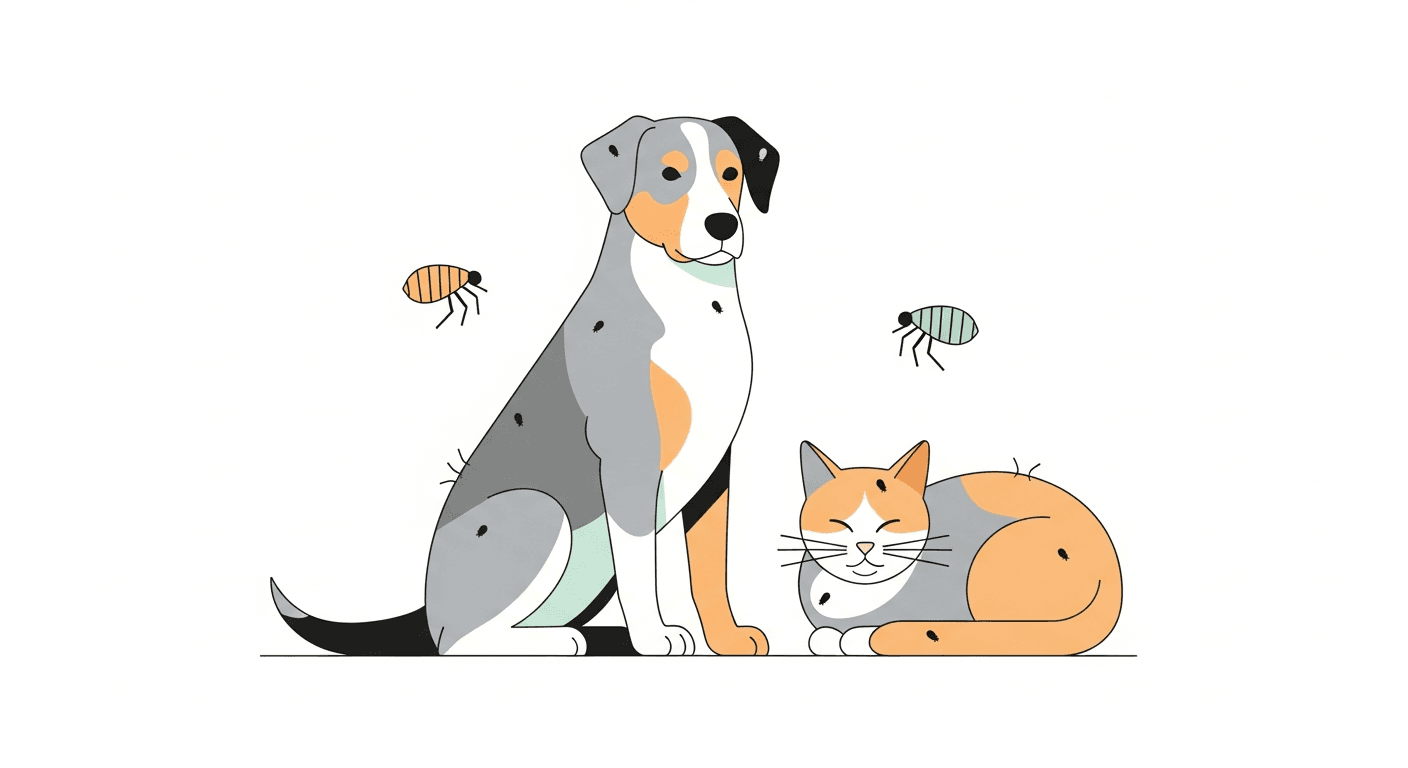
What Is Flea Infestation?
Fleas are small, wingless, parasitic insects that feed on the blood of mammals and birds. The cat flea (Ctenocephalides felis) is responsible for the vast majority of flea infestations in both dogs and cats worldwide, despite its name. These insects are remarkable survivors — they can jump up to 150 times their own height, survive months without feeding, and complete their entire life cycle in as little as two weeks under warm, humid conditions.
A flea infestation goes far beyond just the fleas you see on your pet — only approximately 5% of the flea population at any given time is on the animal. The remaining 95% — in the form of eggs, larvae, and pupae — live in your home: in carpets, bedding, furniture crevices, and soil. This is why treating only the pet while ignoring the environment almost always leads to reinfestation within weeks.
Causes and Risk Factors
Flea infestations can happen to any pet, but certain factors increase risk:
- No year-round flea prevention — the most important controllable risk factor
- Outdoor access — contact with wildlife (raccoons, opossums, squirrels), neighborhood cats, and infested soil
- Contact with other infested animals in boarding, groomers, or dog parks
- Warm, humid climate or season — fleas thrive in temperatures between 18–27°C (65–80°F)
- Multiple pet households — higher flea population establishment risk
- Moving into a previously infested home
Warning Signs and Symptoms
The severity of symptoms depends on the degree of infestation and individual sensitivity. Common signs include:
- Excessive scratching, licking, biting, and chewing — particularly at the base of the tail, inner thighs, and abdomen
- Hair loss — especially over the lower back, base of tail, and inner legs
- Flea dirt — small, dark, pepper-like specks in the coat; when wet, they turn red (digested blood)
- Visible fleas — fast-moving brown insects; easiest to spot in the groin, armpits, and base of tail
- Red, irritated, or thickened skin
- Flea allergy dermatitis (FAD) — in allergic pets, a single flea bite causes intense, generalized itching and skin lesions far out of proportion to the number of fleas present
- Pale gums and weakness — anemia from heavy flea feeding, particularly in puppies and kittens
- Tapeworm segments — cats and dogs can ingest fleas while grooming and acquire tapeworm infection
- Excessive licking of the belly or self-trauma in cats
When to Go to the Vet Immediately
Seek prompt veterinary care if:
- A young puppy or kitten is pale, lethargic, or weak from flea-related anemia
- A pet has severe, self-traumatizing scratching that is breaking the skin
- You observe signs of secondary skin infection (swelling, discharge, odor)
- A heavily infested pet is not improving within 48 hours of treatment
Use the TailRounds AI Triage to assess severity. Neonatal kitten or puppy anemia from fleas can be life-threatening and requires immediate care — Find a Clinic Near You.
At-Home Care and Monitoring
Effective flea control requires treating the pet AND the environment simultaneously:
Treating the pet:
- Use a veterinary-approved flea treatment — oral products (Bravecto, NexGard, Comfortis) or topical spot-ons (Frontline, Advantage, Revolution); avoid cheap over-the-counter products that are often ineffective
- Flea comb through the coat daily and dip the comb in soapy water to drown fleas
- Flea bath with an appropriate medicated shampoo (temporary relief only; use as an adjunct)
- Treat all pets in the household simultaneously
Treating the environment:
- Wash all bedding, pet beds, and soft furnishings in hot water
- Vacuum thoroughly — every room, every day for two weeks; immediately empty the vacuum outside
- Use an indoor environmental flea spray containing an insect growth regulator (IGR) to kill eggs and larvae
- Treat outdoor areas where pets spend time
Log daily observations of scratching intensity and visible fleas in the TailRounds Daily Log.
Prevention and Long-Term Management
- Year-round prevention — do not stop flea prevention in winter; flea pupae can survive indoors year-round
- Use veterinary-recommended products — resistance to some older products is increasing
- Regular vacuuming and washing of pet bedding
- Limit wildlife access to your garden
- Treat all household pets simultaneously
Stay Flea-Free with TailRounds
Consistent monthly prevention is far easier than treating a full infestation. Track prevention dosing dates with the TailRounds Daily Log. If your pet has an active flea problem, Book a vet appointment at Happy Paws for prescription-strength treatment and skin assessment. Find a Clinic Near You for local support, and use the TailRounds AI Triage to assess the severity of your pet's flea-related symptoms.
Continue Reading
 🩺 Diseases & Symptoms
Ear Mites in Dogs and Cats: Symptoms, Treatment, and Prevention
Ear mites cause intense ear itching and dark discharge in pets. Learn to spot the signs, understand treatment options, and prevent reinfestation in multi-pet homes.
 🩺 Diseases & Symptoms
Mange in Dogs: Sarcoptic vs Demodectic — Symptoms and Treatment
Mange causes severe skin disease in dogs. Learn the difference between sarcoptic and demodectic mange, symptoms to watch for, and effective treatments.
 🩺 Diseases & Symptoms
Tapeworms in Pets: How They Spread and How to Eliminate Them
Tapeworms are flat intestinal parasites that spread through fleas or raw prey. Learn how to spot them, treat your pet effectively, and prevent reinfection.
 🩺 Diseases & Symptoms
Ringworm in Dogs and Cats: The Fungal Infection That Is Not Actually a Worm
Ringworm is a common and contagious fungal infection in pets and humans. Learn to identify it, treat it effectively, and prevent spread throughout your household.