
What Are Tapeworms?
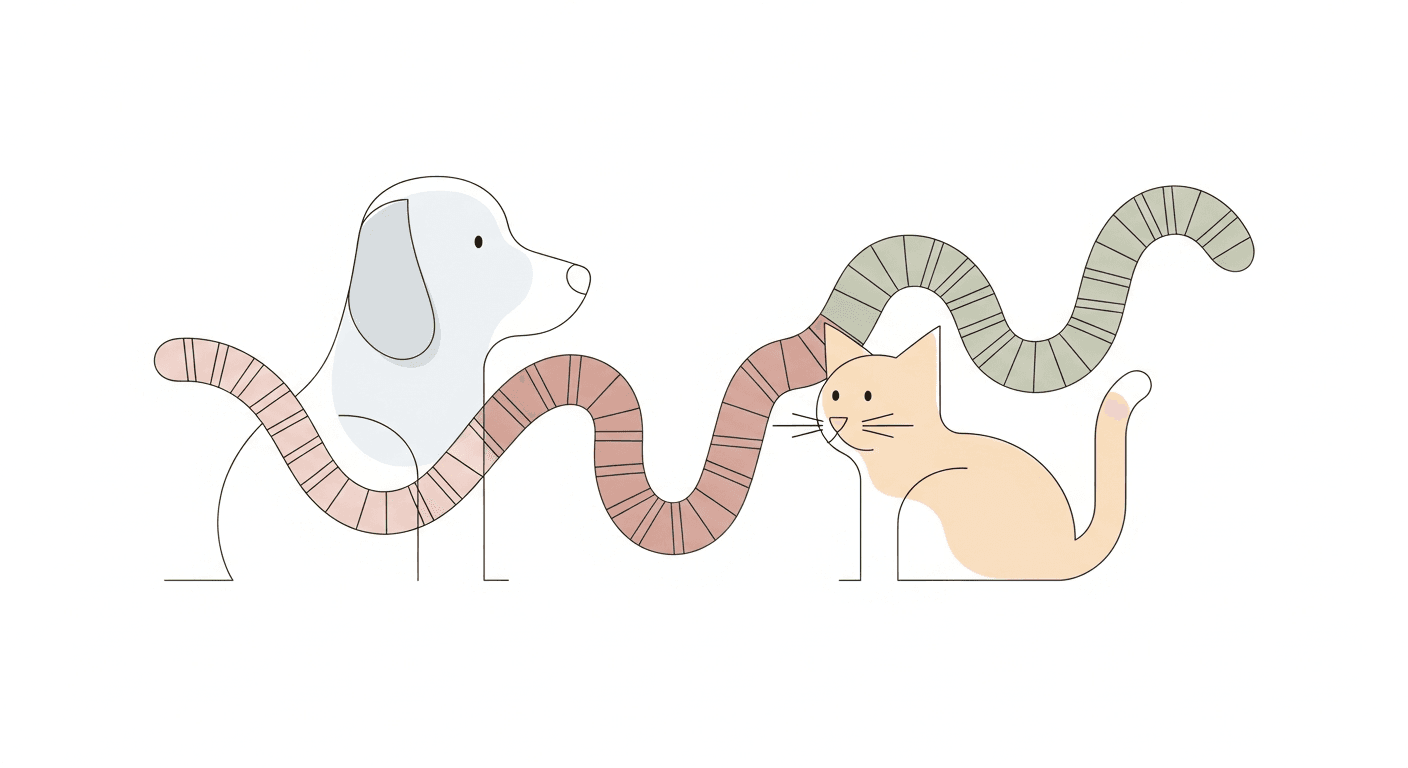
Tapeworms are flat, ribbon-like intestinal parasites that attach to the lining of the small intestine. Unlike roundworms, tapeworms do not have a complete digestive system of their own — they absorb nutrients directly through their body surface. The worm grows as a chain of segments (proglottids), each of which contains eggs. When mature, these egg-filled segments detach from the end of the worm and pass out of the body in feces. They are often visible as small, white, rice-grain-sized or sesame seed-shaped segments around the pet's anus, in the feces, or on bedding.
The most common tapeworm in companion animals is Dipylidium caninum, which requires a flea to complete its life cycle — pets become infected by accidentally ingesting an infected flea while grooming. A second important species, Taenia spp., infects pets that hunt and eat rodents, rabbits, or other prey animals. Echinococcus species are a concern in some geographic regions because they are dangerous to humans.
Causes and Risk Factors
Tapeworm transmission depends on the species:
- Dipylidium caninum — the pet ingests a flea carrying tapeworm larvae; a flea infestation is a prerequisite for this infection
- Taenia spp. — the pet eats infected raw prey (rodents, rabbits) or raw meat containing tapeworm cysts
- Echinococcus spp. — occurs in wildlife-hunting dogs in endemic regions; this species is a significant human health concern
Risk factors include:
- Flea infestation (for Dipylidium)
- Hunting lifestyle or raw meat feeding (for Taenia and Echinococcus)
- Outdoor access
- No regular broad-spectrum parasite prevention
Warning Signs and Symptoms
Tapeworms are often surprisingly well-tolerated in adult animals. Common signs include:
- Visible tapeworm segments — the most telling sign; small, white, rice-grain-like segments crawling around the anus, in fresh feces, or on bedding and sleeping areas (fresh segments may move)
- Scooting — dragging the rear end along the floor due to perianal irritation from migrating segments
- Excessive licking or biting at the anal area
- Mild digestive upset — occasional soft stool
- Weight loss in heavy infections
- Vomiting — occasionally the entire tapeworm is vomited
- Poor coat quality in severe chronic infections
In puppies and kittens with heavy infections, growth retardation, anemia, and intestinal obstruction can occur.
When to Go to the Vet Immediately
Tapeworms are rarely a veterinary emergency in adult pets, but prompt attention is warranted if:
- A very young puppy or kitten is affected and showing signs of illness
- Signs of intestinal obstruction appear (vomiting, abdominal pain, inability to defecate)
- You live in or your dog hunts in an area where Echinococcus is endemic — this is a human health concern requiring prompt treatment
Use the TailRounds AI Triage for guidance, and Book a vet appointment at Happy Paws for proper diagnosis and treatment.
At-Home Care and Monitoring
Tapeworm treatment is simple and highly effective:
- Praziquantel — the drug of choice for all tapeworm species; available as tablets, injectable, and topical spot-on; a single dose kills adult tapeworms; repeat in 3–4 weeks to eliminate any newly acquired worms
- Treat for fleas simultaneously if Dipylidium is involved — without flea control, reinfection is inevitable
- Environmental treatment — treat the home environment for fleas if Dipylidium is confirmed
- Prevent hunting and raw meat feeding if Taenia or Echinococcus is the cause
Note that standard fecal flotation testing often does not detect tapeworm eggs — diagnosis is usually made by visually identifying segments on the pet or in feces. Log observations in the TailRounds Daily Log.
Prevention and Long-Term Management
- Year-round flea control — prevents Dipylidium infection; the most important prevention measure for this species
- Monthly broad-spectrum parasite preventatives that include coverage against tapeworms
- Prevent hunting or scavenging in dogs and cats at risk for Taenia
- Do not feed raw or undercooked meat
- Regular fecal checks and deworming on schedule with your vet
- Wash hands after handling pets and before eating
Keep Tapeworms Out with TailRounds
Eliminating the flea problem is the key to preventing the most common tapeworm infection. Track flea prevention and deworming dates using the TailRounds Daily Log. If you see rice-grain segments near your pet's rear end, Book a vet appointment at Happy Paws for treatment. Find a Clinic Near You for local deworming options, and use the TailRounds AI Triage for immediate guidance on parasite symptoms.
Continue Reading
 🩺 Diseases & Symptoms
Roundworms in Pets: A Common Parasite Every Pet Owner Should Know
Roundworms are extremely common in puppies and kittens and can infect humans too. Learn how to detect, treat, and prevent roundworm infections in your pets.
 🩺 Diseases & Symptoms
Flea Infestation in Dogs and Cats: Symptoms, Treatment, and Prevention
Fleas cause intense itching, anemia, and disease in pets. Learn how to identify an infestation, treat your pet and home effectively, and prevent future problems.
 🩺 Diseases & Symptoms
Giardia in Dogs and Cats: A Common Intestinal Parasite
Giardia causes diarrhea and digestive upset in pets and can spread to humans. Learn how your pet gets infected, how it is treated, and how to prevent reinfection.
 🩺 Diseases & Symptoms
Heartworm Disease in Dogs: Prevention Is Everything
Heartworm disease silently damages a dog's heart and lungs. Learn the lifecycle, symptoms, treatment options, and why monthly prevention is non-negotiable.