
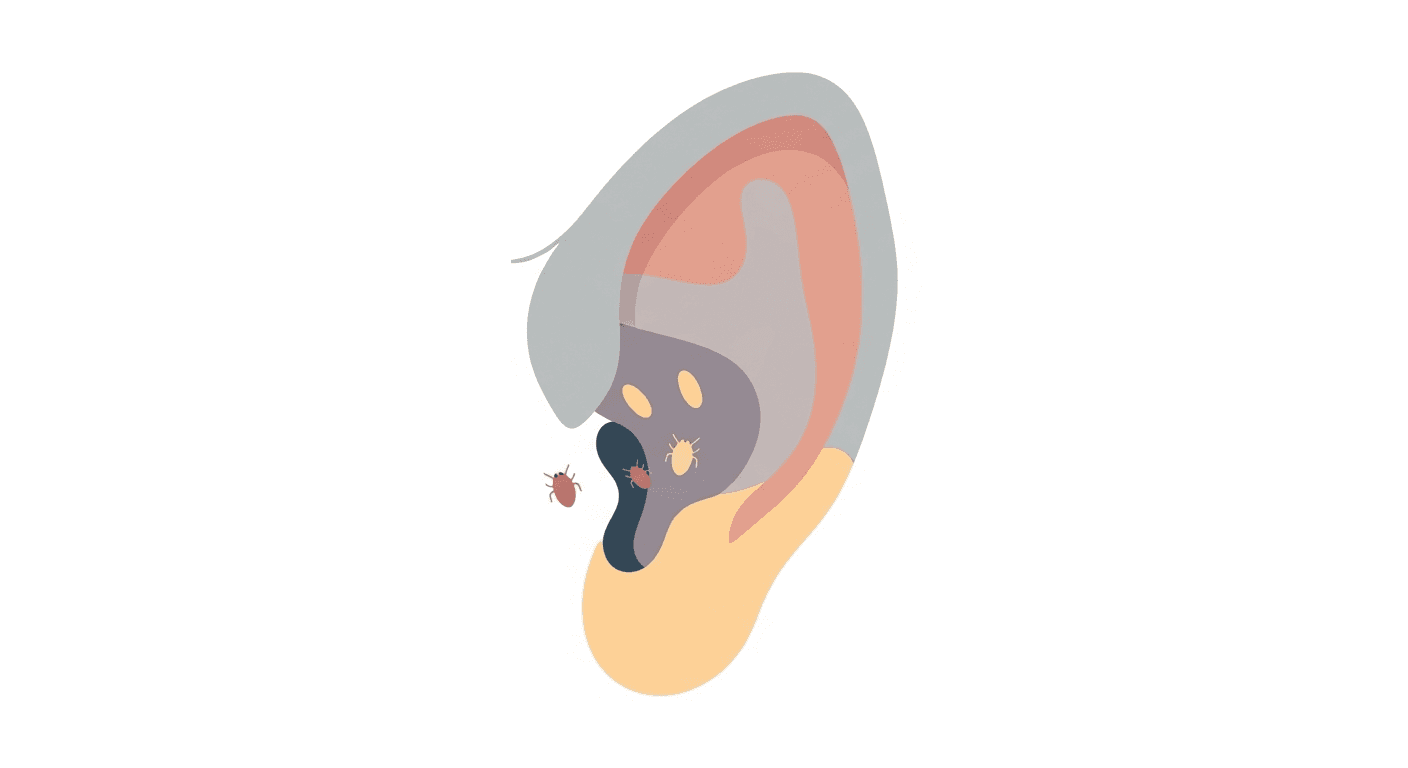
What Are Ear Mites?
Ear mites are tiny, eight-legged parasites that live primarily on the surface of the ear canal and surrounding skin of cats and dogs. The species responsible for the vast majority of ear mite infestations in pets is Otodectes cynotis. These mites feed on ear wax and skin oils, causing intense irritation, inflammation, and secondary infections. Ear mites are highly contagious between animals and are among the most common causes of ear disease in cats — they account for approximately 50% of all feline ear infections.
Humans are rarely affected by Otodectes mites, but brief, self-limiting skin irritation is possible after heavy exposure. Other animals in the household — dogs, cats, rabbits, and ferrets — can all harbor and transmit ear mites to each other, making simultaneous treatment of all in-contact pets essential.
Causes and Risk Factors
Ear mites spread through direct, close physical contact with infected animals. Key risk factors include:
- Kittens and young cats — most commonly affected age group
- Multi-pet households — one affected animal rapidly spreads mites to others
- Outdoor cats and dogs — contact with stray or feral cats is a major transmission route
- Shelter or rescue origin — mites are endemic in high-density animal populations
- No regular parasite prevention
Warning Signs and Symptoms
The clinical signs of ear mites are often dramatic and hard to miss:
- Intense ear scratching — often vigorous enough to cause skin wounds around the ears
- Frequent head shaking
- Dark, crumbly discharge in the ear canal — often described as resembling coffee grounds; this is a mixture of ear wax, mite waste, blood, and debris
- Foul odor from the ears
- Ear canal inflammation — red, swollen inner ear flap and canal
- Hair loss and skin irritation around the ears from scratching
- Head tilt in severe cases if middle ear involvement occurs
- Aural hematoma — a blood-filled swelling of the ear flap caused by vigorous head shaking; requires veterinary drainage
Ear mites can sometimes cause skin irritation away from the ears — on the neck, tail, and body — as the mites occasionally roam outside the ear canal.
When to Go to the Vet Immediately
While ear mites are not typically an emergency, prompt veterinary care is important:
- If an aural hematoma (swollen, fluid-filled ear flap) develops — requires prompt drainage to prevent deformity
- If the ear canal is severely swollen, blocking examination and treatment
- If head tilt or loss of balance develops — middle ear infection must be ruled out
- If a young kitten is showing signs of severe discomfort
Many owners confuse ear mites with yeast or bacterial ear infections — a vet can examine a sample of the discharge under a microscope to confirm the diagnosis. Book a vet appointment at Happy Paws for accurate diagnosis, and use the TailRounds AI Triage to assess urgency.
At-Home Care and Monitoring
Ear mite treatment requires treating all in-contact pets, even those without apparent symptoms:
- Veterinary-approved ear mite treatment — topical spot-ons containing selamectin (Revolution), moxidectin, or milbemycin are very effective; ear drops containing ivermectin or thiabendazole; newer oral products
- Ear cleaning — gently clean the ear with a veterinary ear cleaner to remove debris; do not use cotton swabs deep in the canal
- Treat all household pets simultaneously
- Wash bedding in hot water to reduce environmental mite burden
- Complete the full treatment course — treatment must cover the mite's complete life cycle (typically 2–4 weeks)
- Prevent self-trauma — use an Elizabethan collar if the pet is severely scratching wounds around the ears
Monitor the ears daily after starting treatment and log the appearance and smell using the TailRounds Daily Log.
Prevention and Long-Term Management
- Year-round parasite prevention — many broad-spectrum products (Revolution, Bravecto) also cover ear mites
- Regular ear checks — part of your monthly grooming routine
- Keep cats indoors to limit contact with infested strays
- Treat all new pets for ear mites before introducing them to the household
- Regular veterinary wellness exams to catch early infestations
Keep Your Pet's Ears Healthy with TailRounds
Regular ear checks take just minutes and can catch mite infestations early. Track ear health observations using the TailRounds Daily Log. For diagnosis and treatment, Book a vet appointment at Happy Paws. Find a Clinic Near You for local veterinary care, and consult the TailRounds AI Triage whenever ear symptoms concern you.
Continue Reading
 🩺 Diseases & Symptoms
Flea Infestation in Dogs and Cats: Symptoms, Treatment, and Prevention
Fleas cause intense itching, anemia, and disease in pets. Learn how to identify an infestation, treat your pet and home effectively, and prevent future problems.
 🩺 Diseases & Symptoms
Mange in Dogs: Sarcoptic vs Demodectic — Symptoms and Treatment
Mange causes severe skin disease in dogs. Learn the difference between sarcoptic and demodectic mange, symptoms to watch for, and effective treatments.
 🩺 Diseases & Symptoms
Ringworm in Dogs and Cats: The Fungal Infection That Is Not Actually a Worm
Ringworm is a common and contagious fungal infection in pets and humans. Learn to identify it, treat it effectively, and prevent spread throughout your household.
 🩺 Diseases & Symptoms
Conjunctivitis (Pink Eye) in Dogs and Cats: Causes and Treatment
Red, watery eyes in pets can signal conjunctivitis. Learn the causes, how to tell if it is infectious or allergic, when it is urgent, and how to treat it at home.