
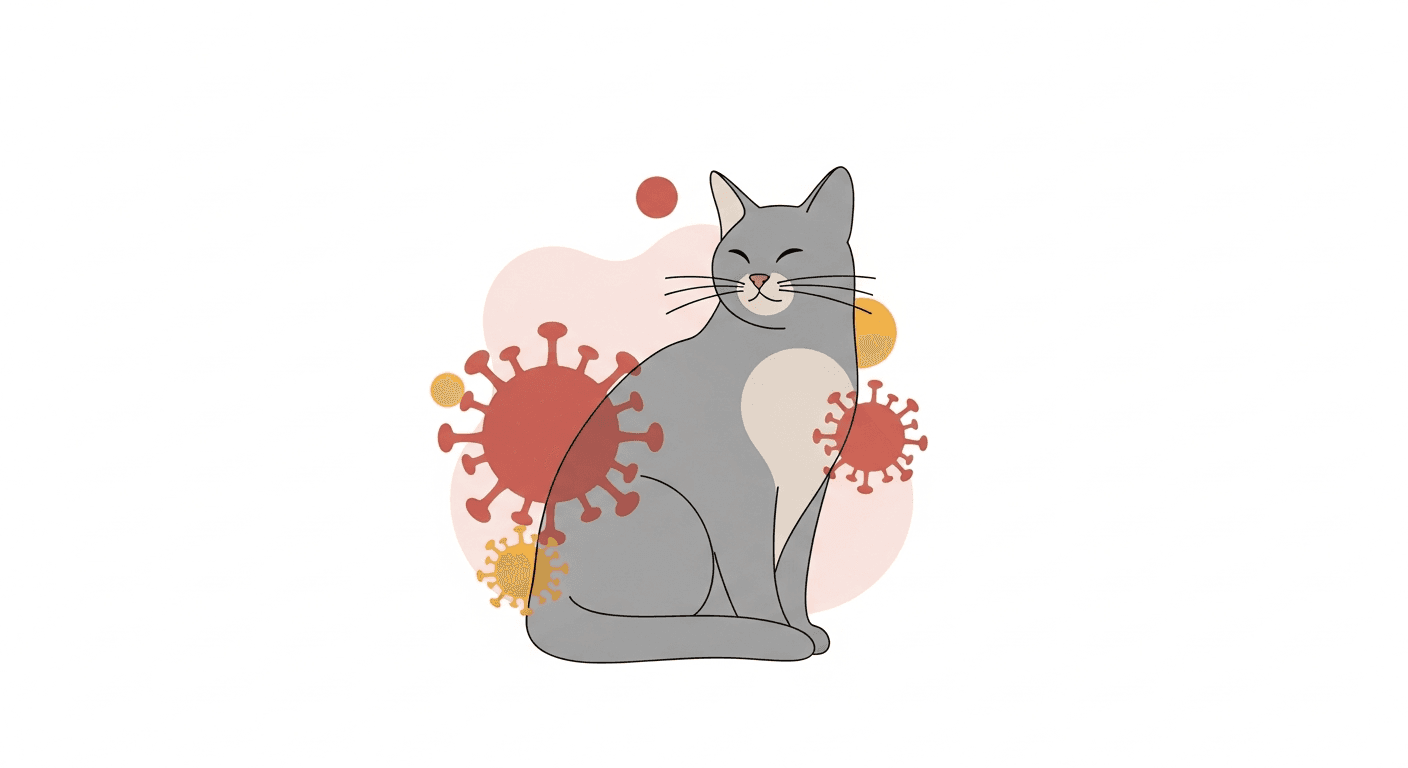
What Is Feline Leukemia Virus?
Feline leukemia virus (FeLV) is a retrovirus that integrates its genetic material into the cat's own DNA, making it one of the most significant infectious diseases affecting domestic cats worldwide. FeLV is the leading viral cause of cancer in cats and a major immunosuppressor, leaving affected cats highly vulnerable to a range of secondary infections, anemia, and lymphoma. The virus is species-specific — it does not infect humans, dogs, or other pets — but it is highly contagious among cats.
Not all cats exposed to FeLV become permanently infected. Young kittens and immunocompromised cats are most likely to develop persistent viremia (the virus circulating in the blood permanently), while up to 70% of adult cats mount an immune response that limits or eliminates the infection. Cats that become persistently viremic face a significantly shortened lifespan, with most living less than three years after diagnosis, though some live longer with excellent supportive care.
Causes and Risk Factors
FeLV is shed in large quantities in saliva, nasal secretions, urine, feces, and milk. It is transmitted through:
- Mutual grooming and bite wounds — the most common routes in free-roaming or multi-cat households
- Shared food and water bowls, litter boxes
- Mother to kitten — in utero, at birth, or through nursing
- Blood transfusions from infected donors
Key risk factors include:
- Being an outdoor or indoor-outdoor cat
- Age — kittens are dramatically more susceptible than adult cats
- Living in a multi-cat household with an FeLV-positive cat
- Unvaccinated status
- Fighting with unknown cats
Warning Signs and Symptoms
FeLV-positive cats may remain apparently healthy for months to years, then develop health problems related to immunosuppression or the virus itself:
- Repeated or persistent infections that do not fully respond to treatment
- Unexplained weight loss and poor coat condition
- Chronic or recurrent respiratory infections
- Chronic diarrhea and digestive issues
- Pale gums and lethargy — signs of anemia
- Enlarged lymph nodes
- Neurological signs — wobbling, seizures, behavior changes
- Eye problems — progressive retinal disease, uveitis
- Reproductive failure in breeding queens
- Lymphoma — the most common cancer in FeLV-positive cats
When to Go to the Vet Immediately
FeLV-positive cats should be seen promptly at the first sign of any new illness, as their compromised immune system means infections escalate faster than in healthy cats. Seek immediate veterinary care for:
- Sudden lethargy and weakness — may indicate severe anemia
- Breathing difficulty
- Neurological signs: seizures, sudden blindness, loss of coordination
- Complete loss of appetite for more than 24 hours
- Any fever above 39.5°C (103°F) in an FeLV-positive cat
Use the TailRounds AI Triage for rapid assessment, and Find a Clinic Near You for emergency care options.
At-Home Care and Monitoring
There is no cure for FeLV, but quality and duration of life can be extended through dedicated supportive care:
- Keep the cat strictly indoors to prevent exposure to additional infections and to prevent spreading FeLV to other cats
- Feed a high-quality, complete diet; avoid raw diets (higher risk of foodborne infection in immunosuppressed cats)
- Separate food, water, and litter boxes from other household cats
- Semi-annual or quarterly veterinary wellness exams — these cats need more frequent monitoring
- Prompt treatment of any secondary infections
- Dental care — mouth infections are common and painful
- Anti-viral and immune-modulating drugs (interferon, ImmunoRegulin) in some cases — discuss with your vet
Log daily observations of appetite, energy, coat condition, and litter box habits using the TailRounds Daily Log.
Prevention and Long-Term Management
FeLV is preventable through vaccination and management:
- FeLV vaccination — highly effective and recommended for all at-risk cats (outdoor or indoor-outdoor); a core vaccine in many guidelines
- Test all new cats before introduction to a household with other cats
- Keep cats indoors to eliminate exposure to unknown cats
- Separate FeLV-positive cats from FeLV-negative cats in multi-cat households
- Neuter all cats — reduces fighting and roaming behavior that increases exposure
Support Your Cat with TailRounds
An FeLV-positive diagnosis does not have to mean immediate decline. Many cats live comfortable, happy lives with attentive care. Track your cat's daily health with the TailRounds Daily Log, schedule regular wellness exams at Book a vet appointment at Happy Paws, and locate specialist care through Find a Clinic Near You. When new symptoms worry you, the TailRounds AI Triage tool provides immediate guidance.
Continue Reading
 🩺 Diseases & Symptoms
Feline Immunodeficiency Virus (FIV): Living with an FIV-Positive Cat
FIV weakens cats' immune systems but many live for years with proper care. Learn how FIV spreads, what symptoms to watch for, and how to manage an FIV+ cat.
 🩺 Diseases & Symptoms
Feline Infectious Peritonitis (FIP): Understanding a Complex Disease
FIP was once nearly always fatal, but new antiviral treatments are transforming outcomes. Learn to recognize FIP, understand the wet vs dry forms, and explore treatment.
 🩺 Diseases & Symptoms
Cat Upper Respiratory Infection: Causes, Symptoms, and Care
Upper respiratory infections are common in cats and kittens. Learn how to recognize feline URI, help your cat recover at home, and prevent future infections.
 🩺 Diseases & Symptoms
Chronic Kidney Disease in Cats: Early Detection and Management
Chronic kidney disease affects 1 in 3 senior cats. Learn the early signs, how to slow progression through diet and care, and how to maximize your cat's quality of life.