
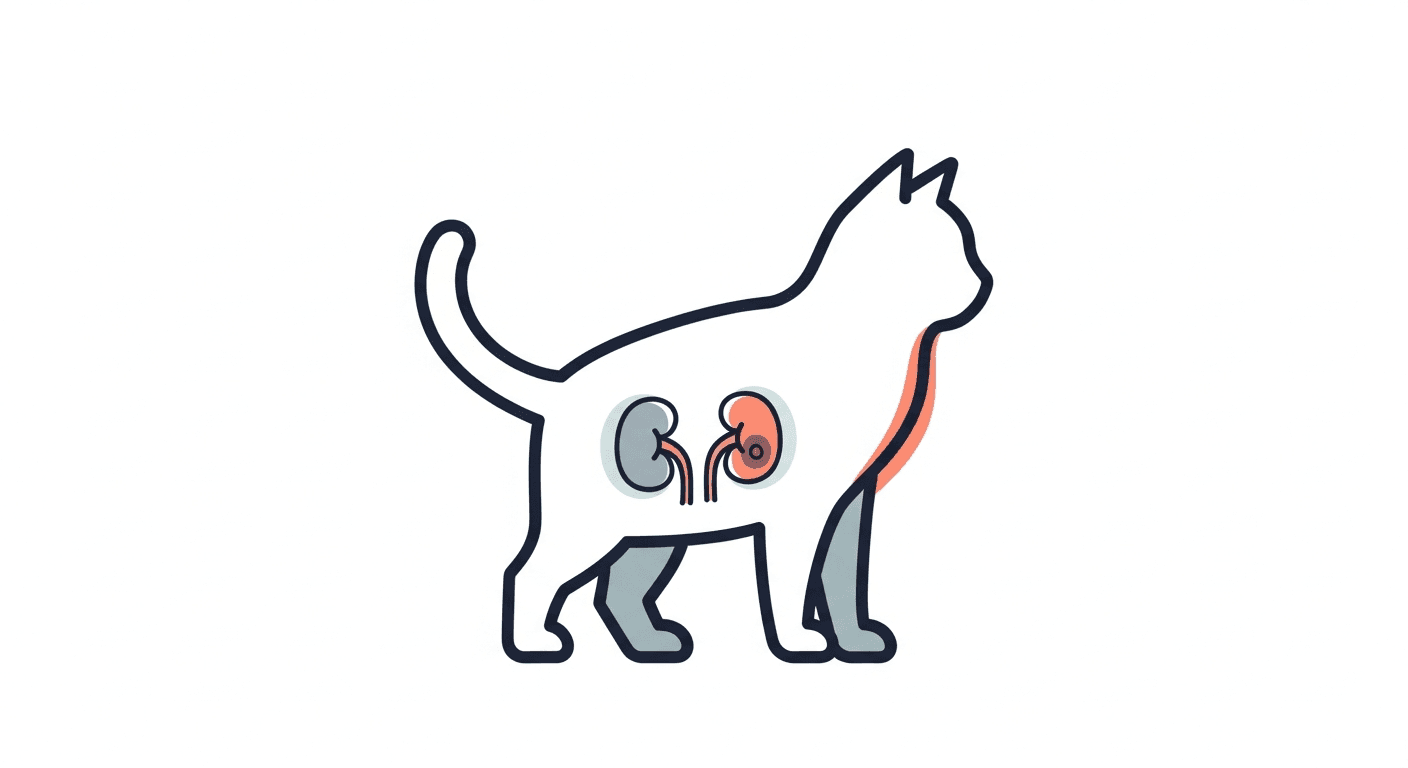
What Is Chronic Kidney Disease in Cats?
Chronic kidney disease (CKD), also called chronic renal failure or chronic renal insufficiency, is a progressive, irreversible deterioration of kidney function over months to years. The kidneys perform critical functions — filtering waste products from the blood, regulating fluid balance, producing hormones that stimulate red blood cell production, and controlling blood pressure. As kidney tissue is progressively lost, these functions are compromised.
CKD is one of the most common diseases in senior cats, affecting approximately 30–40% of cats over 10 years of age and up to 80% of cats over 15 years. It is a condition to be managed rather than cured, but with early detection and appropriate intervention, many cats live comfortably for years after diagnosis. The IRIS (International Renal Interest Society) staging system (Stages 1–4) provides a framework for guiding management based on the degree of kidney dysfunction.
Causes and Risk Factors
The causes of CKD in cats are often multifactorial and incompletely understood:
- Age — the single strongest risk factor; kidneys simply age less well in cats than in many other species
- Chronic dehydration — cats evolved as desert animals and have a low thirst drive, leading to chronic mild dehydration that stresses the kidneys over years
- Recurrent urinary tract infections — cause repeated kidney inflammation
- Hypertension — secondary to hyperthyroidism or occurring independently
- Polycystic kidney disease (PKD) — an inherited condition in Persian and related breeds
- Toxin exposure — lilies, NSAIDs, certain antibiotics, contrast dyes
- Dental disease — chronic bacteremia from severe dental infections may damage kidneys
- FeLV, FIV — can cause kidney disease
Warning Signs and Symptoms
One challenge with CKD is that signs do not appear until approximately 67–75% of kidney function is lost. Early stages (IRIS 1–2) are often asymptomatic, detectable only through blood and urine tests. As the disease progresses:
- Increased thirst and urination (or, paradoxically, decreased urination in very advanced disease)
- Weight loss despite maintained or increased appetite initially
- Reduced appetite progressing to anorexia in later stages
- Vomiting — especially in the morning on an empty stomach
- Lethargy and decreased activity
- Poor, unkempt coat
- Bad breath — uremic (ammonia-like) odor
- Mouth ulcers (uremic stomatitis) in advanced cases
- Anemia — pale gums, weakness
- High blood pressure — may cause sudden blindness from retinal detachment
When to Go to the Vet Immediately
CKD cats need prompt veterinary attention if they show:
- Sudden vision loss — hypertensive retinal detachment (can be reversed if treated within hours)
- Complete refusal to eat for more than 24 hours
- Vomiting more than once or twice daily
- Extreme weakness, inability to lift the head (ventroflexion)
- Acute worsening of any previously stable CKD sign
Use the TailRounds AI Triage for quick assessment and Book a vet appointment at Happy Paws for early screening if your cat is over 7 years old. Find a Clinic Near You for emergency hypertension treatment.
At-Home Care and Monitoring
Slowing CKD progression and maintaining quality of life centers on several pillars:
- Hydration — transitioning to wet (canned) food significantly increases water intake; cat water fountains also encourage drinking
- Renal diet — prescription kidney diets (Hill's k/d, Royal Canin Renal, Purina NF) are phosphorus-restricted; phosphorus retention accelerates kidney damage
- Phosphate binders — if dietary restriction alone is insufficient
- Blood pressure medication — amlodipine for hypertension; critical to prevent further kidney and eye damage
- Anti-nausea medications — maropitant (Cerenia) or famotidine to manage uremic nausea
- Subcutaneous fluid therapy at home — many owners learn to give fluids under the skin; greatly improves comfort in moderate to advanced CKD
- Erythropoiesis-stimulating agents for anemia in advanced stages
Daily weight checks and fluid tracking are essential. Use the TailRounds Daily Log to record food intake, water consumption, vomiting episodes, and weight.
Prevention and Long-Term Management
While CKD is often unavoidable in senior cats, these measures slow progression and delay diagnosis to later life:
- Annual wellness bloodwork including SDMA (a sensitive early kidney marker) from age 7 onward
- Urine specific gravity testing — a simple indicator of kidney concentrating ability
- Wet food diet for all cats throughout life to support hydration
- Aggressive dental disease management
- Blood pressure monitoring at every wellness visit in cats over 7
- Prompt treatment of urinary tract infections and hyperthyroidism
- Avoiding nephrotoxic medications and lily exposure
Give Your Cat the Best Senior Life with TailRounds
Catching CKD early through regular bloodwork changes outcomes significantly. Use the TailRounds Daily Log to track daily food, water intake, and weight. Schedule senior wellness exams at Book a vet appointment at Happy Paws. Find a Clinic Near You for specialists in feline nephrology. For sudden changes like vision loss or extreme weakness, the TailRounds AI Triage provides immediate guidance.
Continue Reading
 🩺 Diseases & Symptoms
Hyperthyroidism in Cats: The Most Common Hormonal Disease in Senior Cats
Hyperthyroidism affects most senior cats. Learn the signs, understand your treatment options including medication, surgery, and radioactive iodine, and manage this condition.
 🩺 Diseases & Symptoms
Diabetes in Cats: Symptoms, Insulin, and the Path to Remission
Feline diabetes is unique — many cats can achieve remission with proper management. Learn the signs, treatment options, and how diet and insulin work together for cats.
 🩺 Diseases & Symptoms
Urinary Blockage in Cats: A True Emergency That Cannot Wait
A blocked cat can die within 24–48 hours. Learn to recognize the signs of urinary obstruction in cats, understand who is at risk, and act fast to save your cat's life.
 🩺 Diseases & Symptoms
Feline Leukemia Virus (FeLV): What Cat Owners Must Know
FeLV is one of the most serious infectious diseases in cats. Learn how it spreads, what symptoms to watch for, how to manage an FeLV-positive cat, and prevention.