
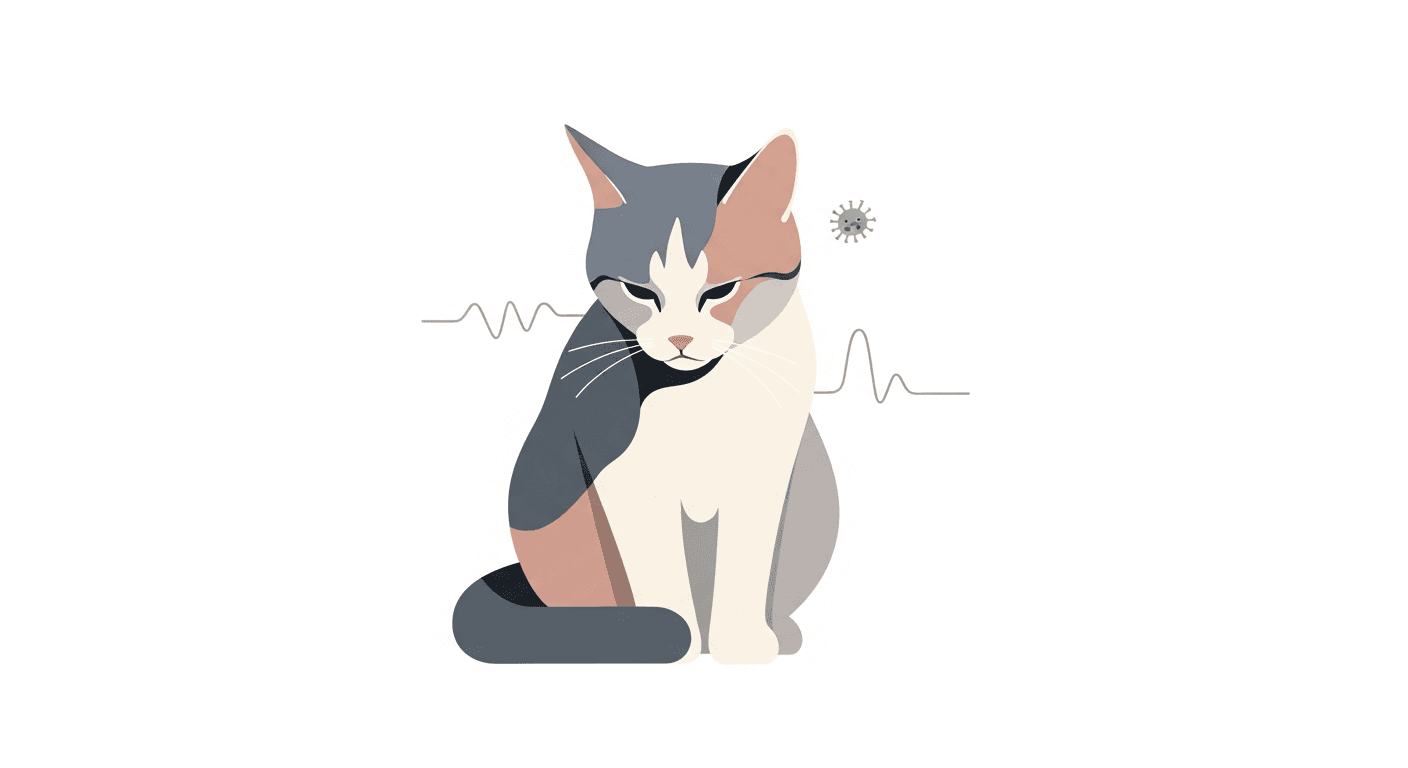
What Is Feline Infectious Peritonitis?
Feline infectious peritonitis (FIP) is a complex, serious disease caused by a mutated form of feline coronavirus (FCoV). Importantly, feline coronavirus itself is extremely common in cats — especially those living in multi-cat environments — and in most cats, it causes only mild or no gastrointestinal symptoms. However, in a small percentage of infected cats (estimates range from 5–10%), the coronavirus mutates into a form that invades and replicates within immune cells (macrophages), triggering an aberrant, exaggerated immune response that causes FIP.
What makes FIP remarkable in 2024 is that the disease — once considered nearly universally fatal — now has effective antiviral treatments. Nucleoside analogs such as GS-441524 and molnupiravir have shown dramatic success rates in clinical studies and field use. While treatment is expensive and long, remission is achievable in the majority of cases when treatment is started in time.
Causes and Risk Factors
The exact trigger for the mutation from harmless FCoV to virulent FIP remains unclear. Established risk factors include:
- Young cats (under 2 years) and elderly cats (over 10 years) — these age groups are most susceptible
- Multi-cat households and catteries — high FCoV prevalence increases mutation opportunity
- Purebred cats — Bengals, Ragdolls, Birmans, and British Shorthairs appear at higher risk, suggesting genetic susceptibility
- Male cats — slightly more commonly affected than females
- Stressful events — rehoming, new pets, illness — may trigger mutation in FCoV-infected cats
- Immunosuppression
Warning Signs and Symptoms
FIP manifests in two classic forms, though overlap exists:
Wet (effusive) FIP:
- Rapid accumulation of fluid in the abdomen (ascites) — pot-belly appearance
- Fluid in the chest cavity — causing difficulty breathing
- Fever unresponsive to antibiotics
- Lethargy and rapid weight loss
- Loss of appetite
Dry (non-effusive) FIP:
- Neurological signs — incoordination, seizures, personality changes, abnormal eye movements (nystagmus)
- Eye disease — cloudiness, uveitis, abnormal pupils, blindness
- Organ infiltration — liver, kidneys, intestines showing granulomatous lesions
- More subtle, slower progression than the wet form
- Unexplained weight loss and fever
Both forms share common early signs: persistent fever, progressive weight loss, and lethargy in a young cat that does not respond to antibiotics.
When to Go to the Vet Immediately
Seek veterinary evaluation without delay if your cat shows:
- Visible abdominal swelling developing over days to weeks in a young cat
- Breathing difficulty or open-mouth breathing
- Sudden neurological signs — loss of coordination, head tilt, seizures
- Sudden blindness
- Persistent fever in a young cat despite antibiotic treatment
Early diagnosis significantly improves treatment outcomes. Use the TailRounds AI Triage to assess urgency, and Book a vet appointment at Happy Paws for evaluation. Find a Clinic Near You for specialists experienced with FIP treatment.
At-Home Care and Monitoring
FIP treatment with antivirals (GS-441524 in particular) is now a reality. Treatment protocols typically involve:
- Daily subcutaneous injections or oral administration of antiviral medication for 12 weeks minimum
- Regular monitoring with bloodwork and protein electrophoresis
- Monitoring of neurological and ocular signs
- Supportive care — appetite stimulants, anti-inflammatories during the initial phase
- After treatment completion, a monitoring period of several months to confirm sustained remission
Track daily symptoms, medication administration, appetite, and activity using the TailRounds Daily Log. Detailed records are essential for veterinarians managing complex FIP cases.
Prevention and Long-Term Management
Currently, no widely available vaccine reliably prevents FIP. Prevention focuses on reducing FCoV exposure and managing stress:
- Maintain clean litter boxes — FCoV is shed in feces; prompt litter box hygiene reduces re-exposure
- In multi-cat environments, use one litter box per cat plus one
- Reduce stress with environmental enrichment and stable routines
- Test cats for FCoV antibody levels before introducing them to a multi-cat household
- Isolate cats with confirmed FIP from others, though FIP itself is not directly contagious (FCoV is)
New Hope for FIP Cats with TailRounds
FIP treatment has transformed what was once a devastating diagnosis into a manageable — and often beatable — disease. Consistent daily monitoring and medication tracking using the TailRounds Daily Log is critical to treatment success. Work closely with a vet experienced in FIP treatment, bookable at Book a vet appointment at Happy Paws. For specialists and emergency care, Find a Clinic Near You. For immediate concerns, the TailRounds AI Triage provides guidance around the clock.
Continue Reading
 🩺 Diseases & Symptoms
Feline Leukemia Virus (FeLV): What Cat Owners Must Know
FeLV is one of the most serious infectious diseases in cats. Learn how it spreads, what symptoms to watch for, how to manage an FeLV-positive cat, and prevention.
 🩺 Diseases & Symptoms
Feline Immunodeficiency Virus (FIV): Living with an FIV-Positive Cat
FIV weakens cats' immune systems but many live for years with proper care. Learn how FIV spreads, what symptoms to watch for, and how to manage an FIV+ cat.
 🩺 Diseases & Symptoms
Cat Upper Respiratory Infection: Causes, Symptoms, and Care
Upper respiratory infections are common in cats and kittens. Learn how to recognize feline URI, help your cat recover at home, and prevent future infections.
 🩺 Diseases & Symptoms
Chronic Kidney Disease in Cats: Early Detection and Management
Chronic kidney disease affects 1 in 3 senior cats. Learn the early signs, how to slow progression through diet and care, and how to maximize your cat's quality of life.