
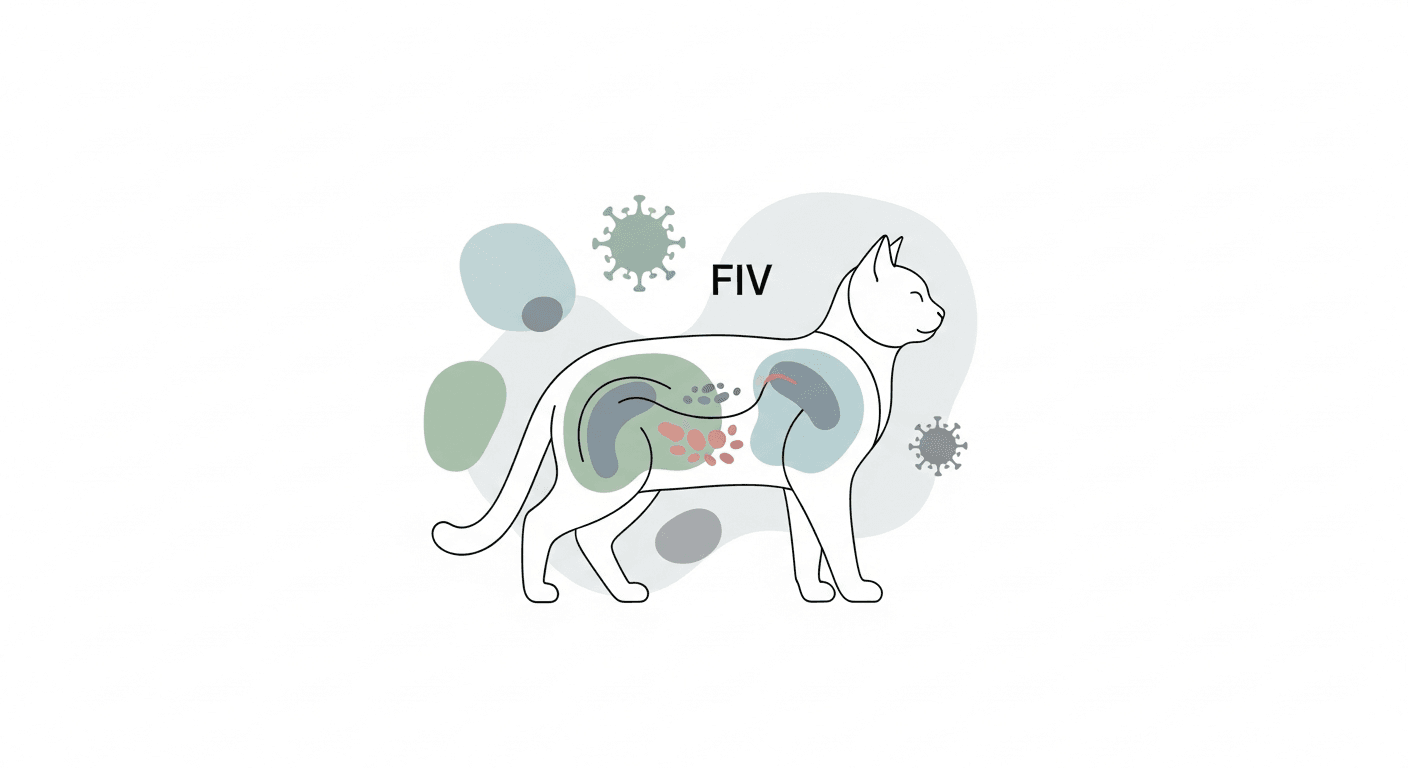
What Is Feline Immunodeficiency Virus?
Feline immunodeficiency virus (FIV) is a lentivirus — the same family of viruses as HIV in humans — that progressively weakens a cat's immune system, leaving it vulnerable to infections and diseases that a healthy cat would easily fight off. While FIV and HIV are biologically related, FIV is species-specific and poses absolutely no health risk to humans, dogs, or other animals. It affects only domestic cats and some wild felid species.
Despite its reputation as a death sentence, most FIV-positive cats live for many years — sometimes their entire normal lifespan — before developing advanced immune deficiency. The virus moves through three phases: an acute phase shortly after infection, a long asymptomatic carrier phase lasting months to years, and a final phase of immune collapse. Understanding this trajectory gives owners and veterinarians the opportunity to maximize quality of life during the long middle phase.
Causes and Risk Factors
FIV is transmitted primarily through deep, penetrating bite wounds — the virus is present in high concentrations in saliva. Unlike FeLV, it is not efficiently spread through casual contact such as shared bowls, mutual grooming, or shared litter boxes. Key risk factors include:
- Being an outdoor or indoor-outdoor male cat — unneutered males that fight are at highest risk
- Unneutered status — territorial fighting dramatically increases bite wound exposure
- Contact with unknown or stray cats
- Geographic areas with high stray cat populations
- Mother-to-kitten transmission — possible but uncommon; kittens born to FIV-positive mothers often test negative after maternal antibodies wane
Warning Signs and Symptoms
During the asymptomatic phase, FIV-positive cats appear completely healthy. Signs appear as immune function declines:
- Recurrent or chronic respiratory infections
- Persistent or recurring mouth problems — severe gingivitis, stomatitis, periodontal disease
- Chronic or recurrent diarrhea
- Weight loss and poor coat condition
- Enlarged lymph nodes
- Chronic skin infections and slow wound healing
- Eye disease — uveitis, corneal cloudiness
- Neurological signs in advanced cases — behavior changes, cognitive decline, seizures
- Increased susceptibility to upper respiratory infections
When to Go to the Vet Immediately
FIV-positive cats should be seen promptly with any new health concern. Seek immediate care if:
- The cat stops eating for more than 24 hours
- Sudden significant weight loss is noted
- Breathing becomes labored or rapid
- Neurological symptoms appear suddenly
- High fever combined with lethargy
- Any significant wound or bite injury — secondary infection risk is very high
The TailRounds AI Triage can help you assess whether a symptom needs same-day or emergency attention. Find a Clinic Near You for immediate care options.
At-Home Care and Monitoring
With attentive care, FIV-positive cats thrive. Key management strategies include:
- Strictly indoor lifestyle — prevents additional infections and prevents spreading FIV to other cats
- High-quality nutrition — avoid raw diets; thoroughly cooked or commercial diets reduce foodborne infection risk
- Dental hygiene — regular tooth brushing and professional cleanings help manage the stomatitis that plagues many FIV-positive cats
- Semi-annual veterinary wellness exams with bloodwork
- Prompt treatment of all infections — do not wait for them to "clear up" on their own
- Parasite prevention — fleas and intestinal parasites are more problematic in immunosuppressed cats
- Stress reduction — a calm, stable home environment supports immune function
Daily monitoring and logging with the TailRounds Daily Log helps you spot subtle changes in appetite, activity, and behavior before they become significant health problems.
Prevention and Long-Term Management
Prevention centers on eliminating bite wound exposure:
- Keep cats indoors — the single most effective prevention measure
- Neuter all cats — reduces territorial aggression and roaming
- Test all new cats before introducing them to a multi-cat household
- FIV-positive cats can coexist with FIV-negative cats if they do not fight — risk of transmission through casual contact is very low
- An FIV vaccine exists in some countries but has limitations; discuss with your vet
Your FIV-Positive Cat Can Thrive with TailRounds
Many cats with FIV live happy, comfortable lives for a decade or more after diagnosis. Consistent monitoring is the key. Use the TailRounds Daily Log to track daily health, schedule bi-annual check-ups at Book a vet appointment at Happy Paws, find local feline health specialists through Find a Clinic Near You, and check the TailRounds AI Triage whenever you notice something that concerns you.
Continue Reading
 🩺 Diseases & Symptoms
Feline Leukemia Virus (FeLV): What Cat Owners Must Know
FeLV is one of the most serious infectious diseases in cats. Learn how it spreads, what symptoms to watch for, how to manage an FeLV-positive cat, and prevention.
 🩺 Diseases & Symptoms
Feline Infectious Peritonitis (FIP): Understanding a Complex Disease
FIP was once nearly always fatal, but new antiviral treatments are transforming outcomes. Learn to recognize FIP, understand the wet vs dry forms, and explore treatment.
 🩺 Diseases & Symptoms
Cat Upper Respiratory Infection: Causes, Symptoms, and Care
Upper respiratory infections are common in cats and kittens. Learn how to recognize feline URI, help your cat recover at home, and prevent future infections.
 🩺 Diseases & Symptoms
Chronic Kidney Disease in Cats: Early Detection and Management
Chronic kidney disease affects 1 in 3 senior cats. Learn the early signs, how to slow progression through diet and care, and how to maximize your cat's quality of life.