
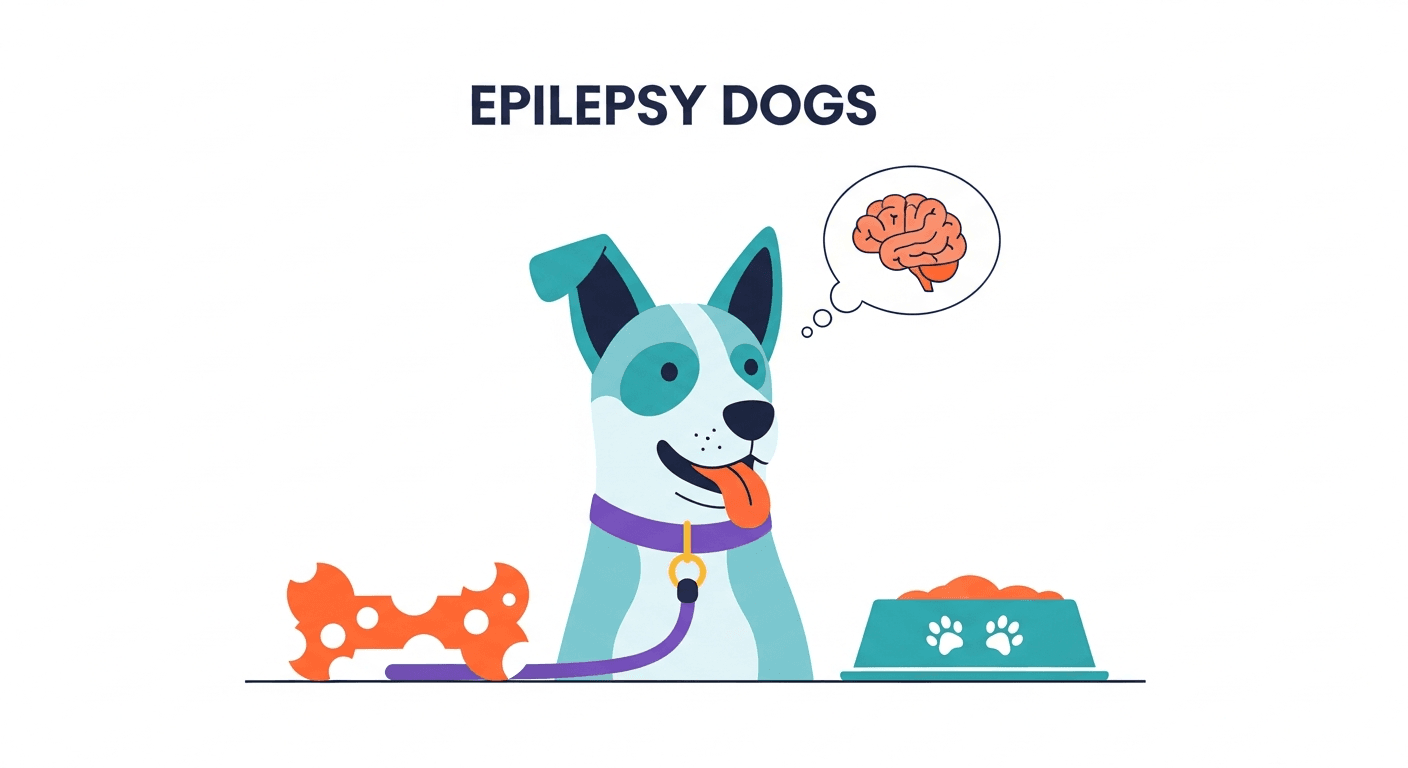
What Is Epilepsy in Dogs?
Epilepsy is a neurological disorder characterized by recurrent, unprovoked seizures caused by abnormal electrical activity in the brain. It is the most common neurological condition in dogs, affecting approximately 0.5–0.75% of the canine population. A seizure occurs when a sudden, uncontrolled electrical discharge disrupts normal brain function, causing involuntary movements, altered consciousness, and behavior changes.
Epilepsy in dogs is classified as idiopathic (genetic, most common, occurring without an identifiable underlying cause) or symptomatic (caused by identifiable brain lesions, metabolic diseases, or toxins). Idiopathic epilepsy is strongly inherited and typically presents in young to middle-aged dogs (six months to six years). While watching a dog have a seizure is frightening, most individual seizures are not immediately life-threatening — but recurrent seizures without management can cause brain damage over time.
Causes and Risk Factors
Causes of idiopathic (genetic) epilepsy:
- Inherited genetic mutations — strongly breed-associated
- Breeds at highest risk: Border Collies, Belgian Tervurens, German Shepherds, Golden Retrievers, Labrador Retrievers, Beagles, Boxers, Dachshunds, Australian Shepherds
Causes of symptomatic epilepsy:
- Brain tumors
- Inflammatory brain diseases (encephalitis)
- Stroke or vascular disease
- Head trauma
- Infectious diseases (distemper, toxoplasmosis)
- Metabolic diseases — liver failure, kidney disease, hypoglycemia, electrolyte imbalances
- Toxin ingestion — xylitol, permethrin, lead, ethylene glycol
Warning Signs and Symptoms
Seizures in dogs typically progress through three phases:
Pre-ictal phase (aura — minutes to hours before):
- Restlessness, anxiety, or clinginess
- Whining or unusual behavior changes
- Hiding or seeking attention
Ictal phase (the seizure itself — seconds to minutes):
- Falling to one side, paddling limbs
- Loss of consciousness or blank staring
- Muscle rigidity or convulsions (grand mal)
- Chomping, salivating, or drooling
- Involuntary urination or defecation
- Focal seizures — twitching of one limb, facial muscle twitching, repetitive behaviors
Post-ictal phase (after the seizure — minutes to hours):
- Confusion and disorientation
- Temporary blindness
- Excessive hunger or thirst
- Pacing or restlessness
- Deep sleep and profound fatigue
When to Go to the Vet Immediately
Call your emergency vet immediately if:
- A seizure lasts more than five minutes (status epilepticus — life-threatening; the brain can overheat and suffer permanent damage)
- The dog has more than two seizures within 24 hours (cluster seizures)
- This is the dog's first ever seizure
- The dog does not recover to near-normal within 30 minutes of the seizure ending
- The dog injures itself during the seizure
- The dog's gums turn blue or white during the episode
For ongoing management questions, the TailRounds AI Triage provides guidance. For emergency seizure situations, go directly to the clinic. Find a Clinic Near You and save the nearest emergency vet number in your phone now.
At-Home Care and Monitoring
During a seizure, never put your hand near the dog's mouth — dogs cannot swallow their tongue, but they can inadvertently bite. Instead:
- Stay calm and time the seizure
- Gently move the dog away from stairs, furniture edges, or other hazards
- Dim the lights and reduce noise
- Do not restrain the dog
- Video the seizure if safely possible — this helps your vet assess seizure type
- Speak softly and reassuringly
After the seizure, keep the dog quiet and comfortable. Log every seizure in the TailRounds Daily Log — record duration, type, time of day, potential triggers (unusual food, stress, sleep disruption), and recovery time. This seizure diary is critical for guiding medication decisions.
Prevention and Long-Term Management
Idiopathic epilepsy cannot be prevented, but seizures can be managed with medication:
- Phenobarbital — the most commonly used first-line anticonvulsant; requires regular blood level monitoring
- Potassium bromide (KBr) — often added when phenobarbital alone is insufficient; slow to reach therapeutic levels
- Levetiracetam (Keppra) — useful as an add-on or in dogs that cannot tolerate other drugs
- Imepitoin (Pexion) — approved in some countries as a first-line option
- Regular blood monitoring — every 6 months to check drug levels, liver enzymes, and CBC
- Consistent medication schedule — never miss a dose; sudden changes can trigger breakthrough seizures
- Avoid known triggers — stress, sleep deprivation, certain foods (discuss with vet)
Track Seizures Precisely with TailRounds
A detailed seizure diary is one of the most valuable tools in epilepsy management. Use the TailRounds Daily Log to record every episode, medication dose, and behavioral observation. Share this data with your neurologist at each appointment, bookable at Book a vet appointment at Happy Paws. Find a Clinic Near You for neurological specialist referrals, and always keep the TailRounds AI Triage bookmarked for moments when you need quick guidance.
Continue Reading
 🩺 Diseases & Symptoms
Distemper in Dogs: Signs, Stages, and How to Protect Your Pet
Canine distemper is a serious viral disease with no cure. Understand the symptoms across all stages, treatment options, and the importance of vaccination.
 🩺 Diseases & Symptoms
Bloat (GDV) in Dogs: A Life-Threatening Emergency Every Owner Must Know
Gastric dilatation-volvulus (GDV) kills within hours. Learn the warning signs, which breeds are at risk, and what to do in this life-threatening emergency.
 🩺 Diseases & Symptoms
Cushing's Disease in Dogs: Symptoms, Diagnosis, and Treatment
Cushing's disease causes excess cortisol in dogs. Recognize the symptoms, understand diagnosis options, and learn how to manage this chronic but treatable condition.
 🩺 Diseases & Symptoms
Diabetes in Dogs: Signs, Insulin Management, and Daily Care
Diabetes in dogs requires lifelong management but is very livable with the right approach. Learn the signs, how insulin works, and what daily care looks like.