
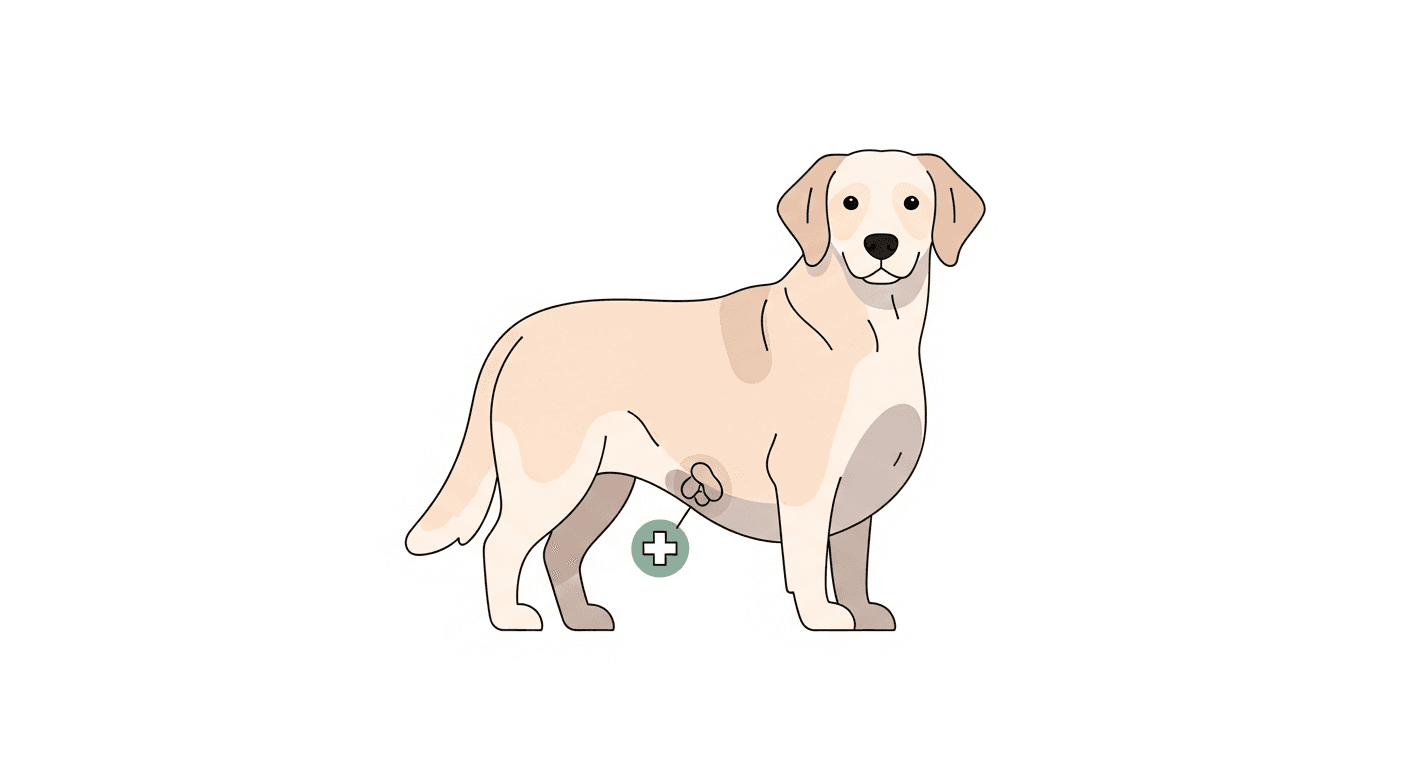
What Is Cushing's Disease in Dogs?
Cushing's disease, medically known as hyperadrenocorticism, is a hormonal disorder in which the body chronically produces too much cortisol — the primary stress hormone. Cortisol, produced by the adrenal glands, plays a vital role in managing stress, immune responses, blood sugar, and metabolism. When cortisol levels remain chronically elevated, however, it wreaks havoc on nearly every organ system in the body.
There are two main forms: pituitary-dependent Cushing's (PDH), accounting for about 80–85% of cases, in which a benign tumor in the pituitary gland drives excess production of ACTH (which in turn stimulates the adrenal glands to produce cortisol); and adrenal-dependent Cushing's (ADH), in which a tumor in one of the adrenal glands itself produces excess cortisol regardless of ACTH levels. A third, iatrogenic form is caused by long-term administration of corticosteroid drugs. Distinguishing between these forms is essential because treatment differs significantly.
Causes and Risk Factors
- Pituitary microadenoma or macroadenoma — the most common cause
- Adrenal tumor — benign adenoma or malignant carcinoma
- Long-term corticosteroid therapy — iatrogenic form
- Middle-aged to older dogs — most cases occur in dogs 6 years and older
- Breed predisposition — Poodles, Dachshunds, Beagles, Boxers, Boston Terriers, and Yorkshire Terriers are more frequently affected
- Small breeds — PDH disproportionately affects smaller dogs
Warning Signs and Symptoms
Cushing's disease develops slowly, so symptoms often appear gradually and may be mistaken for normal aging. Classic signs include:
- Pot-belly appearance — abdominal enlargement due to liver swelling, fat redistribution, and muscle weakness
- PU/PD — excessive drinking and urination (often the most noticeable early sign)
- Increased appetite and weight gain
- Hair loss — typically symmetrical, affecting the trunk and sparing the head and legs
- Muscle weakness — difficulty rising, exercise intolerance
- Thin, fragile skin — bruises easily, heals slowly, may develop calcium deposits (calcinosis cutis)
- Panting, even at rest
- Recurrent skin and urinary infections
- Neurological signs — in cases of large pituitary tumors causing brain compression
When to Go to the Vet Immediately
Cushing's disease is chronic and rarely an acute emergency, but some situations warrant prompt veterinary contact:
- Sudden neurological signs in a dog with known Cushing's — may indicate an enlarging pituitary tumor
- Suspected acute adrenal crisis in a dog being treated for Cushing's — weakness, vomiting, collapse
- Signs of severe infection that does not respond to usual treatment
- Sudden dramatic increase in thirst and urination
Use the TailRounds AI Triage for guidance on urgent versus scheduled appointments, and Book a vet appointment at Happy Paws if you suspect Cushing's for the first time.
At-Home Care and Monitoring
Cushing's is a lifelong condition managed rather than cured (except in cases where an adrenal tumor can be surgically removed). Home management involves:
- Medication compliance — trilostane (Vetoryl) or mitotane (Lysodren) require strict dosing schedules and careful monitoring
- Monitoring for overtreatment (hypoadrenocorticism) — signs include lethargy, vomiting, loss of appetite — these require immediate veterinary contact
- Skin care — keep skin clean and dry; thin Cushingoid skin is prone to infection and bruising
- Urinary hygiene — clean any accidents promptly; monitor for urinary infections
- Moderate, gentle exercise to maintain muscle mass despite weakness
- Avoid corticosteroids — even topical steroids can complicate management
Use the TailRounds Daily Log to track water consumption, urination frequency, appetite, and coat changes — all of which reflect disease control quality.
Prevention and Long-Term Management
PDH cannot be prevented. Adrenal tumors are not preventable either. However, iatrogenic Cushing's can be avoided by using the minimum effective dose of corticosteroids and tapering off appropriately. Long-term management goals include:
- Regular ACTH stimulation tests every 3 months initially, then every 6 months once stable
- Urine culture every 6 months — Cushingoid dogs are prone to urinary tract infections that may be asymptomatic
- Blood pressure monitoring — Cushing's frequently causes hypertension
- Urine protein-to-creatinine ratio — to screen for protein-losing nephropathy
- Ophthalmic exams — Cushingoid dogs are prone to hypertension-induced retinal damage
Stay Ahead of Cushing's with TailRounds
Consistent monitoring is the key to good Cushing's management. Log daily observations with the TailRounds Daily Log and ensure you never miss an ACTH stimulation test by scheduling regular check-ups at Book a vet appointment at Happy Paws. For clinics in your area, Find a Clinic Near You, and use the TailRounds AI Triage anytime you observe concerning changes in your dog's behavior or appearance.
Continue Reading
 🩺 Diseases & Symptoms
Diabetes in Dogs: Signs, Insulin Management, and Daily Care
Diabetes in dogs requires lifelong management but is very livable with the right approach. Learn the signs, how insulin works, and what daily care looks like.
 🩺 Diseases & Symptoms
Pancreatitis in Dogs: Causes, Symptoms, and Dietary Management
Pancreatitis can be life-threatening in dogs. Learn what triggers it, how to recognize the signs, and how diet and care can prevent recurrence.
 🩺 Diseases & Symptoms
Obesity in Dogs and Cats: The Most Preventable Disease in Pets
Over 50% of pets are overweight. Learn how obesity affects your pet's health, how to assess body condition score, and practical strategies to achieve and maintain a healthy weight.
 🩺 Diseases & Symptoms
Epilepsy and Seizures in Dogs: What to Do and How to Manage
Seizures in dogs can be terrifying to witness. Learn about epilepsy causes, what to do during a seizure, medication options, and how to reduce episode frequency.