
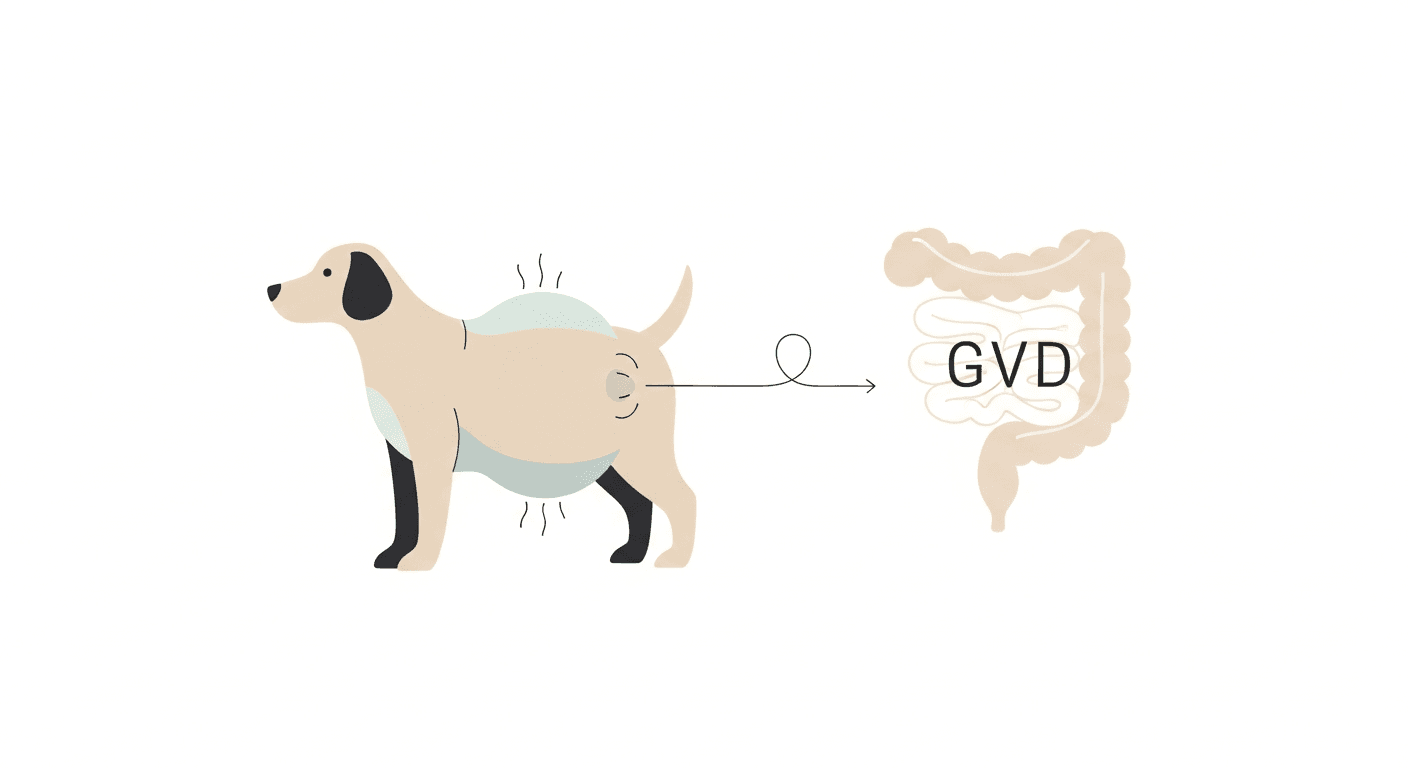
What Is Bloat (GDV) in Dogs?
Gastric dilatation-volvulus, commonly known as bloat or GDV, is one of the most acute life-threatening emergencies in veterinary medicine. The condition occurs in two stages: first, the stomach distends with gas or fluid (gastric dilatation), and then — in the most dangerous form — the stomach twists on its axis (volvulus), trapping gas, cutting off blood supply, and compressing surrounding organs and major blood vessels. Within hours, the condition causes irreversible organ damage, cardiovascular collapse, and death.
Even with emergency surgery, mortality rates for GDV range from 15% to 33%. Without surgery, it is almost universally fatal. This is a condition where knowing the signs and acting within minutes — not hours — can save your dog's life.
Causes and Risk Factors
The exact cause of GDV is still not fully understood, but several risk factors are well-established:
- Large and giant breeds with deep, narrow chests — Great Danes (highest risk), Weimaraners, Saint Bernards, German Shepherds, Dobermans, Standard Poodles, Irish Setters, Gordon Setters
- Eating one large meal per day rather than multiple smaller meals
- Eating rapidly — gulping food and swallowing air
- Vigorous exercise within one to two hours of eating
- Stress and anxiety
- Older dogs — risk increases significantly with age in predisposed breeds
- Family history of GDV
- Feeding from elevated bowls — contrary to old advice, elevated bowls may actually increase risk in some dogs
- Lean body condition in large breeds
Warning Signs and Symptoms
GDV can progress from first symptoms to death in as little as one to two hours. Know these signs and act immediately:
- Unproductive retching — the dog heaves repeatedly but nothing comes up (or only white foam)
- Visibly distended, drum-tight abdomen — especially on the left side behind the ribs
- Extreme restlessness and distress — the dog cannot get comfortable, paces constantly
- Rapid, shallow breathing
- Excessive drooling
- Pale, white, or blue-tinged gums
- Weakness or collapse
- Rapid heart rate (you may be able to feel a racing pulse)
If you see unproductive retching with a distended abdomen, call your emergency vet and drive immediately — do not stop to observe further or use the AI triage tool first. This is always an emergency.
When to Go to the Vet Immediately
GDV is an absolute emergency. There is no "wait and see" approach. Take your dog to an emergency veterinary hospital right now if you observe:
- Any combination of unproductive retching and abdominal distension
- Restlessness and distress after eating in a large-breed dog
- Pale gums with inability to settle
- Collapse or weakness in a dog that was fine minutes before
Call the clinic while you are driving so they can prepare for your arrival. Even if you are unsure, a large-breed dog with these symptoms should be seen immediately — the cost of an unnecessary exam is incomparably lower than the cost of delay. Find a Clinic Near You for the nearest emergency veterinary hospital.
At-Home Care and Monitoring
There is no at-home treatment for GDV. Emergency surgery is the only option once the stomach has twisted. Veterinary treatment involves:
- IV fluid resuscitation for shock
- Decompression of the stomach (tube or needle)
- Emergency surgery to untwist the stomach, remove dead tissue, and perform gastropexy
- Monitoring for cardiac arrhythmias, which commonly develop post-surgery
Post-surgery recovery at home requires rest, a bland diet reintroduced gradually, and careful monitoring for complications including wound infection, recurrence of distension, or abnormal behavior. Use the TailRounds Daily Log to record daily recovery progress and meals.
Prevention and Long-Term Management
For high-risk breeds, preventive strategies can significantly reduce GDV risk:
- Feed two to three small meals per day instead of one large meal
- Slow feeder bowls or puzzle feeders to reduce rapid eating and air ingestion
- Rest for one to two hours after eating before any vigorous exercise
- Prophylactic gastropexy — a surgical procedure that permanently tacks the stomach to the body wall; can be performed electively during spay/neuter surgery in high-risk breeds. This does not prevent the stomach from dilating, but prevents the life-threatening twist
- Manage anxiety — stress is a known trigger; discuss with your vet if your dog has significant anxiety
Be Ready Before an Emergency Happens
If you have a large-breed dog, know where your nearest emergency veterinary clinic is located before an emergency occurs. Save the number in your phone now by visiting Find a Clinic Near You. Track your dog's eating habits and health daily with the TailRounds Daily Log, and schedule a conversation about prophylactic gastropexy by booking at Book a vet appointment at Happy Paws. For non-emergency symptom checks, use the TailRounds AI Triage tool anytime.
Continue Reading
 🩺 Diseases & Symptoms
Pancreatitis in Dogs: Causes, Symptoms, and Dietary Management
Pancreatitis can be life-threatening in dogs. Learn what triggers it, how to recognize the signs, and how diet and care can prevent recurrence.
 🩺 Diseases & Symptoms
Hip Dysplasia in Dogs: Symptoms, Management, and Quality of Life
Hip dysplasia is a common joint condition in large breed dogs. Learn how to identify it early, manage pain, and give your dog the best quality of life.
 🩺 Diseases & Symptoms
Diabetes in Dogs: Signs, Insulin Management, and Daily Care
Diabetes in dogs requires lifelong management but is very livable with the right approach. Learn the signs, how insulin works, and what daily care looks like.
 🩺 Diseases & Symptoms
Epilepsy and Seizures in Dogs: What to Do and How to Manage
Seizures in dogs can be terrifying to witness. Learn about epilepsy causes, what to do during a seizure, medication options, and how to reduce episode frequency.