
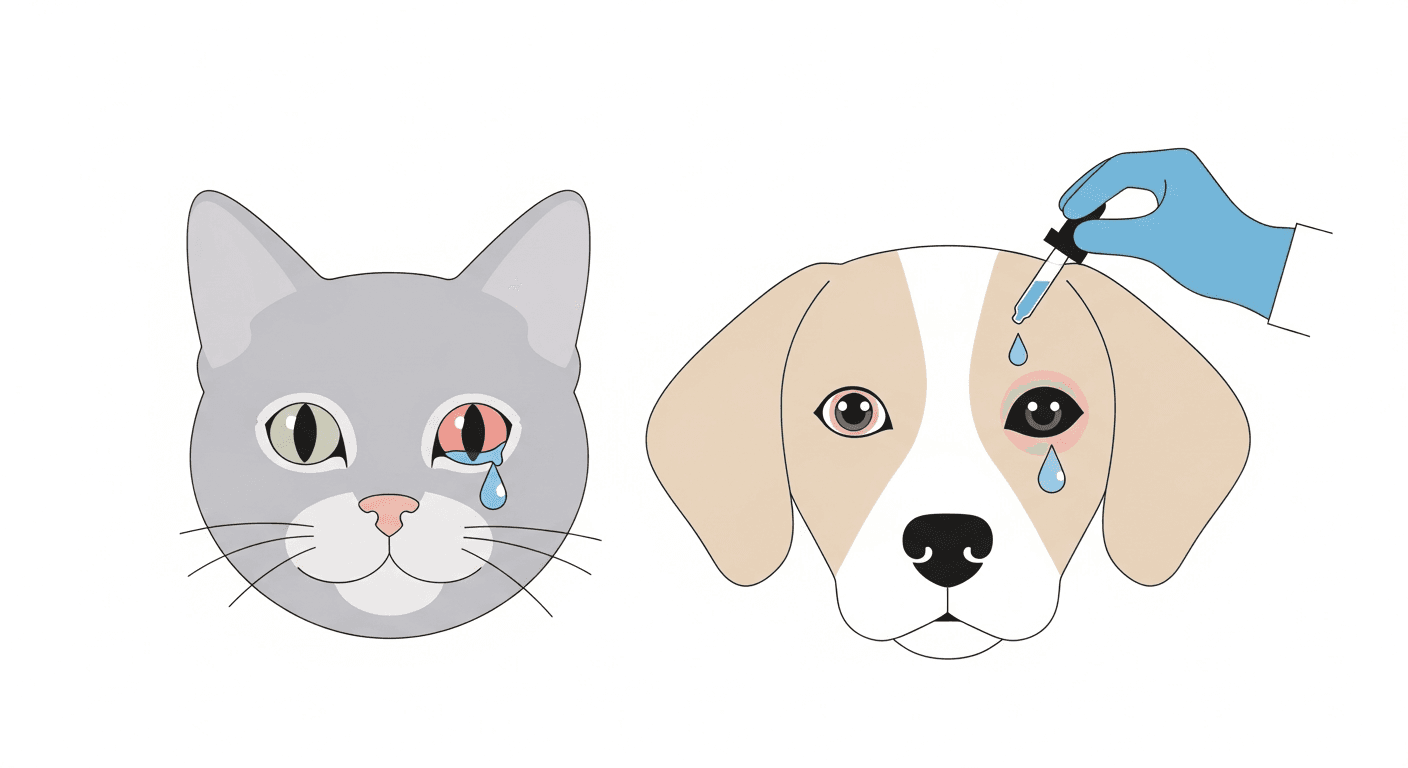
What Is Conjunctivitis in Pets?
Conjunctivitis is the inflammation of the conjunctiva — the thin, transparent mucous membrane that covers the inner surface of the eyelids and the white part (sclera) of the eye. Commonly known as "pink eye," it is one of the most frequently observed eye problems in both dogs and cats, and it can range from a mild, self-limiting irritation to a symptom of a serious underlying disease. In cats especially, conjunctivitis is frequently associated with systemic infections like feline herpesvirus (FHV-1) and feline calicivirus.
Conjunctivitis in pets is not always contagious — the infectious versus non-infectious distinction depends on the underlying cause. Infectious conjunctivitis (bacterial, viral) can spread between cats and sometimes between dogs, while allergic or irritant-induced conjunctivitis does not.
Causes and Risk Factors
Infectious causes:
- Feline herpesvirus type 1 (FHV-1) — the most common cause of conjunctivitis in cats
- Feline calicivirus
- Chlamydophila felis — a bacterial infection causing primarily conjunctivitis in cats; mildly zoonotic
- Mycoplasma spp.
- Bacterial infections (secondary to other causes) — Staphylococcus, Streptococcus
- Canine distemper virus (in dogs)
Non-infectious causes:
- Environmental irritants — dust, smoke, chemicals, air fresheners
- Allergies — environmental or food-related
- Foreign body — grass seed, dust particle
- Entropion — eyelid rolling inward causing lashes to rub the cornea
- Dry eye (keratoconjunctivitis sicca)
- Trauma
Warning Signs and Symptoms
Recognizing conjunctivitis in pets:
- Red, inflamed whites of the eyes
- Discharge — watery and clear (irritant/allergy), or yellow/green and thick (bacterial/viral)
- Squinting or keeping the eye partially closed
- Pawing or rubbing at the eye
- Swollen eyelids
- Increased tear production — staining below the eye
- Crusting around the eye edges, especially in the morning
- Third eyelid protrusion — particularly in cats with herpesvirus
When to Go to the Vet Immediately
Some eye conditions look like conjunctivitis but are more serious. Seek urgent care if:
- The eye appears cloudy, blue-white, or hazy — may indicate corneal ulcer or glaucoma
- The pet is in visible pain — squinting tightly, extreme light sensitivity
- The pupil is an unusual size or shape
- The eye appears to be protruding or sinking
- Symptoms appeared suddenly after a possible foreign body exposure or trauma
- Symptoms are worsening despite home care
Corneal ulcers can look like conjunctivitis but require immediate treatment to prevent vision loss. Do not put off eye exams. Use the TailRounds AI Triage to assess urgency and Book a vet appointment at Happy Paws promptly for any eye concern.
At-Home Care and Monitoring
While awaiting veterinary evaluation, gentle supportive care can be provided:
- Wipe away discharge gently with a clean, damp cloth — use a separate cloth for each eye
- Do not use human eye drops without veterinary guidance — many are harmful to pets
- Prevent self-trauma — use an Elizabethan collar if the pet is pawing at the eye
- Identify and remove possible irritants from the pet's environment
- Isolate cats with suspected FHV-1 or calicivirus from other cats
Veterinary treatment depends on the cause and may include topical antibiotics, antiviral eye drops (for FHV-1), L-lysine supplementation, anti-inflammatory eye drops, or addressing the underlying systemic cause. Log eye discharge color and amount, squinting frequency, and any associated signs using the TailRounds Daily Log.
Prevention and Long-Term Management
- Core FVRCP vaccination reduces severity of FHV-1 and calicivirus conjunctivitis in cats
- Stress management for FHV-1 positive cats — stress triggers viral reactivation
- L-lysine supplementation for cats with recurrent herpetic eye disease
- Regular veterinary eye exams as part of wellness visits
- Reduce allergen exposure in allergic pets
- Keep eyes clean and free of discharge to prevent secondary bacterial infections
Protect Your Pet's Vision with TailRounds
Eye problems can escalate quickly. Log daily eye observations using the TailRounds Daily Log and track changes in discharge, squinting, and clarity. Book a prompt exam at Book a vet appointment at Happy Paws. Find a Clinic Near You for ophthalmology referrals, and use the TailRounds AI Triage to assess whether your pet's eye symptoms need immediate attention.
Continue Reading
 🩺 Diseases & Symptoms
Cat Upper Respiratory Infection: Causes, Symptoms, and Care
Upper respiratory infections are common in cats and kittens. Learn how to recognize feline URI, help your cat recover at home, and prevent future infections.
 🩺 Diseases & Symptoms
Allergies in Dogs and Cats: Types, Triggers, and Effective Management
Allergies cause chronic itching, skin problems, and digestive issues in pets. Learn to identify allergy types, understand testing and treatment options, and manage symptoms long-term.
 🩺 Diseases & Symptoms
Ear Mites in Dogs and Cats: Symptoms, Treatment, and Prevention
Ear mites cause intense ear itching and dark discharge in pets. Learn to spot the signs, understand treatment options, and prevent reinfestation in multi-pet homes.
 🩺 Diseases & Symptoms
Ringworm in Dogs and Cats: The Fungal Infection That Is Not Actually a Worm
Ringworm is a common and contagious fungal infection in pets and humans. Learn to identify it, treat it effectively, and prevent spread throughout your household.