
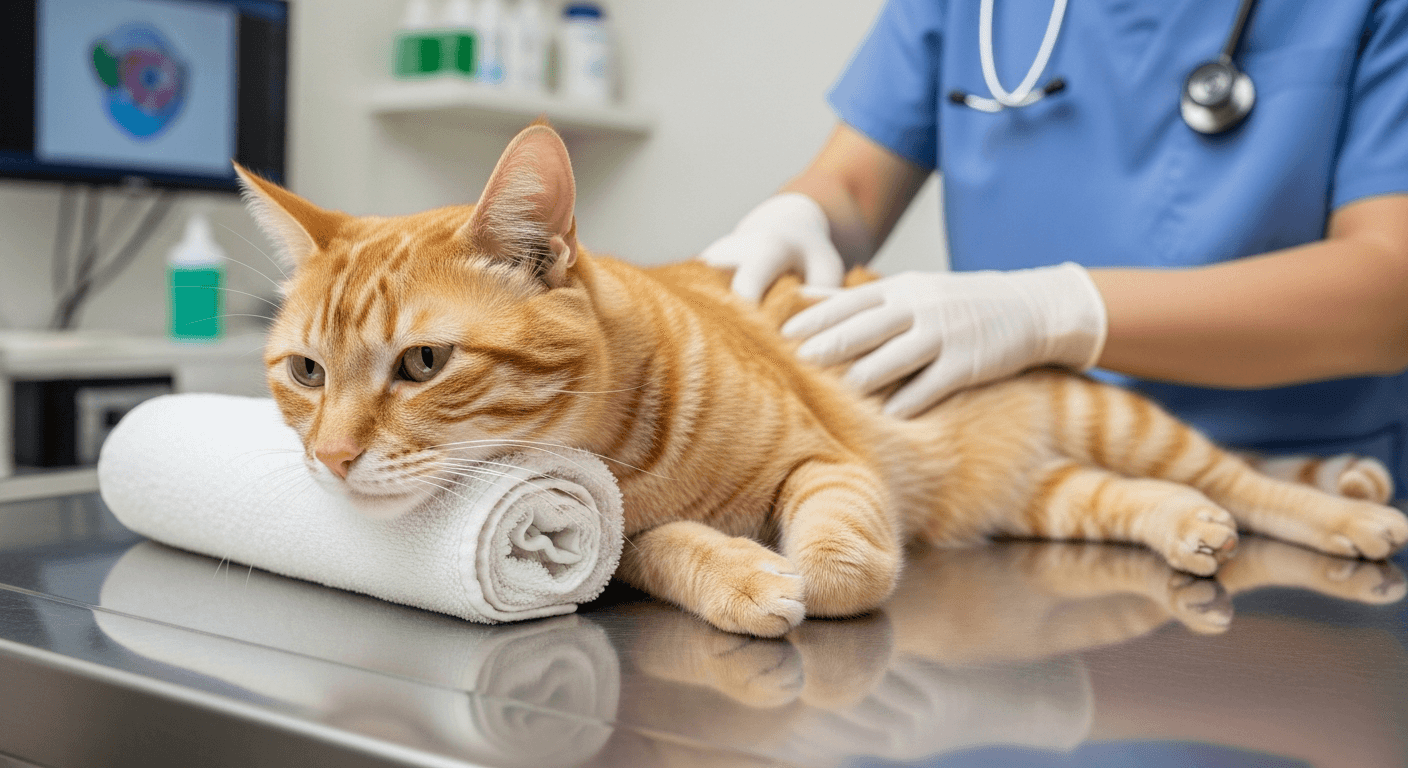
What Is White Foam Vomit in Cats?
When a cat vomits white or clear foam, the stomach and upper intestines are usually empty. The foam is a mixture of gastric secretions, saliva, and air. The most common reason is simply that the cat hasn't eaten recently — the stomach acid and secretions have nothing to work with and irritate the stomach lining, triggering a vomiting reflex. This can happen with cats that are fed once a day or whose meals are widely spaced.
However, white foam vomiting can also indicate gastritis, inflammatory bowel disease, hairballs in early stages, kidney disease, hyperthyroidism, or pancreatitis. A single episode is usually benign. Repeated episodes need investigation.
First 3 Steps to Take at Home
- Review feeding schedule: If vomiting consistently happens in the morning before breakfast, try splitting daily food into smaller, more frequent meals to keep stomach acid levels stable.
- Check for hairball signs: White foam occasionally precedes or follows hairball expulsion. If your cat has been grooming heavily, offer a hairball remedy and schedule regular brushing.
- Monitor for 24 hours: A single episode with no other symptoms in a cat that then eats normally and seems fine can be observed at home. Multiple episodes in a day require a vet call.
When to Go to the Vet Immediately
- More than 3 episodes of white foam vomiting in one day
- Cat is not eating after vomiting
- Accompanied by lethargy, weight loss, or increased thirst/urination
- Kitten vomiting white foam — dehydration risk is high
- Any blood in vomit, even a small streak
- Cat appears to be in pain or is hunched over
Follow-Up Care Checklist
- Switch to 3–4 small meals per day if once-daily feeding is the cause
- Keep a hairball prevention routine: weekly brushing minimum, monthly hairball gel
- Ensure fresh water is always available — dehydration worsens gastric irritation
- If medication is prescribed for gastritis, give at the exact times recommended to maintain stomach pH
Log Episodes with TailRounds
Recording the time of day and relation to mealtimes is key for white foam vomiting. The TailRounds Daily Log makes it easy to track meals and symptoms together, so patterns become visible fast.
Book a Vet Appointment
If your cat vomits white foam more than twice a week, it's time to investigate. Book an appointment at Happy Paws — bloodwork and an ultrasound can rule out kidney disease and IBD quickly.
Summary for Your Clinic Visit
Tell your vet how often the vomiting occurs, what time of day (especially in relation to meals), whether there is any undigested food or hair in the vomit, and any weight changes you've noticed over the past few weeks.
Continue Reading
 🐱 Cat Health
Cat Vomiting: Common Causes and What to Watch For
Understand why cats vomit, how to tell occasional vomiting from a medical emergency, and when to call your vet.
 🐱 Cat Health
Cat Hairballs: What's Normal and When to Worry
Learn how often hairballs are normal, what a hairball looks like, and when repeated hairball vomiting signals a gastrointestinal problem.
 🐱 Cat Health
Cat Not Eating: When Is It an Emergency?
Learn why your cat has stopped eating, which symptoms require immediate vet care, and how to safely encourage appetite at home.
 🐱 Cat Health
Cat Diarrhea: What to Watch For and When to Act
One loose stool vs. three days of diarrhea — know the difference, learn home care steps, and find out when diarrhea becomes an emergency in cats.