
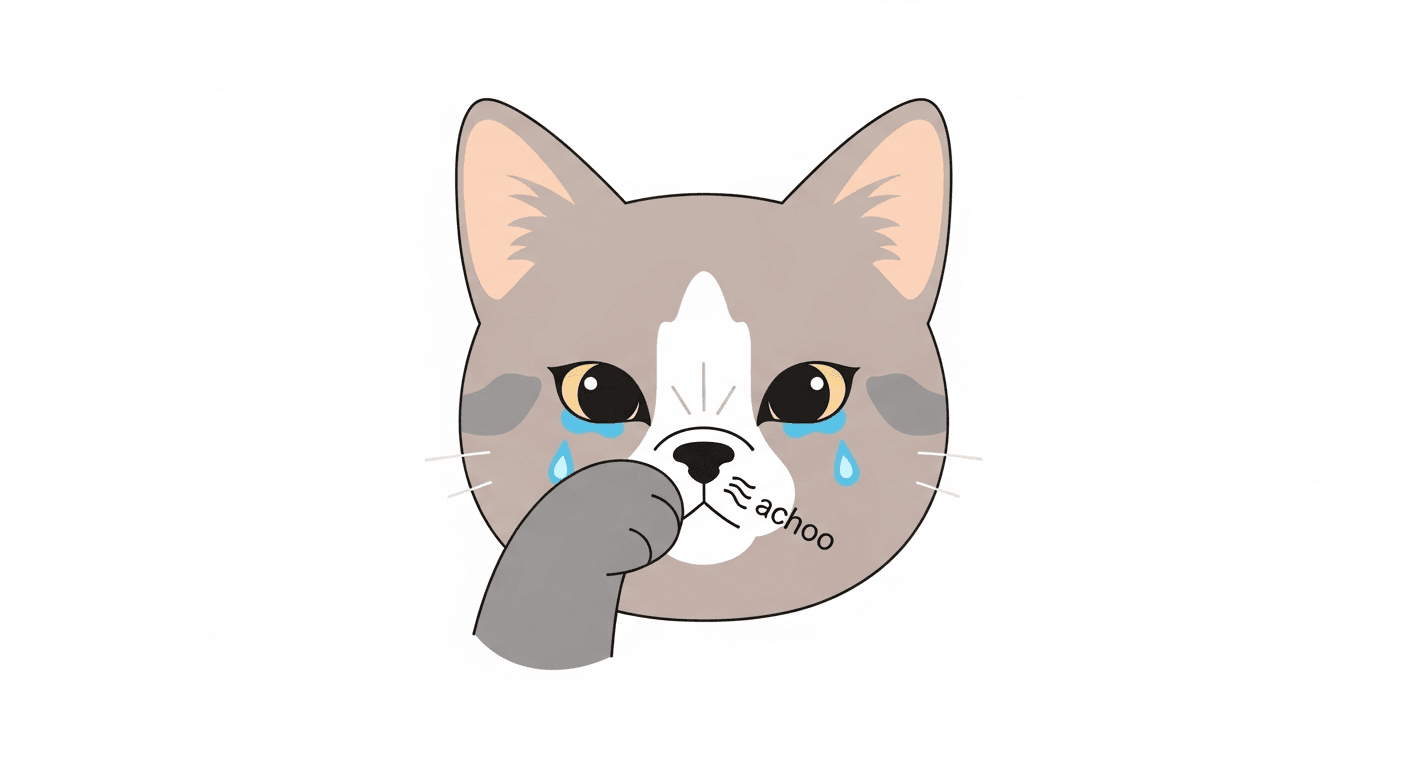
What Is a Cat Upper Respiratory Infection?
Upper respiratory infections (URIs) in cats are the feline equivalent of the common cold — highly contagious, very common, and usually caused by feline herpesvirus (FHV-1) or feline calicivirus (FCV). These viruses spread through direct contact, shared food bowls, and airborne droplets. Multi-cat households and recently adopted cats from shelters or catteries are especially vulnerable.
Symptoms include sneezing, nasal discharge (clear or colored), watery or crusty eyes, mild fever, reduced appetite, and sometimes mouth ulcers (in calicivirus cases). Most healthy adult cats recover in 1–3 weeks. Kittens and immunocompromised cats can develop severe complications including pneumonia and corneal ulcers.
First 3 Steps to Take at Home
- Keep the nasal passages clear: Use a soft, damp cotton ball to gently wipe away nasal discharge and eye crust several times a day. A stuffy nose reduces a cat's sense of smell, which suppresses appetite — clearing it helps the cat eat.
- Use a humidifier: Placing a cool-mist humidifier near the cat's resting area helps loosen congestion and makes breathing more comfortable.
- Encourage eating with warm, aromatic food: Gently warming wet food releases more scent and encourages an appetite-suppressed cat to eat. Dehydration and not eating are the biggest risks in URI.
When to Go to the Vet Immediately
- Kitten with URI symptoms — they deteriorate rapidly
- Open-mouth breathing or labored breathing
- Not eating for more than 24 hours
- Green or yellow discharge from the nose or eyes (suggests bacterial infection needing antibiotics)
- Eye kept closed, extreme tearing, or visible cloudiness on the eye surface
- Symptoms lasting more than 10 days without improvement
Follow-Up Care Checklist
- Isolate the sick cat from other cats in the household to prevent spread
- Wash hands and change clothes after handling a sick cat before touching others
- Discard shared food bowls and wash bedding in hot water
- Complete any antibiotic or antiviral course fully, even if the cat seems better early
- Note that herpesvirus is lifelong — stress can trigger flare-ups; discuss L-Lysine supplementation with your vet
Log Symptoms Daily with TailRounds
URI symptoms can change quickly in cats. Log energy level, appetite, and symptom severity each day using the TailRounds Daily Log so you and your vet can track whether the infection is improving or worsening.
Book a Vet Appointment
If your cat has colored discharge, isn't eating, or symptoms haven't improved in 3–4 days, it's time for a vet visit. Book at Happy Paws for same-week appointments.
Summary for Your Clinic Visit
Tell your vet how long symptoms have been present, whether other cats in the home are affected, the cat's vaccination status, and whether the cat has been in contact with new cats or a shelter environment recently.
Continue Reading
 🐱 Cat Health
Cat Eye Discharge: What the Color and Consistency Tell You
Clear, yellow, or green discharge from your cat's eyes each tells a different story. Learn what causes eye discharge and when it needs vet care.
 🐱 Cat Health
Kitten Vaccination Schedule: What Every New Owner Needs to Know
A complete guide to kitten vaccines — which ones are essential, when to give them, and how to protect your kitten from serious infectious diseases.
 🐱 Cat Health
Cat Breathing Fast or Labored: When It's an Emergency
Fast, shallow, or labored breathing in cats is never normal outside of extreme heat or stress. Learn what it means and when to seek emergency care.
 🐱 Cat Health
Cat Not Eating: When Is It an Emergency?
Learn why your cat has stopped eating, which symptoms require immediate vet care, and how to safely encourage appetite at home.