
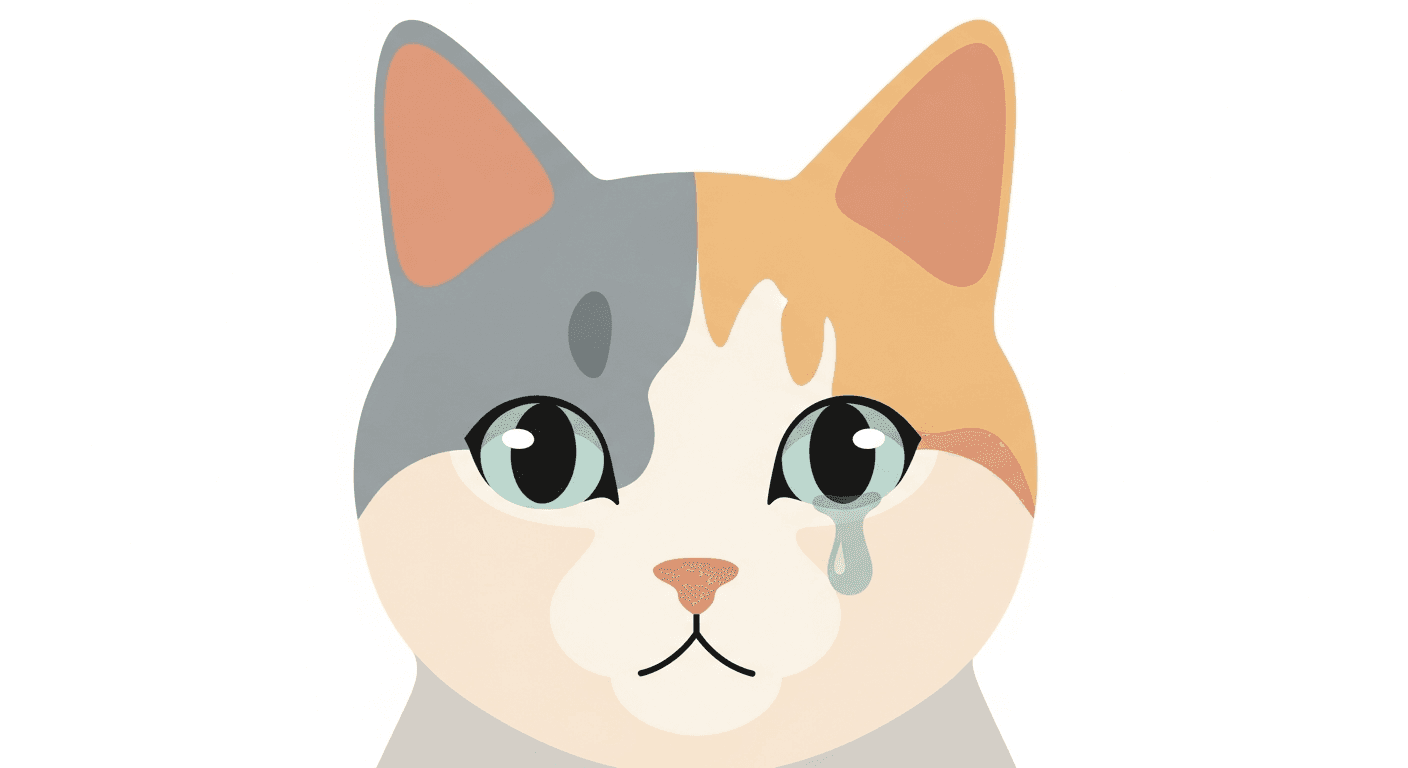
What Does Eye Discharge Mean in Cats?
A small amount of clear, watery discharge from a cat's eye — especially in the morning — can be normal. But persistent, colored, or copious discharge indicates an underlying problem. The color provides useful diagnostic information. Clear or watery discharge often results from allergies, irritation, or early viral infection. Yellow or green discharge indicates bacterial involvement or a secondary infection on top of a viral one. Brown or rust-colored crust at the inner corner is common in flat-faced breeds (Persians, Scottish Folds) due to anatomical drainage issues.
The most common cause of significant eye discharge in cats is feline herpesvirus (FHV-1), which causes conjunctivitis and in severe or recurrent cases, corneal ulcers. Chlamydophila felis is another common bacterial cause, especially in multi-cat households.
First 3 Steps to Take at Home
- Gently clean the eyes: Use a soft, damp cotton ball (different one for each eye) to wipe away discharge. Never share cloths between eyes — this can spread infection from one eye to the other.
- Assess both eyes carefully: Is one eye or both eyes affected? Is the eye kept closed or squinting? Is there cloudiness on the surface of the eye? Any changes to the eyeball itself (vs. just discharge) require same-day vet attention.
- Check for respiratory signs: Eye discharge in cats often accompanies sneezing and nasal discharge as part of an upper respiratory infection. Note whether other URI symptoms are present.
When to Go to the Vet Immediately
- Eye kept permanently shut, or squinting severely
- Cloudiness, white spot, or visible damage on the cornea (corneal ulcer)
- Eye that is bulging or sunken
- Blood visible inside the eye
- Any eye discharge in a kitten under 8 weeks (neonatal conjunctivitis can cause permanent vision loss)
Follow-Up Care Checklist
- Apply prescribed eye drops or ointment at the exact frequency specified — eye infections progress quickly
- Keep the eye area clean and check for improvement daily
- For herpesvirus, discuss L-Lysine supplementation and stress reduction as long-term management
- Recheck in 7–10 days to confirm the eye is healing
Track Eye Health with TailRounds
Photograph the affected eye at the same time each day and log discharge amount and color in the TailRounds Daily Log. Visual progression tracking is especially valuable for eye conditions.
Book a Vet Appointment
Colored eye discharge, squinting, or any change to the eye surface needs prompt assessment. Book at Happy Paws — we can examine under slit lamp and test for corneal ulcers with fluorescein stain.
Summary for Your Clinic Visit
Tell your vet how long discharge has been present, describe color and consistency, note whether one or both eyes are affected, and mention any respiratory symptoms or known vaccination history.
Continue Reading
 🐱 Cat Health
Cat Sneezing and Watery Eyes: Upper Respiratory Infection Explained
Sneezing, runny eyes, and nasal discharge in cats are classic signs of URI. Learn what causes it, how to care for your cat at home, and when to see a vet.
 🐱 Cat Health
Cat Ear Infection: Signs, Causes, and Treatment
Bacterial and yeast ear infections in cats cause pain, discharge, and head-shaking. Learn to recognize the signs and what treatment looks like.
 🐱 Cat Health
Cat Not Eating: When Is It an Emergency?
Learn why your cat has stopped eating, which symptoms require immediate vet care, and how to safely encourage appetite at home.
 🐱 Cat Health
Kitten Vaccination Schedule: What Every New Owner Needs to Know
A complete guide to kitten vaccines — which ones are essential, when to give them, and how to protect your kitten from serious infectious diseases.