
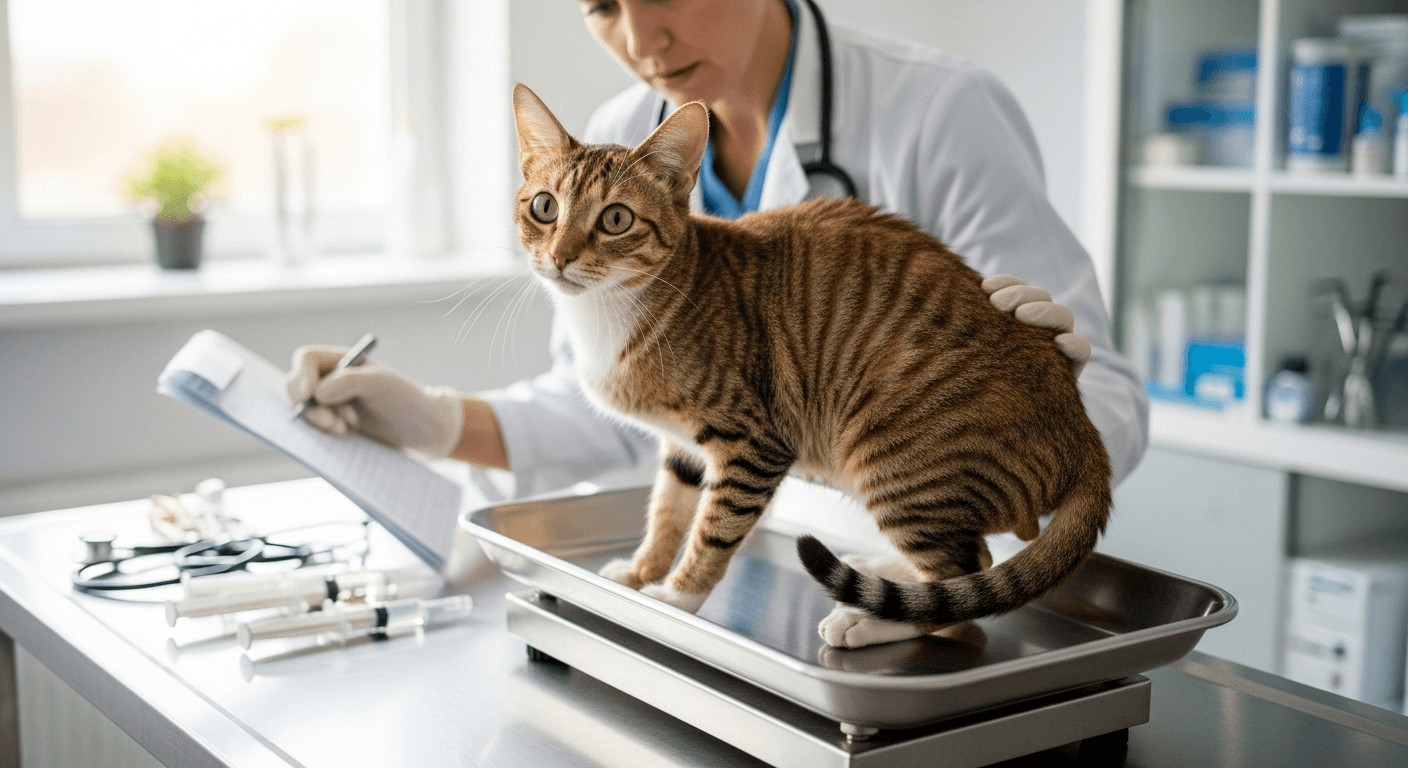
Why Would a Cat Lose Weight While Eating?
Weight loss despite a good or even increased appetite is one of the most important clinical signs in veterinary medicine. It means the body is consuming energy faster than food replaces it, or food is not being properly absorbed. The three most common causes in middle-aged and senior cats are hyperthyroidism (overactive thyroid gland), diabetes mellitus, and gastrointestinal disease including IBD (inflammatory bowel disease) and intestinal lymphoma.
Hyperthyroidism alone is responsible for the majority of unexplained weight loss in cats over age 10 and is easily treated — but requires bloodwork to diagnose.
First 3 Steps to Take at Home
- Weigh your cat weekly: Use a kitchen scale (weigh yourself holding the cat, then subtract your weight). Even a 200g loss per week in a 4 kg cat is significant — that's 5% bodyweight per month.
- Note appetite and food intake: Is the cat eating more than usual (hyperthyroidism, diabetes) or the same amount? Is it vomiting or having abnormal stools? Write this down.
- Schedule a vet appointment promptly: Weight loss that continues for 2+ weeks, or that has resulted in visible muscle loss (especially over the spine and hips), requires blood and urine tests. Do not wait for the annual wellness visit.
When to Go to the Vet Immediately
- Rapid weight loss — more than 10% bodyweight in 4 weeks
- Weight loss combined with vomiting, diarrhea, or lethargy
- Jaundice (yellow skin or eyes) alongside weight loss
- Visible muscle wasting over the back and hindquarters
Follow-Up Care Checklist
- For hyperthyroidism: take thyroid medication (methimazole) daily without missing doses; recheck thyroid levels every 3 months
- For diabetes: establish insulin and feeding schedule; monitor glucose at home if advised
- For IBD: follow elimination or hypoallergenic diet protocol strictly; note any digestive changes
- Weigh weekly and log changes
Track Weight Weekly with TailRounds
Weight trends over time tell a more useful story than any single measurement. Log weekly weights using the TailRounds Daily Log and review the trend with your vet at each visit.
Book a Vet Appointment
Weight loss despite eating is never something to wait on. Book at Happy Paws for a same-week blood panel — most diagnoses in this category are treatable when found early.
Summary for Your Clinic Visit
Bring your weight log, describe appetite and food intake changes, note any vomiting, diarrhea, or increased thirst/urination, and provide the cat's age and medical history.
Continue Reading
 ✂️ Cat Care
Cat Hyperthyroidism: Signs, Treatment Options, and Monitoring
Hyperthyroidism is the most common hormonal disorder in older cats. Learn the signs, understand the four treatment options, and how to monitor your cat.
 ✂️ Cat Care
Feline Diabetes: Symptoms, Diagnosis, and Daily Management
Diabetes in cats is manageable and even reversible with early treatment. Learn the symptoms, what diagnosis involves, and how daily care looks.
 🐱 Cat Health
Cat Drinking More Water Than Usual: Causes and What to Do
Increased thirst in cats — called polydipsia — is a key symptom of kidney disease, diabetes, and hyperthyroidism. Here's how to recognize it and act.
 ✂️ Cat Care
Early Kidney Disease in Cats: Signs, Diagnosis, and Management
Chronic kidney disease is the leading cause of death in cats over 12. Learn the earliest signs, how it's diagnosed, and how to slow progression significantly.