
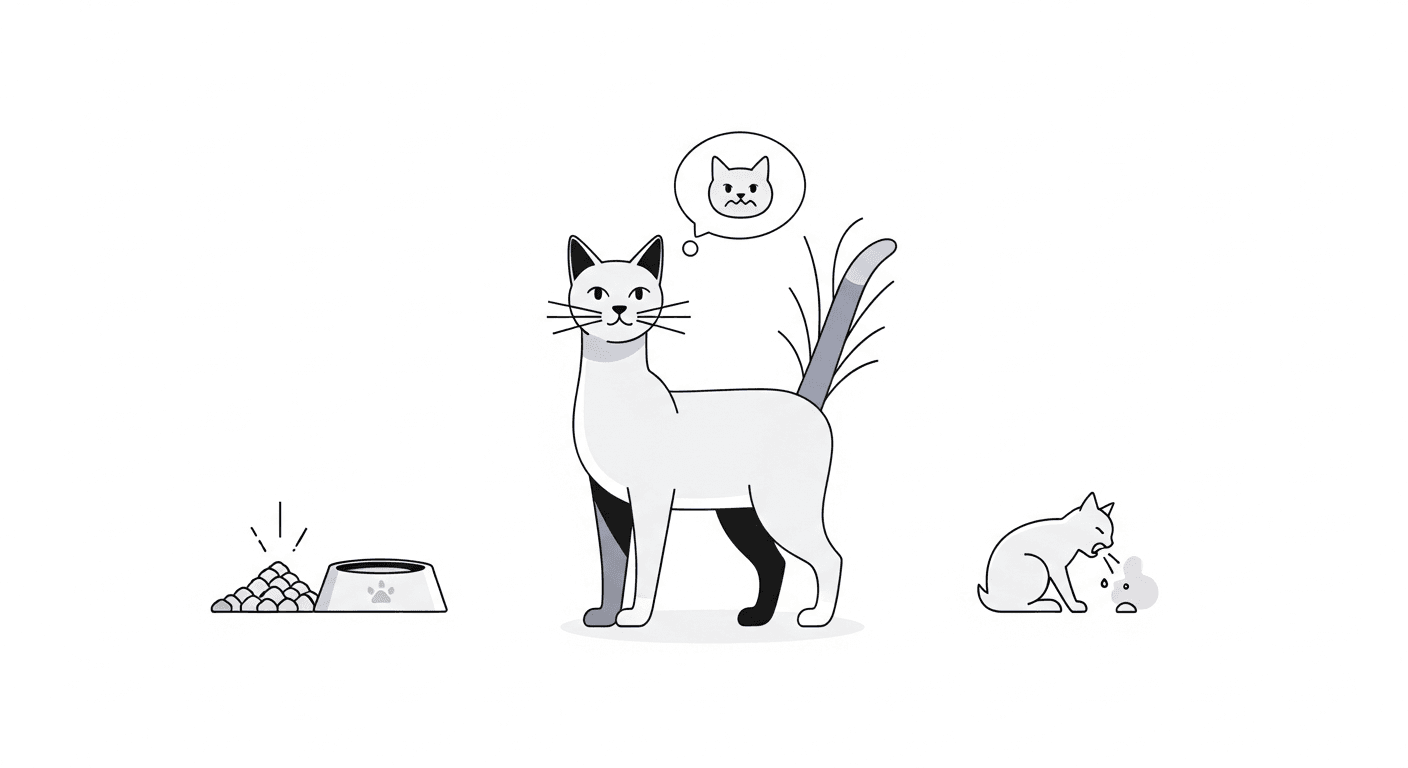
What Is Feline Hyperthyroidism?
Hyperthyroidism is caused by an overactive thyroid gland, usually due to a benign (non-cancerous) adenoma. The thyroid produces excessive T4 hormone, which accelerates the cat's entire metabolism. It's extremely common — affecting an estimated 10% of cats over 10 years old. Because it develops gradually and many symptoms can be attributed to "aging," it's frequently missed until quite advanced. Bloodwork is the only reliable way to diagnose it — a simple T4 level measurement.
Classic Signs of Hyperthyroidism in Cats
- Weight loss despite increased appetite (often ravenous appetite)
- Increased vocalization, especially at night
- Restlessness, hyperactivity, or increased irritability
- Increased thirst and urination
- Poor, unkempt coat
- Vomiting and occasional diarrhea
- In severe cases: rapid or irregular heart rate, high blood pressure
First 3 Steps When Hyperthyroidism Is Suspected
- Book a senior wellness exam immediately: A blood test that includes a T4 level will diagnose hyperthyroidism. This is a simple, inexpensive addition to a standard blood panel.
- Understand the four treatment options: Daily oral medication (methimazole/carbimazole) — controls but doesn't cure; Topical ear gel (transdermal methimazole) — easier for cats that resist pilling; Radioiodine therapy (I-131) — the gold-standard cure, single treatment, 95% cure rate; Surgical thyroidectomy — effective but less common. Discuss which is best for your cat's situation.
- Check kidney values before starting treatment: Hyperthyroidism can mask underlying kidney disease by artificially increasing blood flow to the kidneys. Treating the thyroid can unmask CKD. Your vet will want to reassess kidney function 4–6 weeks after starting treatment.
When to Go to the Vet Immediately
- Cat seems to be in heart failure (labored breathing, open mouth breathing)
- Sudden hypertensive crisis: sudden blindness, neurological signs, collapse
- Thyroid storm: acute severe worsening of symptoms with extreme restlessness, high fever
Follow-Up Care Checklist
- For methimazole: recheck T4 every 4–6 weeks initially until stable; then every 3–6 months
- Check bloodwork for methimazole side effects (liver values, white blood cell count) at 3 months
- Monitor blood pressure at each recheck — hypertension often improves with thyroid treatment but sometimes worsens
- Track weight weekly — response to treatment is confirmed by weight stabilization and then gradual regain
Track Hyperthyroidism Management with TailRounds
Log daily medication administration, appetite, weight, and behavior changes in the TailRounds Daily Log. This daily record guides dose adjustments and helps confirm treatment success.
Book a Vet Appointment
Senior cat losing weight despite eating well? Book at Happy Paws — a T4 blood test can be added to any senior wellness visit for minimal additional cost.
Summary for Your Clinic Visit
Bring your weight log, describe all symptoms and when they started, note the current diet, and bring any prior bloodwork results for comparison.
Continue Reading
 🐱 Cat Health
Cat Losing Weight But Still Eating: What's Going On?
When a cat loses weight despite eating well, something is preventing nutrient absorption or burning energy faster than food can supply it. Learn what to look for.
 🐱 Cat Health
Cat Drinking More Water Than Usual: Causes and What to Do
Increased thirst in cats — called polydipsia — is a key symptom of kidney disease, diabetes, and hyperthyroidism. Here's how to recognize it and act.
 ✂️ Cat Care
Senior Cat Care Guide: What Changes After Age 10
Cats are considered senior at age 10 and geriatric at 15. Learn how health needs change, which conditions to watch for, and how to keep senior cats comfortable.
 ✂️ Cat Care
Cat Meowing or Yowling at Night: Causes and Solutions
Nighttime yowling is one of the most disruptive feline behaviors. Learn why it happens and what can be done about it — medically and behaviorally.