
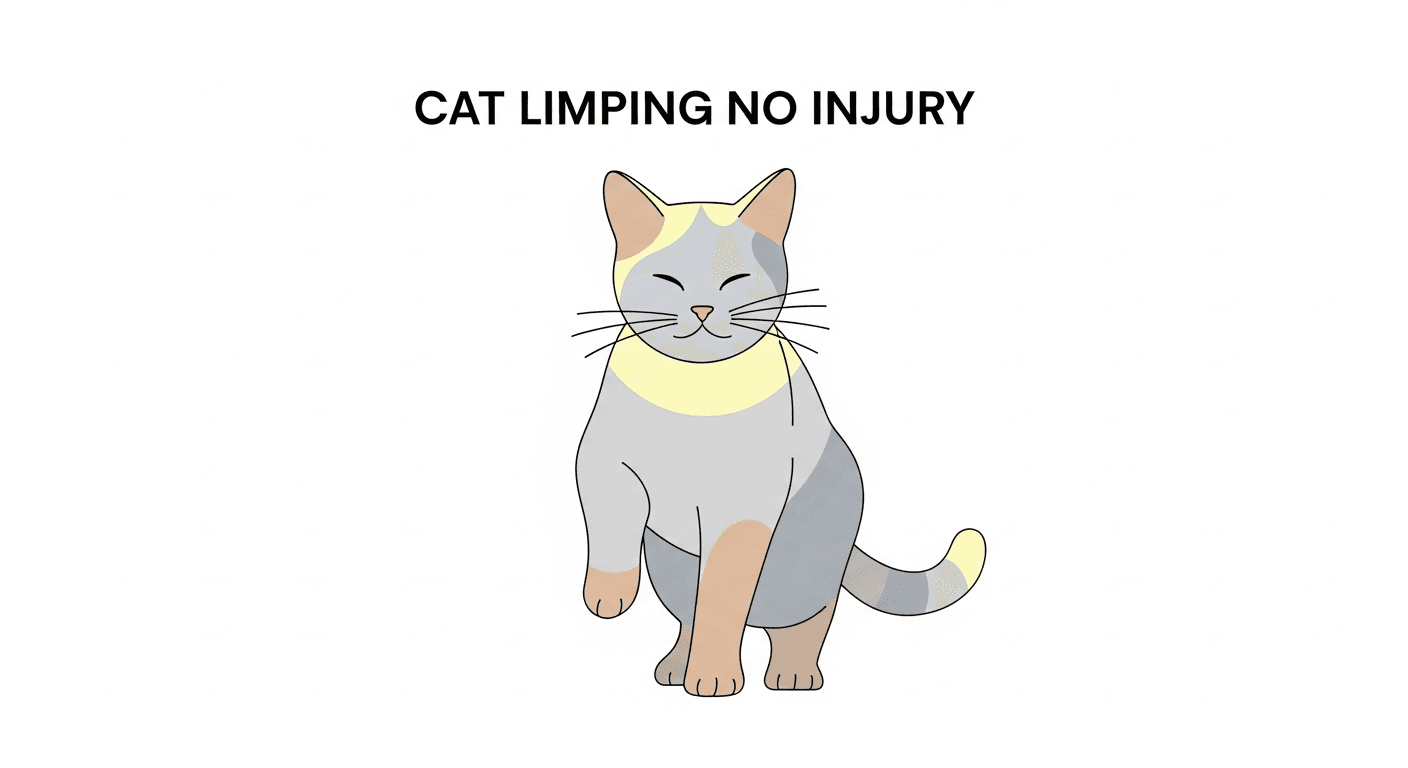
What Causes Limping in Cats Without Obvious Injury?
When a cat limps and there's no visible cut, swelling, or trauma, the cause may be musculoskeletal, neurological, or systemic. The most common non-traumatic causes include arthritis (extremely common in cats over 10 years old — studies suggest over 90% of senior cats have radiographic evidence), bone or joint infections (osteomyelitis), fractures from falls that weren't witnessed, ligament injuries (cats can have cruciate ruptures like dogs), feline infectious peritonitis affecting joints, cancer of the bone, and tick-borne diseases causing polyarthritis.
Cats are stoic — a cat that is visibly limping is usually experiencing significant pain.
First 3 Steps to Take at Home
- Examine the foot and leg carefully: Look between the toes for thorns, glass, or foreign objects. Check for swelling, heat, cuts, or misalignment. Gently feel along the leg for pain responses, but don't force movement if the cat resists.
- Restrict activity: Confine the cat to one room and prevent jumping for 24 hours. Minor muscle strains often improve with rest. If limping persists or worsens after rest, vet examination is necessary.
- Do not give pain medication without vet guidance: Paracetamol (acetaminophen) is fatal to cats. NSAIDs designed for humans are highly toxic to cats. Only veterinary-prescribed analgesics are safe.
When to Go to the Vet Immediately
- Cat is non-weight-bearing (not putting any weight on the limb)
- Visible bone deformity or unusual angle of the limb
- Limping in a hind leg with cold, blue, or white toes (aortic thromboembolism — a cardiac emergency)
- Sudden paralysis or dragging of hindlimbs
- Limping with fever, lethargy, or not eating
Follow-Up Care Checklist
- For arthritis: discuss pain management (meloxicam for cats, gabapentin, or joint supplements) with your vet
- Make the home more accessible — low litter boxes, ramps instead of stairs, heated bedding
- Keep the cat lean — every extra kilogram puts significant stress on arthritic joints
- Schedule 6-monthly rechecks for cats on long-term pain medication (bloodwork to monitor kidney and liver)
Track Mobility with TailRounds
Log daily mobility observations — which leg, how pronounced, whether it's better or worse after rest — in the TailRounds Daily Log. Mobility trends guide arthritis management decisions.
Book a Vet Appointment
Limping that lasts more than 24 hours, or any limping with non-weight-bearing, needs X-rays. Book at Happy Paws for a full orthopedic exam.
Summary for Your Clinic Visit
Tell your vet which leg, how long it's been limping, whether onset was sudden or gradual, whether you witnessed any fall or trauma, and whether the cat has responded to restricted activity.
Continue Reading
 🐱 Cat Health
Cat Limping After Jumping or Landing: What Could It Be?
A cat that limps after a jump or landing may have sprained a joint, fractured a toe, or injured a ligament. Learn first aid steps and when imaging is needed.
 🐱 Cat Health
Is Your Cat Too Tired? Signs of Lethargy vs Normal Rest
Cats sleep up to 16 hours a day — so how do you know when tiredness is actually lethargy? Learn the signs that distinguish normal rest from illness.
 🐱 Cat Health
Cat Hiding More Than Usual: When Is It a Health Warning?
Cats hide when they're scared — but also when they're sick or in pain. Learn how to tell normal hiding from a health red flag.
 ✂️ Cat Care
Senior Cat Care Guide: What Changes After Age 10
Cats are considered senior at age 10 and geriatric at 15. Learn how health needs change, which conditions to watch for, and how to keep senior cats comfortable.