
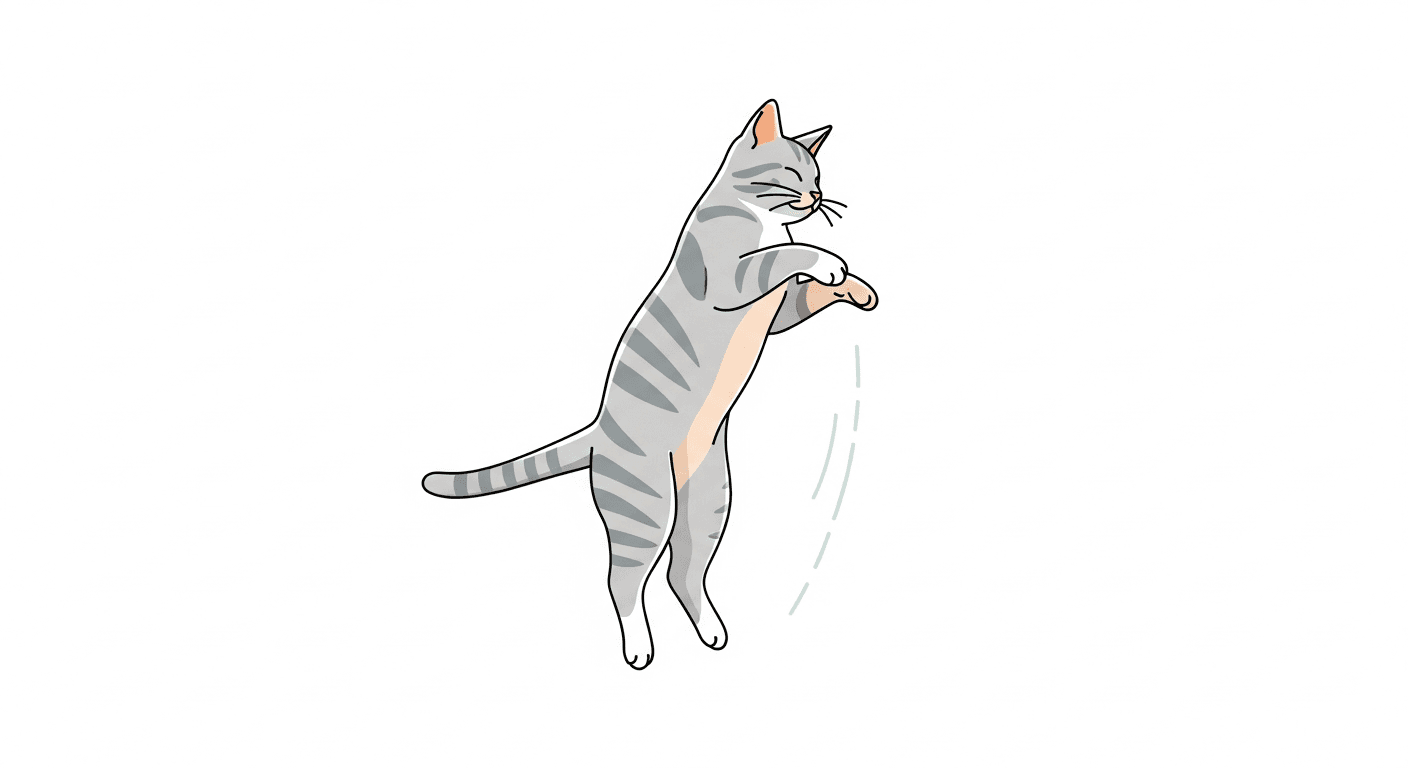
What Can Cause Limping After a Jump?
Cats are remarkable jumpers, but their musculoskeletal system isn't immune to injury. A misjudged landing, a jump onto a slippery surface, or a fall from a height can cause sprains, muscle tears, dislocated toes, stress fractures of the small bones in the foot, or even fractures of the larger leg bones. Cats instinctively land on their feet — but "high-rise syndrome" (falls from significant heights) can cause chest injuries and fractures even when the cat walks away seemingly uninjured.
First 3 Steps to Take at Home
- Observe for 15–20 minutes without stress: A cat that takes a slightly awkward landing may simply need a few minutes for a minor strain to settle. Watch whether the limping is improving, staying the same, or worsening over 20 minutes.
- Examine the foot and leg gently: Look for swelling, heat, cuts between toes, or broken nails (a common source of acute limping). Press gently along the foot and leg to locate the pain point.
- Restrict movement for 24 hours: Confine to a small, comfortable space. Prevent further jumping. If limping has not clearly improved in 24 hours, see a vet.
When to Go to the Vet Immediately
- Non-weight-bearing (holding leg completely up)
- Visible deformity, misalignment, or bone protrusion
- Fall from more than 1.5 meters — even without obvious injury, chest and abdominal injury is possible
- Cat is in severe distress, vocalizing, or hiding immediately after a fall
- Both hind legs affected after a fall — aortic thromboembolism can be triggered by stress
Follow-Up Care Checklist
- Complete prescribed rest period even if the cat seems better — soft tissue injuries need time to heal even without limping
- Use cat stairs or ramps on furniture to reduce future high-impact landings
- For fractures: follow the post-casting or post-surgical care protocol precisely
Log Recovery with TailRounds
Track which leg is affected, limping severity (0–10), and activity level each day during recovery using the TailRounds Daily Log. This confirms the cat is healing on schedule.
Book a Vet Appointment
Any limping that persists beyond 24 hours after a fall, or any non-weight-bearing, needs X-rays. Book at Happy Paws for same-day imaging.
Summary for Your Clinic Visit
Describe the fall or jump (height, surface, what you witnessed), which leg, how long limping has persisted, and any other symptoms observed since the incident.
Continue Reading
 🐱 Cat Health
Cat Limping with No Obvious Injury: Possible Causes
A cat that limps without a visible wound might have arthritis, a pulled muscle, or a bone infection. Learn how to assess limping and when to seek help.
 🐱 Cat Health
Cat Hiding More Than Usual: When Is It a Health Warning?
Cats hide when they're scared — but also when they're sick or in pain. Learn how to tell normal hiding from a health red flag.
 🐱 Cat Health
Is Your Cat Too Tired? Signs of Lethargy vs Normal Rest
Cats sleep up to 16 hours a day — so how do you know when tiredness is actually lethargy? Learn the signs that distinguish normal rest from illness.
 ✂️ Cat Care
Cat Wound Care at Home: What You Can Treat and What Needs a Vet
Minor cuts can be managed at home, but cat bite wounds, deep lacerations, and puncture wounds require veterinary care. Learn the difference.