
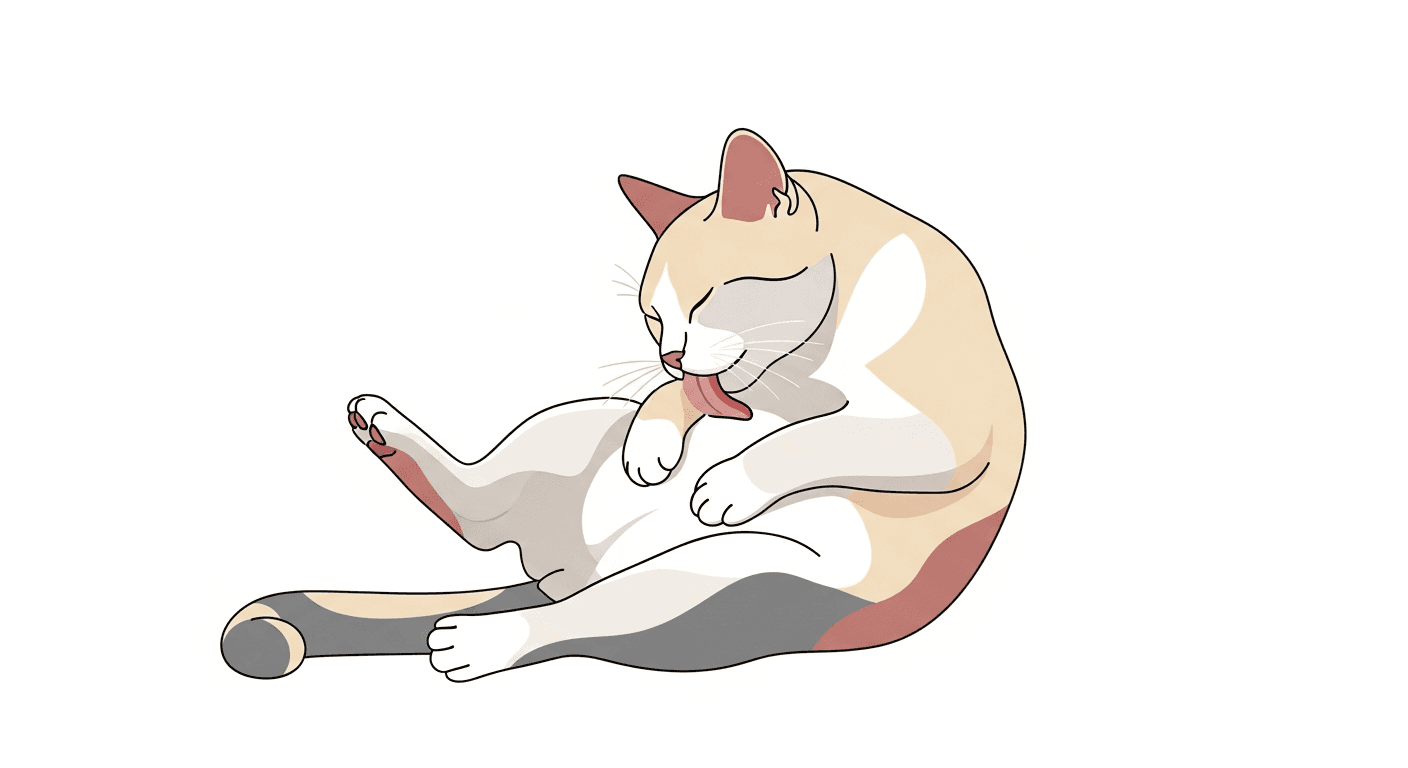
What Causes Cats to Over-Groom?
Cats groom naturally, but over-grooming — licking to the point of hair loss, skin redness, or sores — is a sign that something is wrong. The pattern of hair loss is often diagnostically useful: symmetrical hair loss along the belly and inner thighs is classic for feline psychogenic alopecia (stress-driven compulsive licking), while patchy or asymmetrical loss often points to parasites (fleas, mites) or allergic skin disease.
The most common causes are: flea allergy dermatitis (even one flea bite triggers intense itching in allergic cats), food allergy, environmental allergy (pollen, dust mites), skin infections, and stress/anxiety. Pain from internal conditions (cystitis, arthritis) can also cause localized licking over the affected area.
First 3 Steps to Take at Home
- Check for fleas: Use a fine-toothed comb and look for flea dirt (small black specks that turn red when wet on a damp tissue). Even indoor cats can get fleas. A single flea in a highly allergic cat is enough to trigger weeks of itching.
- Review the diet: Food allergies most commonly develop to proteins the cat has eaten for a long time — often chicken or fish. Note the current diet and any treats, and ask your vet about a hypoallergenic food trial.
- Identify household stressors: Have there been recent changes? New pets, new people, moved furniture, building work? Stress-related over-grooming often starts within a few weeks of a change.
When to Go to the Vet Immediately
- Open sores or wounds from licking
- Apparent skin infection: redness, discharge, odor, or crusting
- Hair loss that is rapidly spreading or is accompanied by lethargy
- Cat is licking a specific body part obsessively — consider internal pain (cystitis, arthritis, anal gland issue)
Follow-Up Care Checklist
- Apply year-round flea prevention (topical or collar) even for indoor cats
- If food allergy is suspected, complete the full 8–12 week hydrolyzed diet trial without any treats or table food
- For stress-related cases, enrich the environment: vertical space, hiding spots, separate feeding areas for multi-cat homes
- Do not use an e-collar long-term as the only solution — treat the root cause
Track Grooming and Skin Changes with TailRounds
Log grooming intensity and any new hair loss areas daily using the TailRounds Daily Log. Photos with timestamps attached to log entries give your vet a clear picture of progression.
Book a Vet Appointment
Over-grooming with hair loss or skin damage needs a dermatological workup. Book at Happy Paws for a skin exam, parasite assessment, and allergy consultation.
Summary for Your Clinic Visit
Bring a record of the diet including all treats and toppers, describe where hair loss is occurring, note when it started and any triggers, and bring a photo showing the worst affected areas.
Continue Reading
 🐱 Cat Health
Itchy Cat: Allergies, Parasites, and Skin Disease Explained
An itchy cat scratches, bites, and over-grooms itself. Discover the most common causes of feline pruritus and how each is treated.
 🐱 Cat Health
Cat Dandruff: Why It Happens and How to Help
White flakes on your cat's coat might be dandruff — or something more. Learn the causes of feline seborrhea and how to improve your cat's skin health.
 🐱 Cat Health
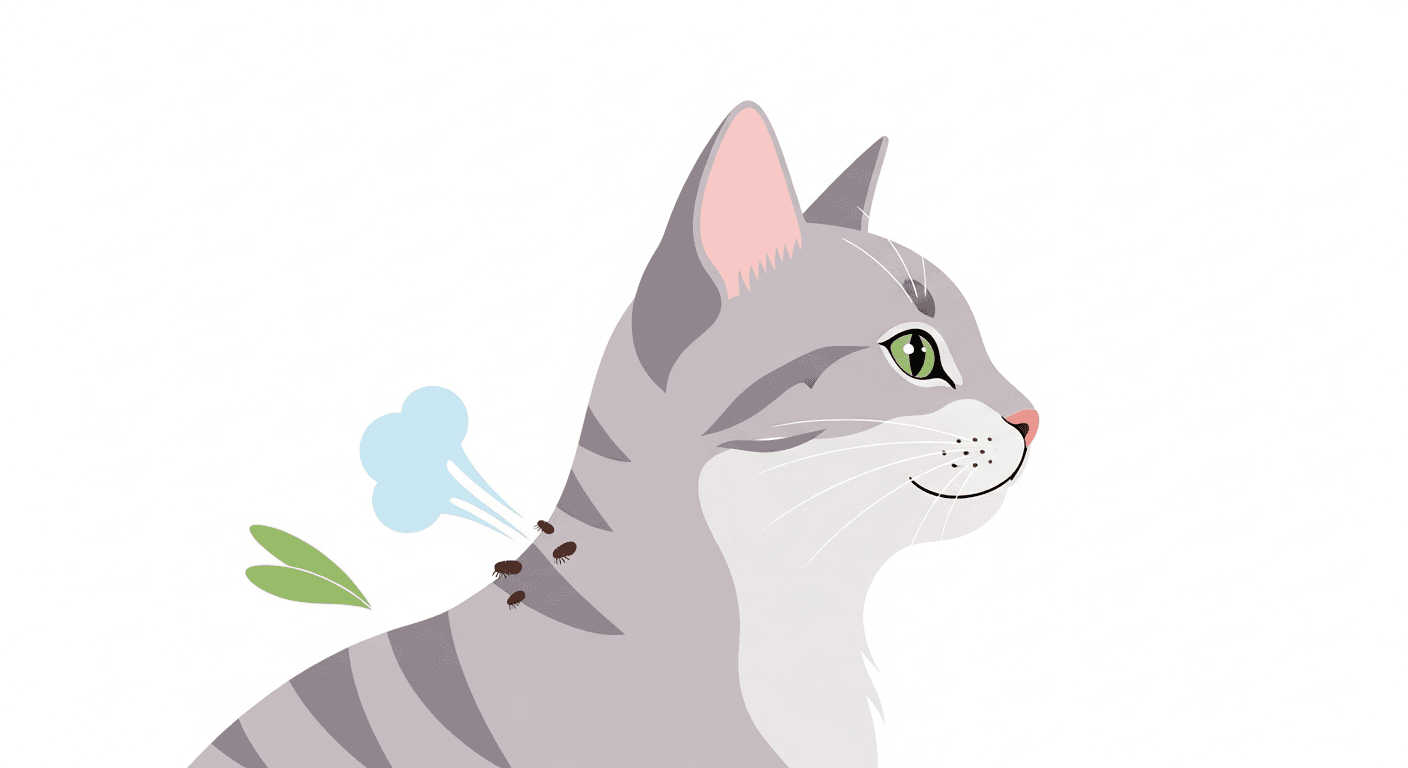
Cat Flea Treatment: What Actually Works and What Doesn't
Not all flea treatments are equal — some are ineffective, others unsafe for cats. Learn which products work, how to treat the environment, and how to prevent reinfestation.
 ✂️ Cat Care
Cat Stress After Moving: How to Help Your Cat Adjust
Moving is deeply stressful for cats. Learn how to set up a new home, reduce anxiety, and recognize when stress is causing health problems.