
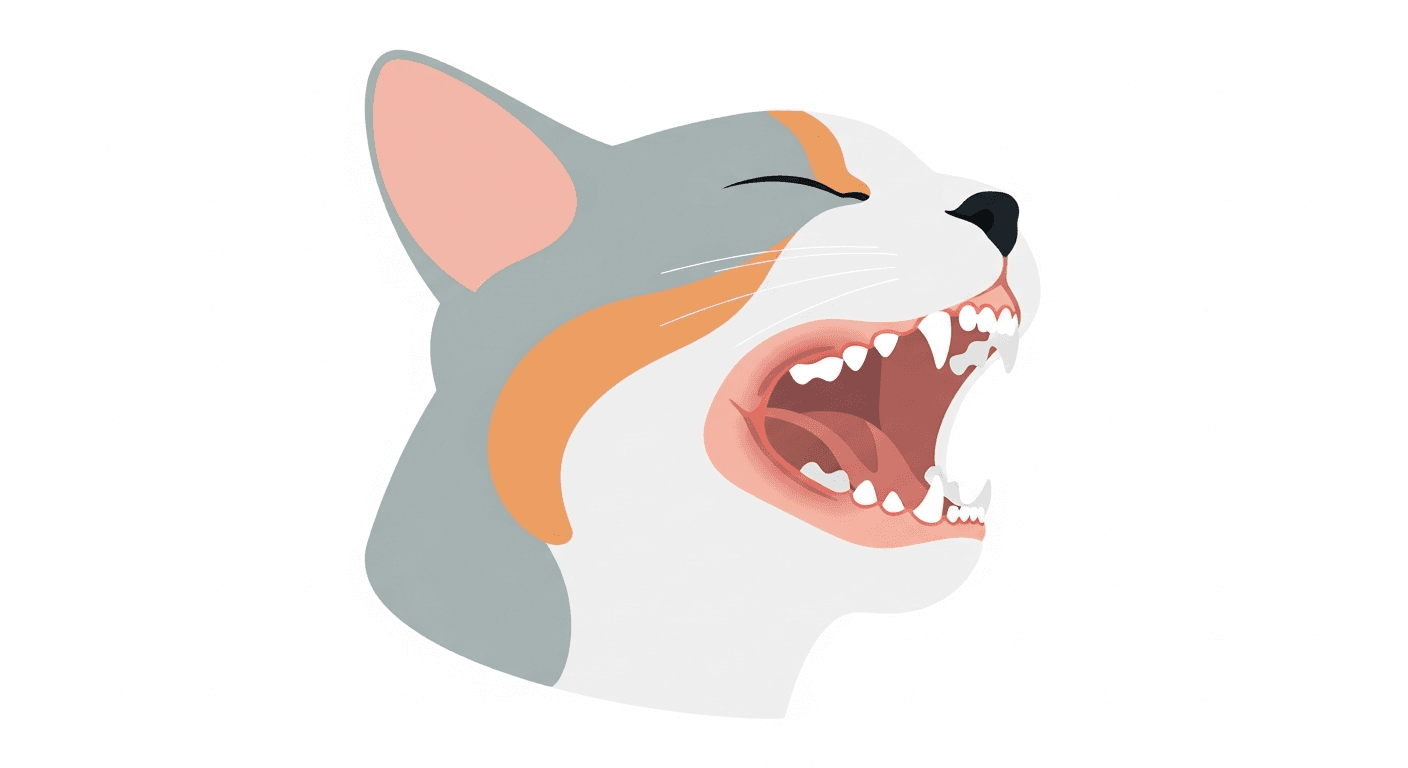
What Is Cat Periodontal Disease?
Periodontal disease is inflammation and infection of the structures surrounding the teeth — gums, periodontal ligament, and bone. It begins as gingivitis (reversible gum inflammation) and progresses to periodontitis (irreversible bone loss and tooth damage). Studies consistently show that over 70% of cats over age 3 have some degree of dental disease, yet most owners don't realize it until the disease is advanced because cats hide oral pain exceptionally well.
The progression: plaque (bacterial film) → tartar (calcified plaque) → gingivitis (red, swollen gums) → periodontitis (bone destruction, tooth root exposure, pocket formation) → tooth loss, abscess, and systemic spread of bacteria to the kidneys, heart, and liver.
First 3 Steps to Take at Home
- Start tooth brushing today: Even stage 1 gingivitis can be reversed with consistent daily brushing using feline toothpaste (enzymatic formulas work even without brushing contact). Start slowly — let the cat lick the paste first, then introduce the brush.
- Offer dental-supportive foods and treats: VOHC (Veterinary Oral Health Council) certified dental chews and prescription dental diets mechanically remove plaque. These supplement — but don't replace — brushing.
- Schedule a professional dental evaluation: Only a vet can assess below the gum line. Annual dental exams starting at age 1–2 allow early intervention before bone loss occurs.
When to Go to the Vet Immediately
- Visible red, bleeding, or severely swollen gums
- Cat dropping food, chewing on one side, or refusing hard food
- Facial swelling — possible abscess
- Significant bad breath that has changed recently
Follow-Up Care Checklist
- Post-professional cleaning, home brushing is essential to maintain results
- Extracted teeth heal quickly in cats — most cats eat normally within days of extractions
- Recheck dental health annually or every 6 months for cats prone to rapid tartar buildup
- Senior cats with advanced disease may need more frequent professional cleanings
Track Dental Care with TailRounds
Log every brushing session in the TailRounds Daily Log. This record confirms compliance and helps your vet evaluate whether the home care is sufficient between professional cleanings.
Book a Vet Appointment
Haven't had your cat's teeth checked recently? Book a dental assessment at Happy Paws — a 15-minute oral exam can catch disease long before it becomes painful or expensive to treat.
Summary for Your Clinic Visit
Bring your dental care log, describe any changes in eating or mouth odor, note the cat's age and when the last professional cleaning was performed, and mention any swelling or pain you've observed.
Continue Reading
 🐱 Cat Health
Cat Bad Breath: Is It Dental Disease or Something More Serious?
Bad breath in cats isn't just unpleasant — it's often a sign of dental disease, kidney failure, or diabetes. Learn how to tell the difference.
 🐱 Cat Health
Cat Mouth Odor: Beyond Bad Breath — Stomatitis and Oral Tumors
Extremely foul odors from a cat's mouth can indicate stomatitis, tooth root abscesses, or oral tumors. Learn how to distinguish them and what treatment involves.
 🐱 Cat Health
Cat Not Eating: When Is It an Emergency?
Learn why your cat has stopped eating, which symptoms require immediate vet care, and how to safely encourage appetite at home.
 🐱 Cat Health
Cat Drooling: When Is It a Problem?
Some cats drool contentedly, but excessive or sudden drooling can signal oral pain, nausea, neurological issues, or toxin exposure.