
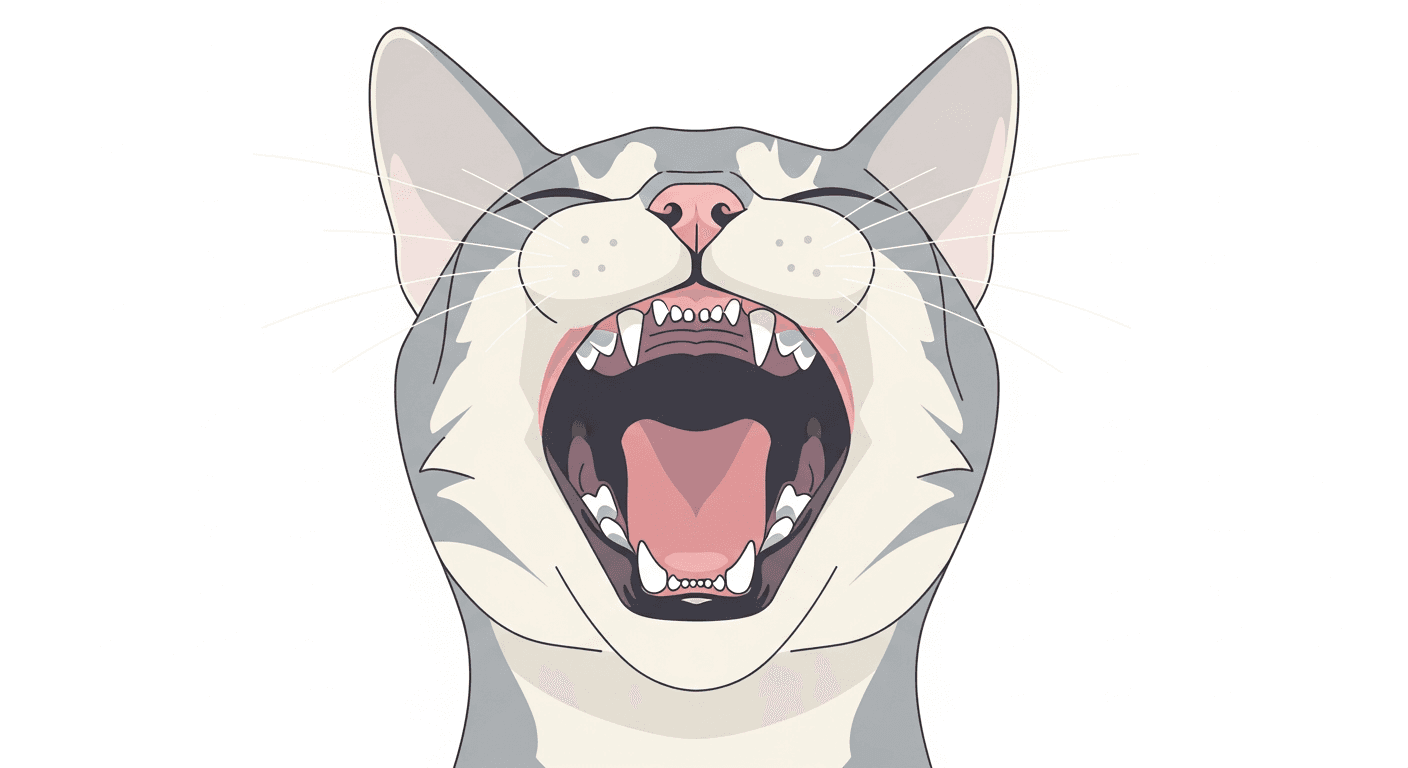
What Causes Bad Breath in Cats?
A mild "food smell" after eating is normal. But persistent bad breath — especially when it has a specific character — is a clinical symptom. The most common cause is periodontal disease: bacteria accumulate in plaque and tartar on the teeth, producing sulfur compounds and causing infection in the gums and tooth roots. By age 3, over 70% of cats have some degree of dental disease, most owners are unaware of until a vet points it out.
Beyond dental disease, the character of bad breath can guide diagnosis. A sweet or fruity smell suggests uncontrolled diabetes. A urine-like or "fishy ammonia" odor can indicate kidney failure. A foul, fetid smell often accompanies oral tumors or stomatitis (severe immune-mediated mouth inflammation).
First 3 Steps to Take at Home
- Examine the mouth carefully: With good lighting, look for red, swollen, or receding gums; brown/yellow tartar buildup; broken teeth; or mouth sores. Any of these alongside bad breath warrants a vet visit.
- Assess other symptoms: Is the cat drinking more water (diabetes, kidney disease)? Losing weight? Drooling? Dropping food while eating? These additional signs help determine urgency.
- Do not attempt to scrape tartar at home: Human dental tools can crack or fracture feline teeth. Professional dental cleaning under anesthesia is the only safe and effective approach for tartar removal.
When to Go to the Vet Immediately
- Breath smells like ammonia or urine — this can indicate kidney failure, which needs urgent bloodwork
- Sweet, fruity breath combined with increased thirst and urination — possible uncontrolled diabetes
- Cat is drooling excessively, pawing at the mouth, or not eating due to mouth pain
- Visible mouth sores, swelling, or exposed tooth roots
Follow-Up Care Checklist
- Start a tooth-brushing routine — daily is ideal, a few times per week still makes a significant difference
- Use only veterinary-formulated toothpaste — human toothpaste contains xylitol, which is toxic to cats
- Offer dental chews or dental diet food as a supplement (not a replacement) to brushing
- Schedule professional dental cleanings as your vet recommends — usually annually for cats prone to tartar
Track Dental Health with TailRounds
Log your cat's tooth-brushing dates and any mouth-related symptoms using the TailRounds Daily Log. Consistent records make it easy to demonstrate compliance to your vet and catch deterioration early.
Book a Vet Appointment
Bad breath is almost never just cosmetic in cats. Book a dental exam at Happy Paws — our team provides full oral assessments and professional cleanings under anesthesia when needed.
Summary for Your Clinic Visit
Describe the smell (sweet, ammonia, fetid), how long you've noticed it, whether the cat is eating and drinking normally, whether you've seen any mouth changes, and the last time a professional dental cleaning was performed.
Continue Reading
 🐱 Cat Health
Cat Gum Disease: Stages, Signs, and What to Expect at the Vet
Periodontal disease is the most common disease in adult cats. Learn to recognize early signs, understand treatment stages, and prevent progression.
 🐱 Cat Health
Cat Mouth Odor: Beyond Bad Breath — Stomatitis and Oral Tumors
Extremely foul odors from a cat's mouth can indicate stomatitis, tooth root abscesses, or oral tumors. Learn how to distinguish them and what treatment involves.
 🐱 Cat Health
Cat Not Eating: When Is It an Emergency?
Learn why your cat has stopped eating, which symptoms require immediate vet care, and how to safely encourage appetite at home.
 🐱 Cat Health
Cat Drinking More Water Than Usual: Causes and What to Do
Increased thirst in cats — called polydipsia — is a key symptom of kidney disease, diabetes, and hyperthyroidism. Here's how to recognize it and act.