
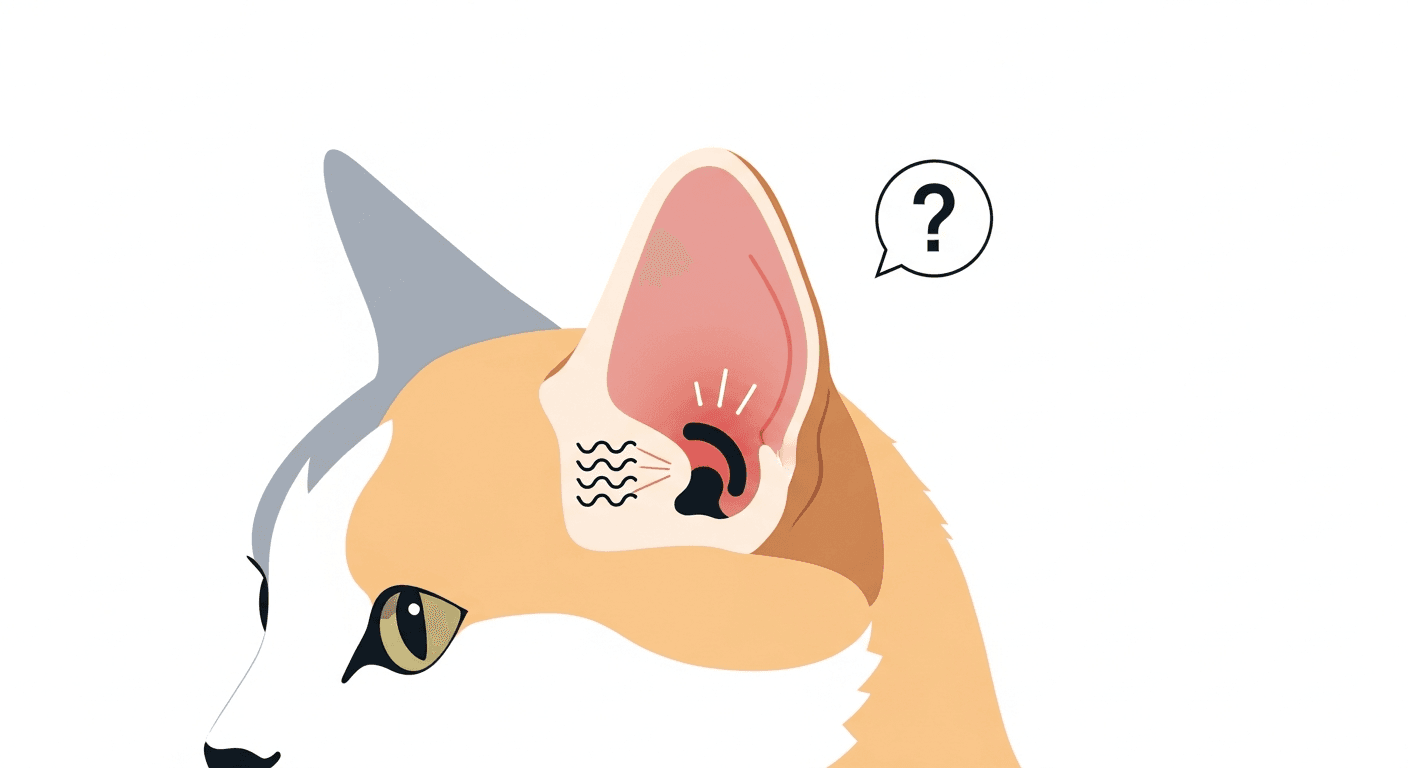
What Causes Ear Infections in Cats?
Ear infections (otitis externa) in cats are less common than in dogs, but when they do occur, they usually have an underlying cause. Secondary bacterial and yeast infections often follow ear mite infestations, trauma, polyps, or narrowing of the ear canal due to chronic inflammation. Cats with allergic skin disease are predisposed to ear infections as part of the same allergic process. Unlike dogs, primary bacterial ear infections without an underlying cause are uncommon in cats.
Signs include head shaking, scratching at the affected ear, redness and swelling of the ear canal, discharge (yellow, brown, or black), odor, and pain when the ear is touched. Advanced infections can spread to the middle and inner ear, causing head tilt, balance problems, and hearing loss.
First 3 Steps to Take at Home
- Don't probe or clean deeply: Use a gentle wipe to clean the visible outer ear flap, but do not insert cotton swabs into the canal. This pushes debris further in and risks damaging the eardrum.
- Assess the ear from outside: Is the ear red, hot, or swollen? Is the cat tilting its head to one side? Any of these signs suggest the infection may extend beyond the outer ear.
- Book a vet appointment promptly: Ear infections in cats require cytology (examining discharge under a microscope) to identify whether the infection is bacterial, yeast, or both. The wrong medication can worsen the situation.
When to Go to the Vet Immediately
- Head tilt, loss of balance, or walking in circles — indicates middle or inner ear involvement
- Sudden hearing loss in the affected ear
- Aural hematoma (soft, fluid-filled swelling of the ear flap)
- Visible polyp or mass in the ear canal
- Cat refusing to eat due to ear pain
Follow-Up Care Checklist
- Complete the full course of ear drops — stopping early allows reinflection from surviving organisms
- Clean ears with prescribed cleaner before applying drops, unless your vet advises otherwise
- Recheck 2 weeks after treatment to confirm resolution via cytology
- Address the underlying cause (allergies, polyps) to prevent recurrence
Track Ear Health with TailRounds
Log treatment doses, ear appearance, and discharge changes daily during treatment using the TailRounds Daily Log. This record helps confirm whether the infection is clearing.
Book a Vet Appointment
Any ear that looks red, smells, or has discharge needs proper diagnosis before treatment. Book at Happy Paws for ear cytology and a treatment plan tailored to the specific infection.
Summary for Your Clinic Visit
Describe the discharge color and consistency, note how long symptoms have been present, whether both ears are affected, any recent ear mite treatment, and the cat's allergy history.
Continue Reading
 🐱 Cat Health
Cat Ear Mites: Symptoms, Treatment, and Prevention
Dark, crumbly discharge and intense ear scratching in cats often mean ear mites. Learn how to recognize, treat, and prevent them.
 🐱 Cat Health
Cat Bad Breath: Is It Dental Disease or Something More Serious?
Bad breath in cats isn't just unpleasant — it's often a sign of dental disease, kidney failure, or diabetes. Learn how to tell the difference.
 🐱 Cat Health
Itchy Cat: Allergies, Parasites, and Skin Disease Explained
An itchy cat scratches, bites, and over-grooms itself. Discover the most common causes of feline pruritus and how each is treated.
 🐱 Cat Health
Cat Sneezing and Watery Eyes: Upper Respiratory Infection Explained
Sneezing, runny eyes, and nasal discharge in cats are classic signs of URI. Learn what causes it, how to care for your cat at home, and when to see a vet.