
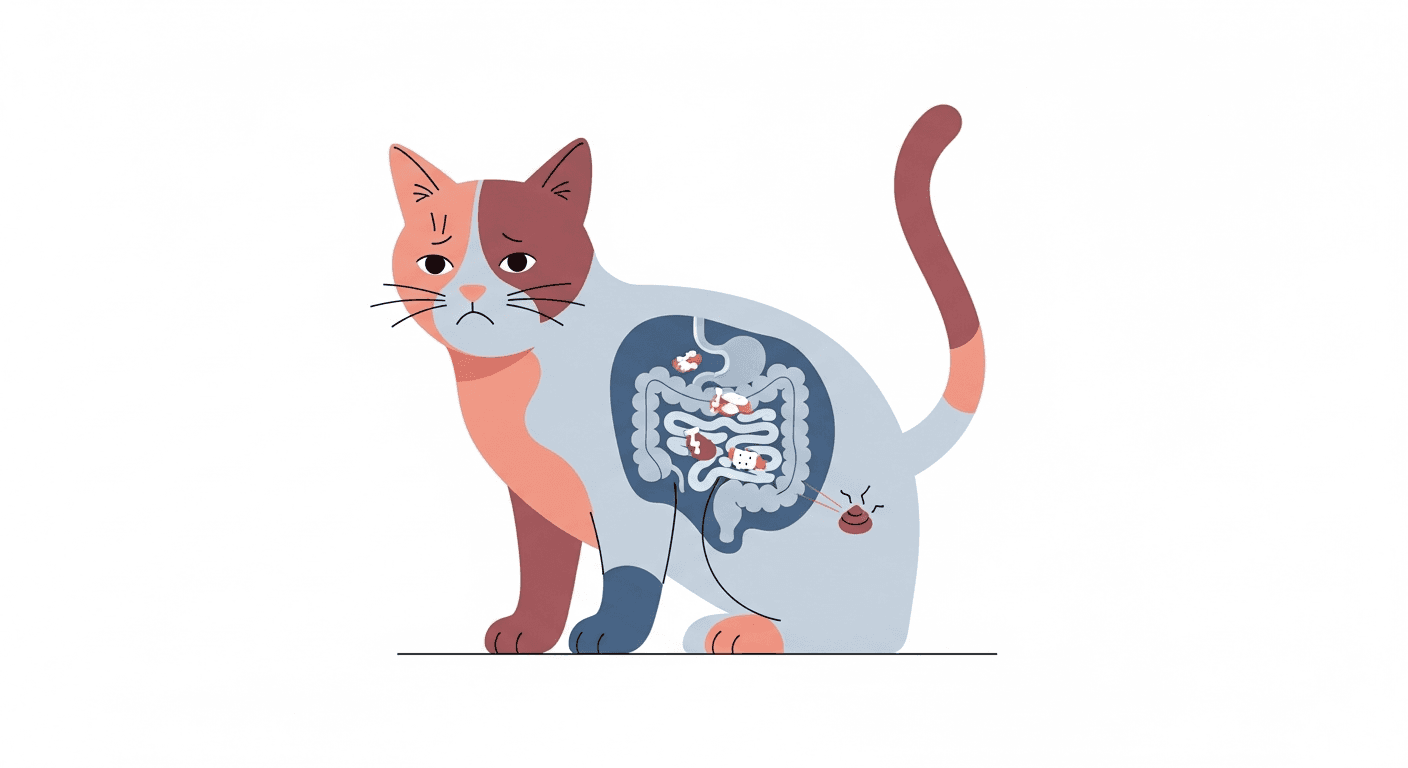
What Is Constipation in Cats?
A constipated cat has infrequent, difficult, or painful defecation. Most cats defecate once or twice a day. If your cat hasn't produced a stool in 48–72 hours, or is straining in the litter box without producing one, constipation is the likely explanation. It can be caused by dehydration, a low-fiber diet, hairballs, pain from arthritis making the litter box difficult to access, neurological issues, or obstruction from a foreign object or mass.
Obstipation is severe, complete impaction where the cat cannot defecate at all. Left untreated, this progresses to megacolon — permanent distension and reduced motility of the colon — requiring lifelong management or surgery.
First 3 Steps to Take at Home
- Increase hydration aggressively: Dehydration is the most common cause of feline constipation. Switch to wet food, add a water fountain, and consider adding a small amount of water or low-sodium broth to meals.
- Add fiber to the diet: A small amount (1/4 teaspoon) of plain canned pumpkin (not pie filling) added to meals provides soluble fiber that can help move stool. Do not use laxatives without vet guidance.
- Check litter box accessibility: Older cats with arthritis may avoid using litter boxes with high sides. A low-entry box in a warm, easy-to-reach location may resolve behavior-related constipation.
When to Go to the Vet Immediately
- No stool in 72 hours or more
- Straining repeatedly with distress — crying, hunching, frequent trips to litter box
- Vomiting alongside constipation (suggests severe impaction or obstruction)
- Distended, hard, or painful abdomen
- Known history of megacolon or prior constipation episodes
Follow-Up Care Checklist
- Transition to wet food permanently if dehydration-related constipation recurs
- Discuss lactulose or polyethylene glycol (MiraLAX) dosing with your vet for recurrent cases
- Increase daily exercise through play to stimulate gut motility
- Monitor litter box frequency weekly and note it in your health log
Track Litter Box Habits with TailRounds
Litter box frequency is often the first indicator of both constipation and diarrhea. Log defecation patterns with the TailRounds Daily Log to catch early signs of constipation before it becomes impaction.
Book a Vet Appointment
Three days without a bowel movement in a cat requires examination. Book at Happy Paws for an abdominal X-ray and enema if needed.
Summary for Your Clinic Visit
Tell your vet when the cat last defecated, whether the cat has been straining, the diet history, hydration status, and any prior constipation episodes or diagnoses.
Continue Reading
 🐱 Cat Health
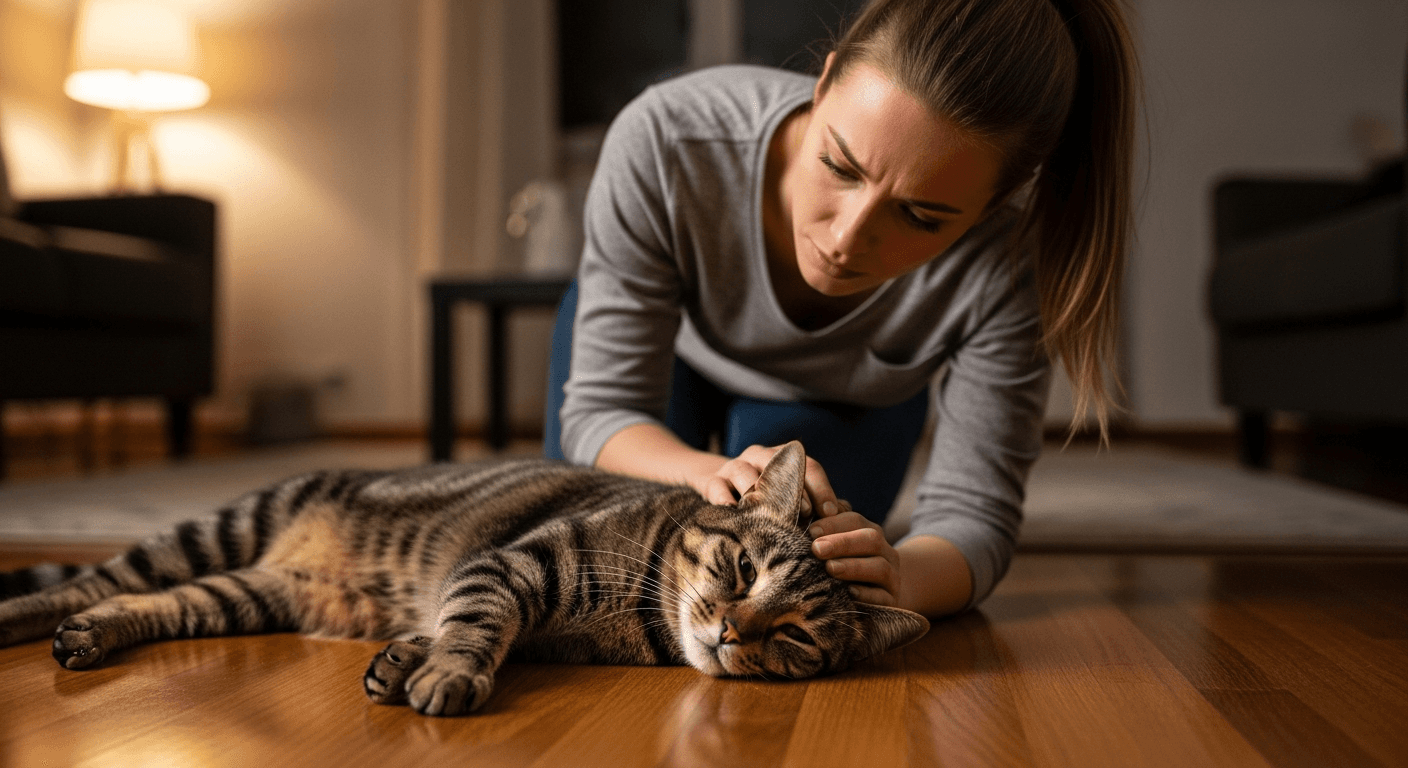
Cat Diarrhea: What to Watch For and When to Act
One loose stool vs. three days of diarrhea — know the difference, learn home care steps, and find out when diarrhea becomes an emergency in cats.
 🐱 Cat Health
Cat Not Eating: When Is It an Emergency?
Learn why your cat has stopped eating, which symptoms require immediate vet care, and how to safely encourage appetite at home.
 ✂️ Cat Care
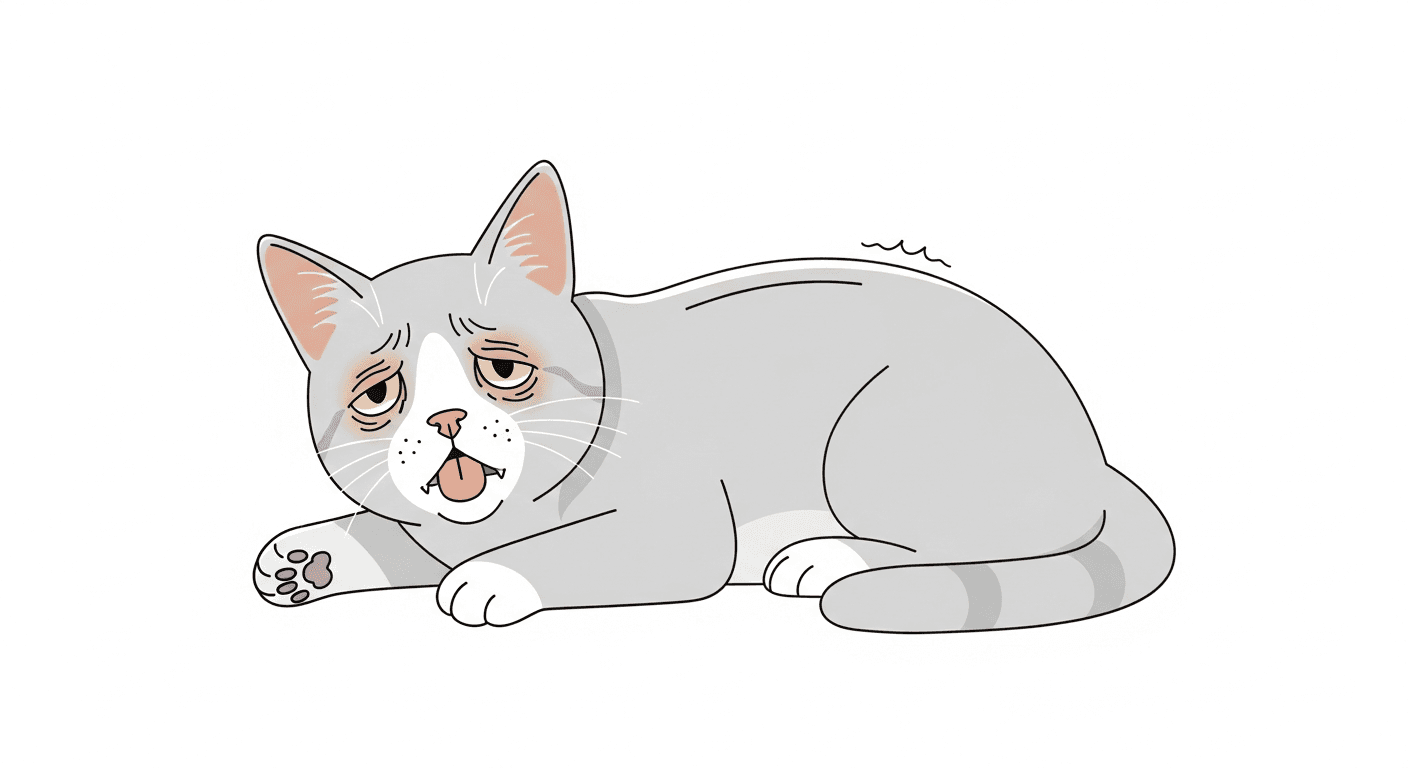
Cat Dehydration: How to Spot It and Improve Hydration
Cats are notoriously poor drinkers. Learn the signs of dehydration, how to test hydration at home, and strategies to get your cat drinking more water.
 🐱 Cat Health
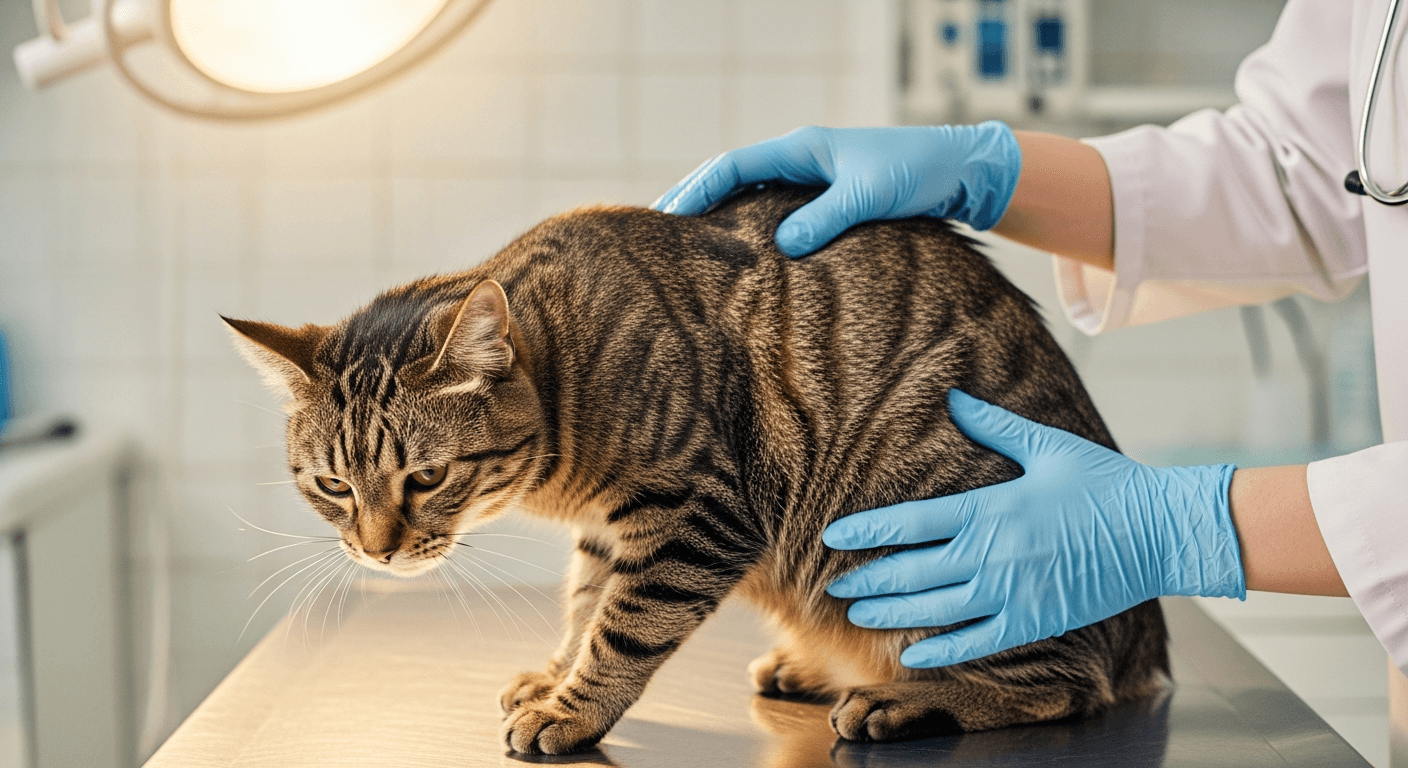
Cat Vomiting: Common Causes and What to Watch For
Understand why cats vomit, how to tell occasional vomiting from a medical emergency, and when to call your vet.