
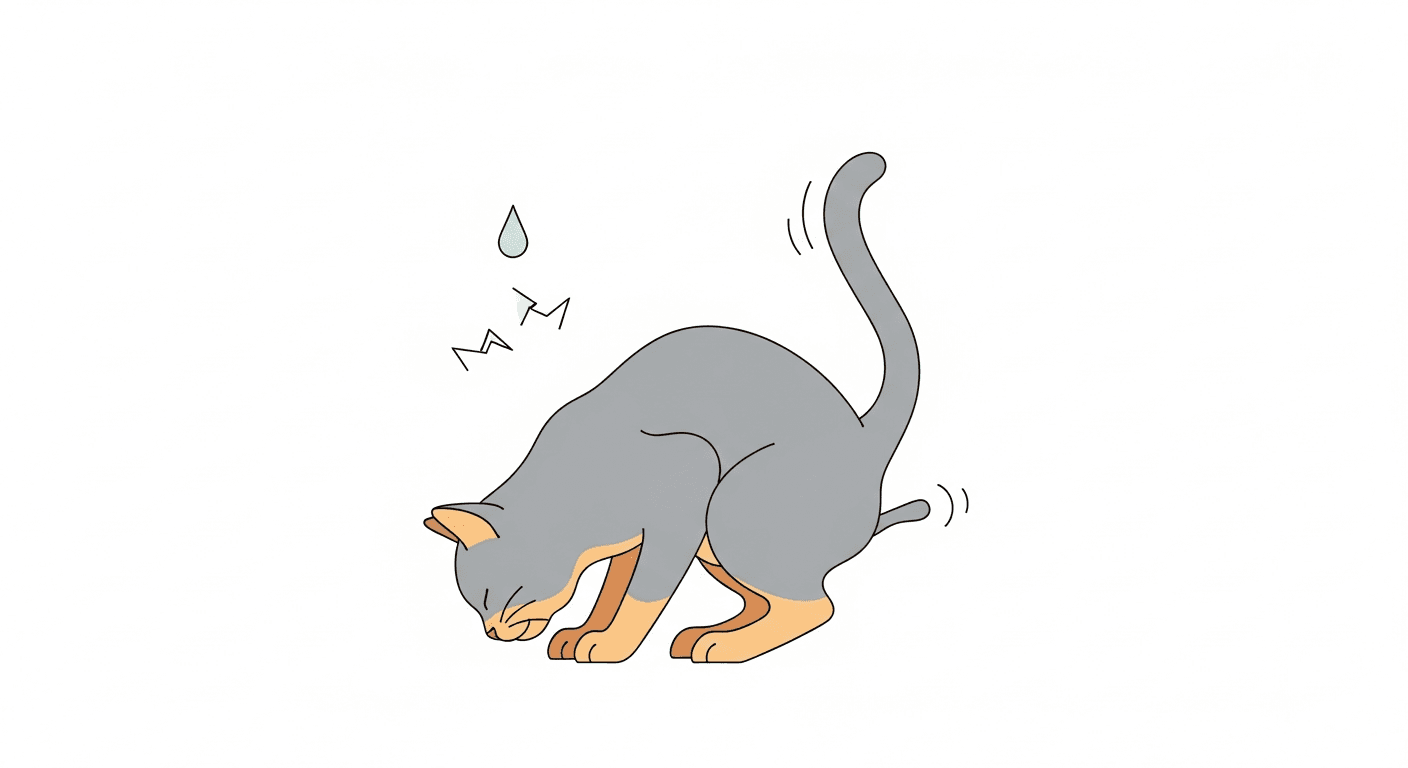
Why Is Straining Always Taken Seriously in Male Cats?
When a male cat squats in the litter box and strains repeatedly without producing urine, the most dangerous possibility is urethral obstruction — a life-threatening emergency. The challenge is that constipation produces identical posture and straining. Owners commonly assume constipation when the actual problem is a blocked bladder, and delay treatment with fatal results.
The key distinction: a constipated cat may produce small amounts of stool or mucus with effort. A blocked cat produces nothing, or perhaps a few drops of urine with blood. Without being certain, treat it as a urinary emergency.
First 3 Steps to Take at Home
- Watch one straining episode carefully: Is the cat in the litter box position (squatting low, tail lifted) or the defecation position (tail more horizontal, often straining for longer)? Urinary straining is typically repeated trips in quick succession. Constipation usually involves longer single straining episodes.
- Check for urine in the litter box: If you have a light-colored clumping litter, look for any fresh, wet spots. No urine clumps despite multiple visits strongly suggests a blockage.
- Call the vet or emergency clinic: Don't test your diagnostic skills beyond this. Call and describe what you're seeing — most vets will tell you to come in immediately if there's any chance of blockage.
When to Go to the Vet Immediately
- Any male cat straining repeatedly with no urine produced
- Blood in urine or on fur around the genitals
- Cat crying while in the litter box
- Progressive lethargy alongside straining
- You are not certain whether the cat is urinating or defecating — err on the side of emergency
Follow-Up Care Checklist
- If urinary blockage: post-treatment protocol per the vet's instructions — wet food only, hydration monitoring, recheck urinalysis
- If constipation: identify underlying cause (dehydration, diet, arthritis limiting litter box access)
Track Litter Box Activity with TailRounds
Knowing the last normal urination gives your vet critical information. Log litter box activity daily using the TailRounds Daily Log.
Book a Vet Appointment
Never wait on a male cat straining with no output. Call Happy Paws immediately — urinary emergencies are prioritized and can be life-saving when treated within the first few hours.
Summary for Your Clinic Visit
Tell the vet when straining started, whether any urine or stool has been produced, the cat's last normal urination, his diet, and whether he's eaten or drunk anything today.
Continue Reading
 ✂️ Cat Care
Cat Urinary Blockage: A Life-Threatening Emergency — Signs and Action
A blocked cat cannot urinate and will die within 24–72 hours without treatment. Know the signs so you can act in time.
 ✂️ Cat Care
Blood in Cat Urine: Causes and What to Do
Pink, red, or brown urine in cats is always abnormal. Learn the common causes of hematuria in cats and how urgently it needs to be addressed.
 🐱 Cat Health
Cat Constipation: Signs, Causes, and Home Care
Learn how to recognize constipation in cats, when it becomes obstipation (a medical emergency), and how to help your cat stay regular.
 🐱 Cat Health
Cat Suddenly Not Using the Litter Box: 8 Common Reasons
A previously litter-trained cat avoiding the box is telling you something. Learn the 8 most common causes and how to address each one.