
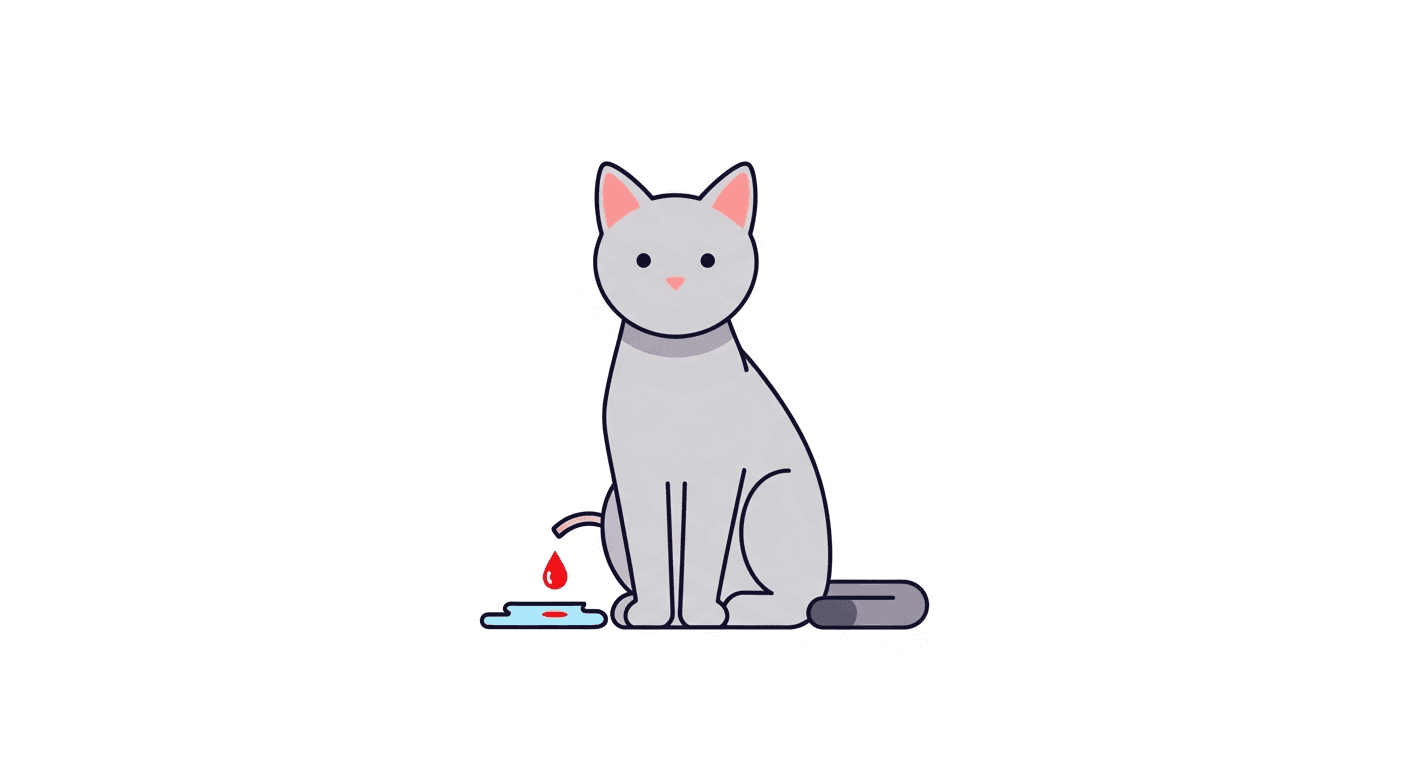
What Causes Blood in Cat Urine?
Hematuria (blood in urine) in cats is never normal. The most common causes include feline idiopathic cystitis (FIC — bladder inflammation, often stress-triggered), urinary crystals or stones (struvite, calcium oxalate), urinary tract infection (less common in cats than dogs, but occurs), bladder polyps or tumors, and urinary trauma. In male cats specifically, any blood in urine combined with straining warrants emergency evaluation for urethral blockage.
First 3 Steps to Take at Home
- Confirm the source: Blood can come from the urethra, bladder, kidneys, or in female cats, from reproductive organs. Look for blood in the litter box (in urine), on the fur around the genitals, or from vaginal discharge. This distinction helps your vet.
- Check for urinary straining: Is the cat producing normal volumes of urine with blood present, or straining and producing drops? The latter is a potential emergency — prioritize accordingly.
- Collect a urine sample if possible: Place a clean, dry (uncoated) dish under the cat in the litter box, or use non-absorbing plastic litter pellets. A fresh urine sample collected within 2 hours allows your vet to run a urinalysis immediately without catheterization.
When to Go to the Vet Immediately
- Male cat with blood in urine AND straining — urethral blockage emergency
- Large amounts of blood (bright red urine, not just pink tinge)
- Blood with lethargy, vomiting, or not eating
- Known trauma or a cat that was in a fight or accident
Follow-Up Care Checklist
- For FIC: reduce stress, increase water intake (wet food, fountains), and consider environmental enrichment
- For crystals: prescription urinary diet and dramatically increased hydration
- For UTI: complete the prescribed antibiotic course and confirm resolution with a recheck urinalysis
- Recheck urine 2–4 weeks after treatment to confirm blood has cleared
Track Urinary Symptoms with TailRounds
Log urine color, frequency, and volume daily during treatment using the TailRounds Daily Log. This tracking confirms improvement and catches any recurrence.
Book a Vet Appointment
Blood in urine always requires urinalysis and often imaging. Book a urinary assessment at Happy Paws — we can run urinalysis and bladder ultrasound in one visit.
Summary for Your Clinic Visit
Bring a fresh urine sample if possible, note when you first observed blood, describe the volume of blood, whether the cat is straining, and any stressors or dietary changes in the past few weeks.
Continue Reading
 ✂️ Cat Care
Cat Urinary Blockage: A Life-Threatening Emergency — Signs and Action
A blocked cat cannot urinate and will die within 24–72 hours without treatment. Know the signs so you can act in time.
 ✂️ Cat Care
Male Cat Straining to Urinate: Emergency Signs vs. Constipation
Straining in male cats is a urinary emergency until proven otherwise. Learn how to tell urinary blockage from constipation and act appropriately.
 🐱 Cat Health
Cat Peeing Outside the Litter Box: Medical and Behavioral Causes
A cat suddenly avoiding the litter box can signal a urinary infection, crystals, or behavioral stress. Learn how to find the cause and address it properly.
 ✂️ Cat Care
Cat Peeing Frequently in Small Amounts: What It Means
Frequent small-volume urination in cats typically indicates lower urinary tract disease. Learn to identify it, respond appropriately, and prevent recurrence.