
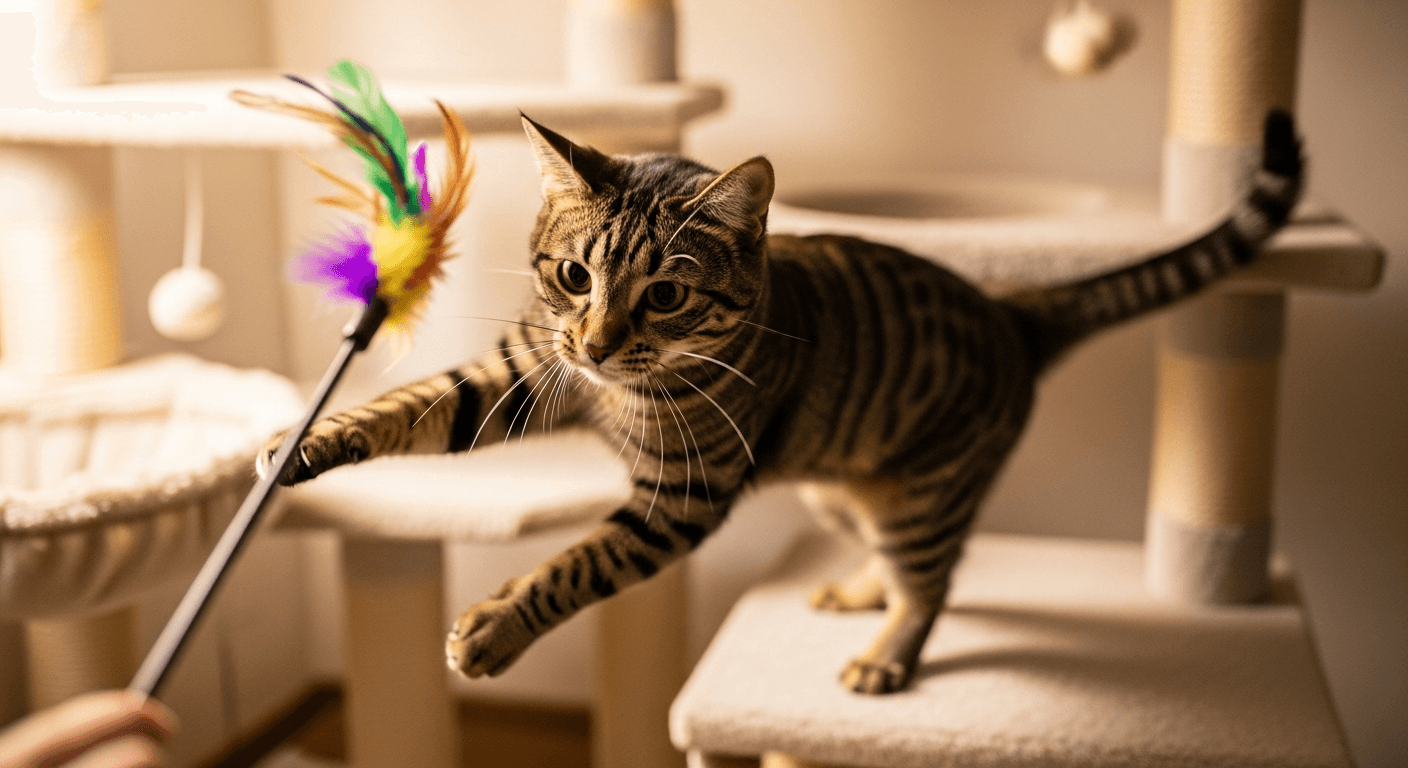
Why Do Indoor Cats Need Enrichment?
Indoor cats live longer, healthier lives than outdoor cats — but they face a different challenge: boredom. In the wild, a cat would spend 6–8 hours each day stalking, hunting, and exploring. An indoor cat in a static environment has none of this. The result is often obesity, behavioral problems (over-grooming, inappropriate elimination, aggression), and depression. Enrichment doesn't require expensive equipment — it requires intentional design of the cat's daily environment.
First 3 Steps to Enrich Your Cat's Life
- Add vertical space: Cats feel secure when elevated. Cat trees, wall-mounted shelves, and window perches give cats the ability to survey their territory from height. This alone reduces inter-cat stress in multi-cat households significantly.
- Implement daily interactive play: 2 sessions of 10–15 minutes of active play with a wand toy or laser pointer — followed by a real "catch" (give the cat a treat or small prey-like toy to "kill") — fulfills the hunt-chase-catch-consume sequence. This is the single most impactful enrichment you can provide.
- Feed from puzzle feeders: Replacing the food bowl with a puzzle feeder or scatter feeding (hiding kibble in small amounts around the house) forces the cat to work for food. This mental engagement is deeply satisfying for cats and slows eating, reducing vomiting from too-fast eating.
When to See the Vet
- Over-grooming to the point of hair loss — may need medical and behavioral intervention
- Aggression that has developed or worsened — enrichment alone may not be sufficient
- Obesity that has developed despite appropriate food portions — needs a structured weight-loss plan
Follow-Up Enrichment Checklist
- Rotate toys every few days — novelty drives engagement
- Add a window bird feeder outside a cat-accessible window — this provides hours of mental stimulation
- Consider "catios" (enclosed outdoor structures) for safe outdoor access
- For multi-cat homes: provide separate sleeping areas, feeding stations, and escape routes for each cat
Track Activity with TailRounds
Log daily play sessions and note any behavioral changes using the TailRounds Daily Log. Consistent activity logging helps you maintain enrichment habits and spot correlations between boredom and problem behaviors.
Book a Vet Appointment
Behavioral problems related to boredom often need both enrichment and medical evaluation. Book a behavioral consultation at Happy Paws for a structured enrichment plan tailored to your cat.
Summary for Your Clinic Visit
Describe the behavioral problems you're seeing, the cat's daily routine, the home environment, whether there are other pets, and the cat's activity level and diet.
Continue Reading
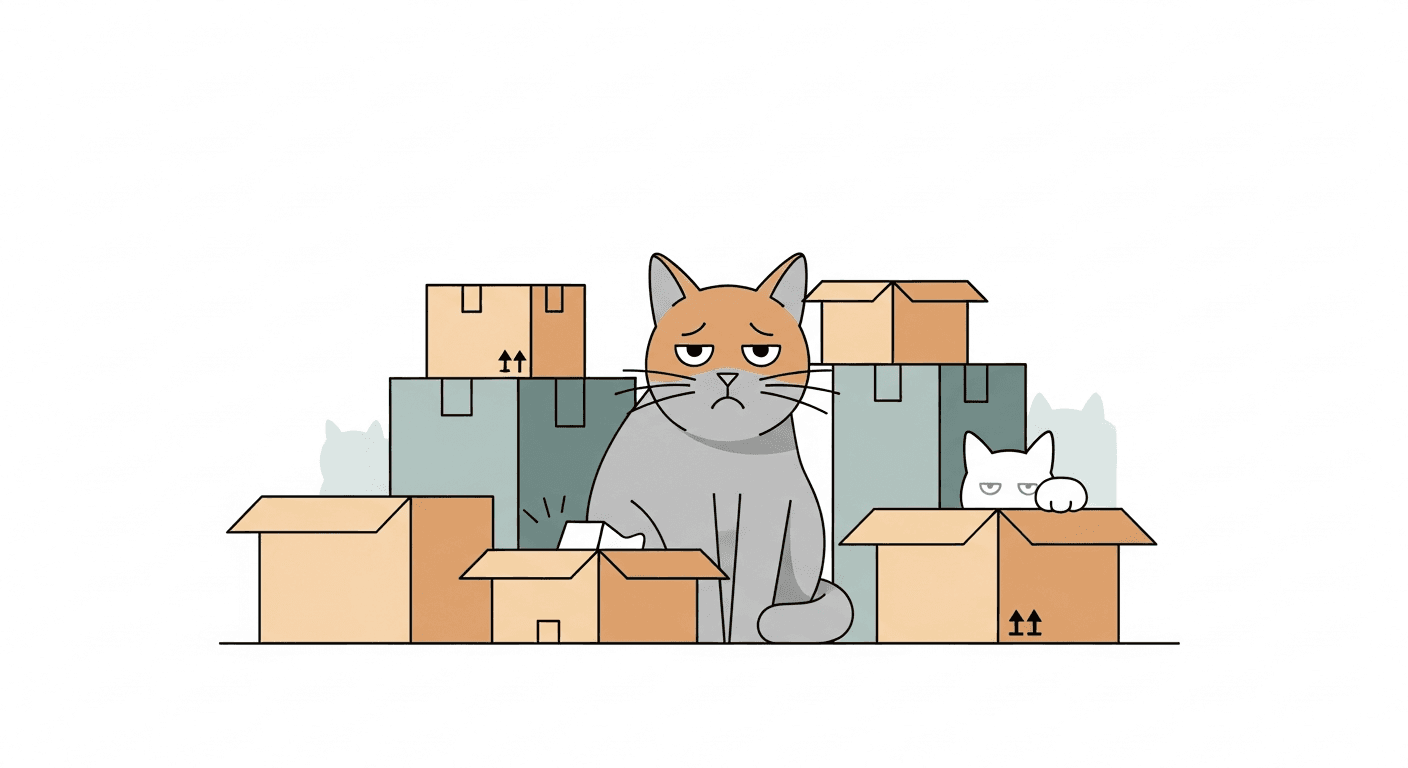 ✂️ Cat Care
Cat Stress After Moving: How to Help Your Cat Adjust
Moving is deeply stressful for cats. Learn how to set up a new home, reduce anxiety, and recognize when stress is causing health problems.
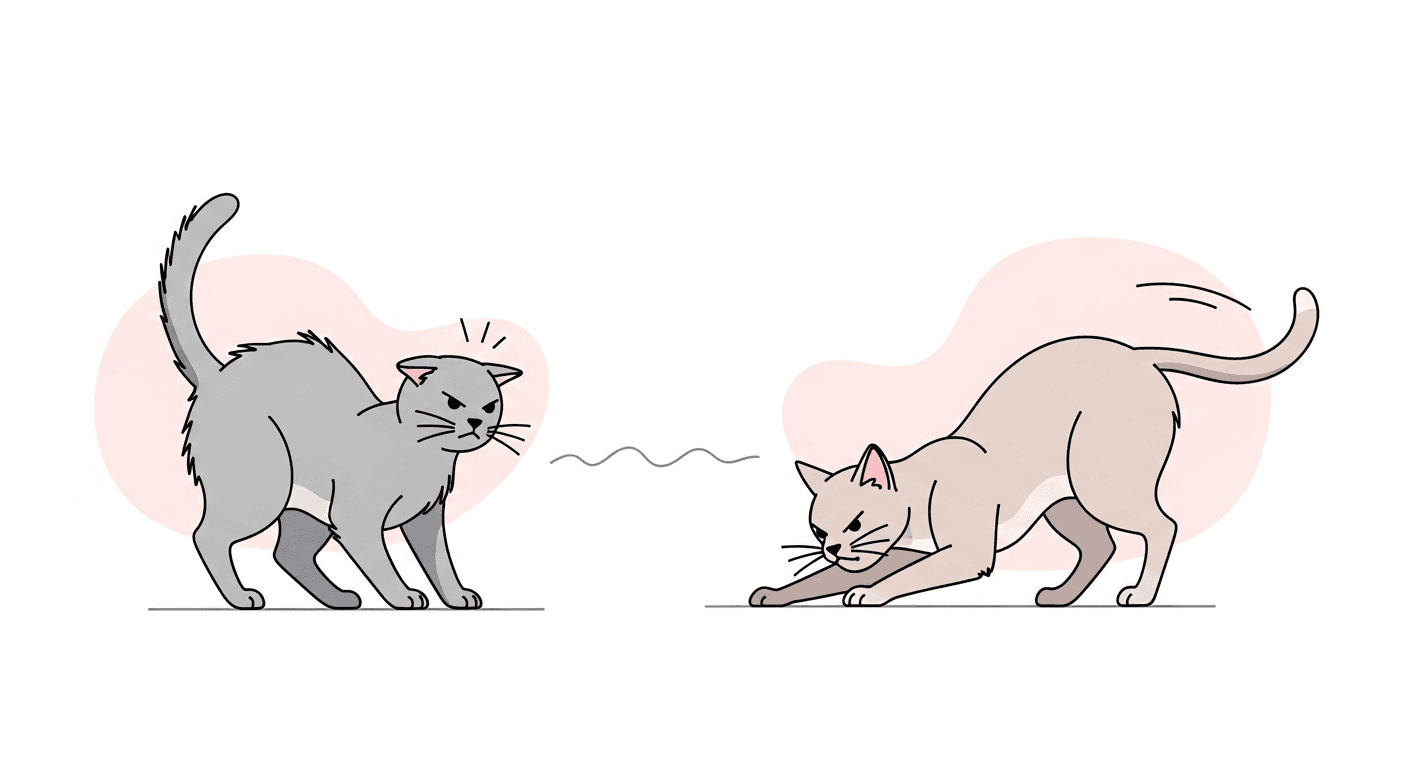 ✂️ Cat Care
Cat-to-Cat Aggression: Why Cats Fight and How to Help
Inter-cat aggression ranges from play-fighting to serious injury. Learn to tell them apart and manage multi-cat household conflict effectively.
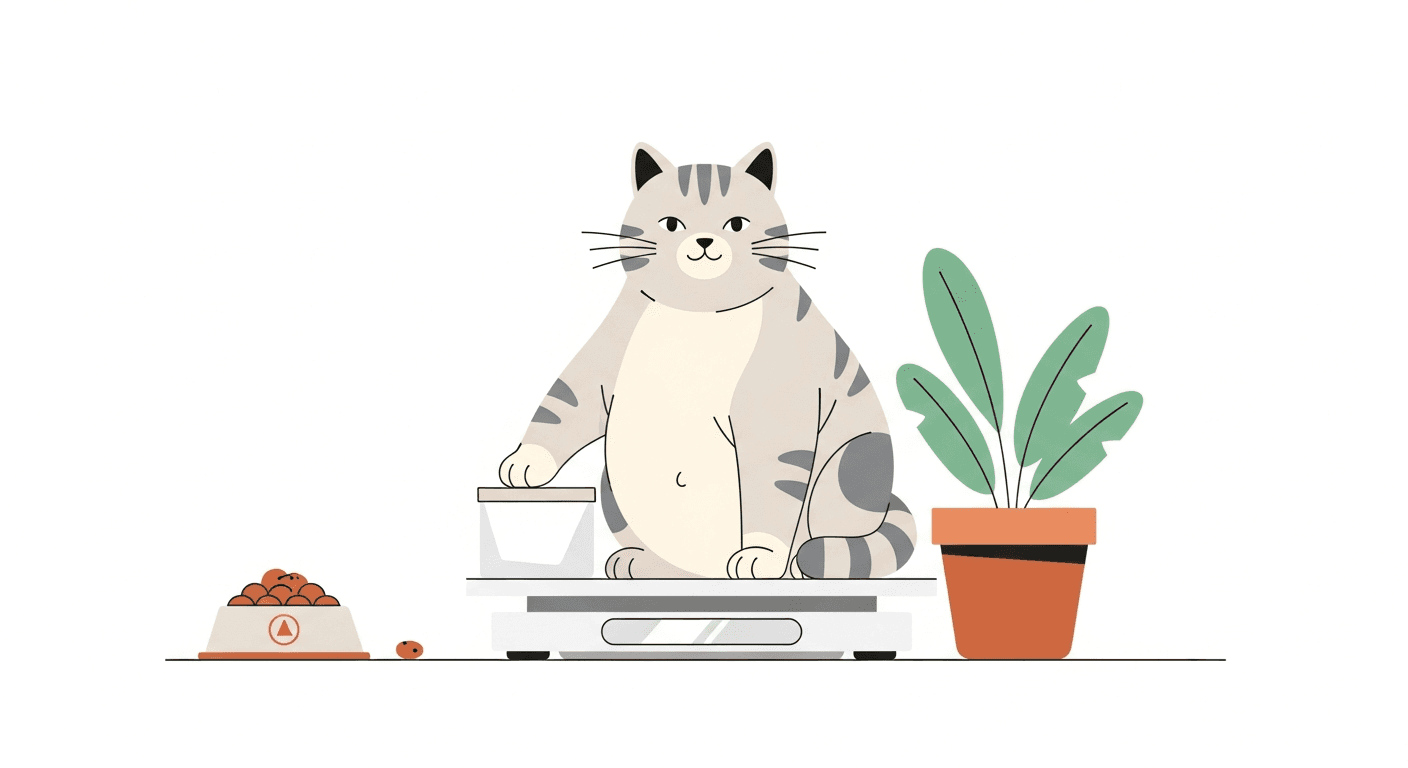 ✂️ Cat Care
Cat Obesity: How to Help Your Cat Lose Weight Safely
Over 50% of cats are overweight or obese. Learn why crash diets are dangerous for cats, and how to create a safe, effective weight-loss plan.
 ✂️ Cat Care
Cat Meowing or Yowling at Night: Causes and Solutions
Nighttime yowling is one of the most disruptive feline behaviors. Learn why it happens and what can be done about it — medically and behaviorally.