
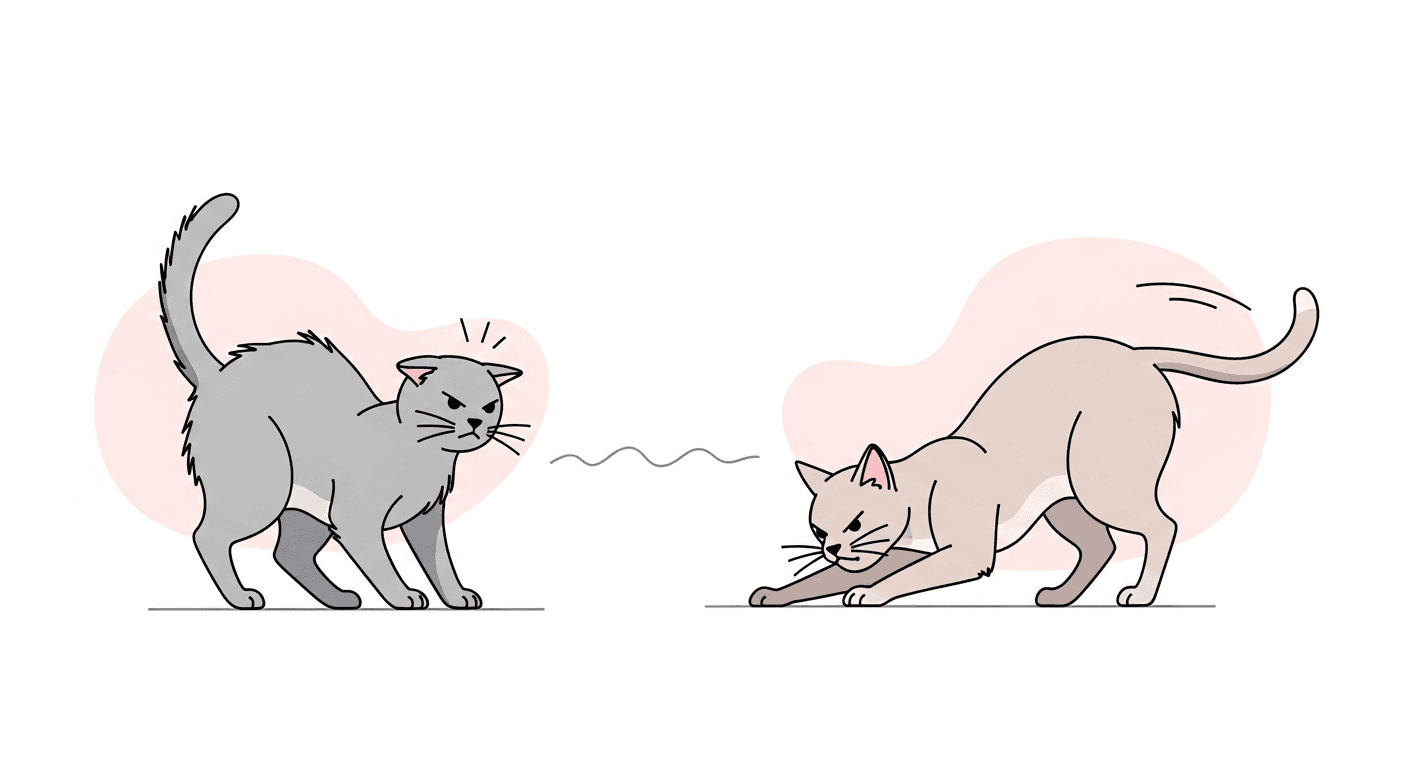
Understanding Inter-Cat Aggression
Cat aggression toward other cats in the household is one of the most common behavioral complaints among multi-cat owners. Unlike play-fighting (which involves taking turns, soft body language, and no injuries), genuine inter-cat aggression involves one cat consistently victimizing another, causing the victim to hide, avoid eating, or show stress-related symptoms like over-grooming or urinating outside the litter box.
Common causes include: resource competition (food, territory, litter boxes), redirected aggression, introduction of a new cat without proper protocols, and medical pain causing increased irritability in the aggressor.
First 3 Steps to Take at Home
- Separate the cats immediately after any serious fight: Put physical space between them. Treat any bite wounds — cat bite abscesses develop quickly and are extremely painful. Two cats with unresolved aggression cannot simply be "left to sort it out."
- Ensure adequate resources for all cats: The minimum is one food bowl, one water source, and one litter box per cat, plus one extra. Resource scarcity is a primary trigger for inter-cat conflict. Place these in different locations so no single cat can guard all of them.
- Reintroduce gradually: Separate the cats into different rooms and do a slow reintroduction — scent swapping (exchanging bedding), feeding on opposite sides of a closed door, then visual access through a baby gate — over 2–4 weeks. Rushing this process extends conflict.
When to Go to the Vet Immediately
- Bite wounds — puncture wounds that appear small can track deeply and abscess within 24–48 hours
- A cat that has stopped eating, hiding completely, or is eliminating outside the litter box due to stress
- Suspected pain in the aggressive cat — rule out medical triggers before behavioral intervention
Follow-Up Care Checklist
- Consider Feliway MultiCat diffusers — synthetic cat pheromones can reduce inter-cat tension
- Create vertical space — more cat trees, shelves, and high perches allow cats to coexist with separate territories in the same room
- For persistent aggression, consult a board-certified veterinary behaviorist; medication may be part of the solution
Track Conflict Events with TailRounds
Log every aggressive incident, including location, trigger, and outcome, in the TailRounds Daily Log. This helps identify patterns and assess whether the situation is improving.
Book a Vet Appointment
Bite wounds need prompt treatment, and persistent inter-cat conflict may need pharmaceutical support. Book at Happy Paws for wound care and a behavioral consultation.
Summary for Your Clinic Visit
Describe the relationship between the cats (how long they've lived together), when conflict began, what triggers it, and any injuries or stress-related symptoms in the victim cat.
Continue Reading
 ✂️ Cat Care
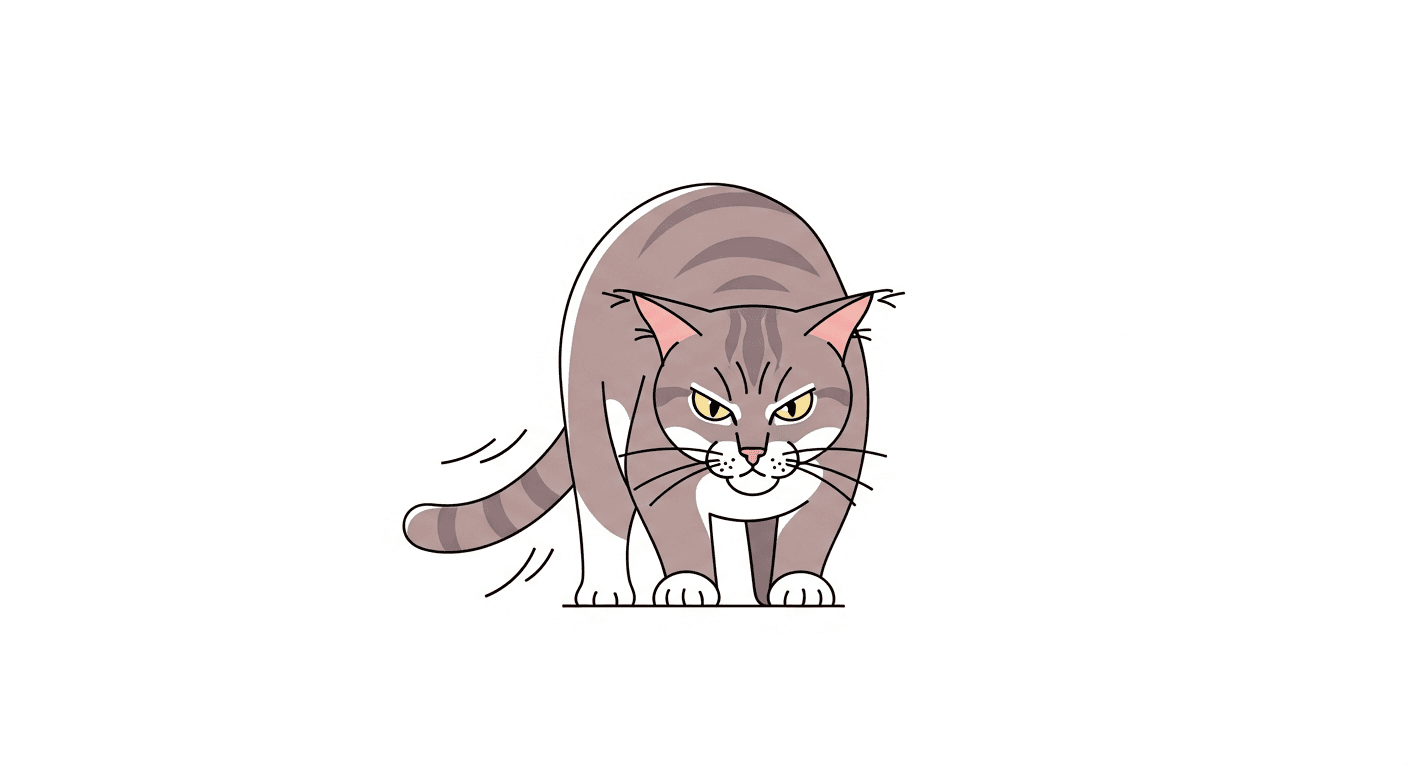
Cat Sudden Aggression: Why It Happens and How to Respond Safely
A cat that suddenly attacks can be responding to pain, fear, overstimulation, or redirected aggression. Learn to identify the cause and de-escalate safely.
 ✂️ Cat Care
Cat Stress After Moving: How to Help Your Cat Adjust
Moving is deeply stressful for cats. Learn how to set up a new home, reduce anxiety, and recognize when stress is causing health problems.
 🐱 Cat Health
Cat Hiding More Than Usual: When Is It a Health Warning?
Cats hide when they're scared — but also when they're sick or in pain. Learn how to tell normal hiding from a health red flag.
 ✂️ Cat Care
New Kitten Care Checklist: Everything You Need in the First Month
A complete first-month guide for new kitten owners: vet visits, vaccinations, feeding, socialization, litter training, and what to watch for.