
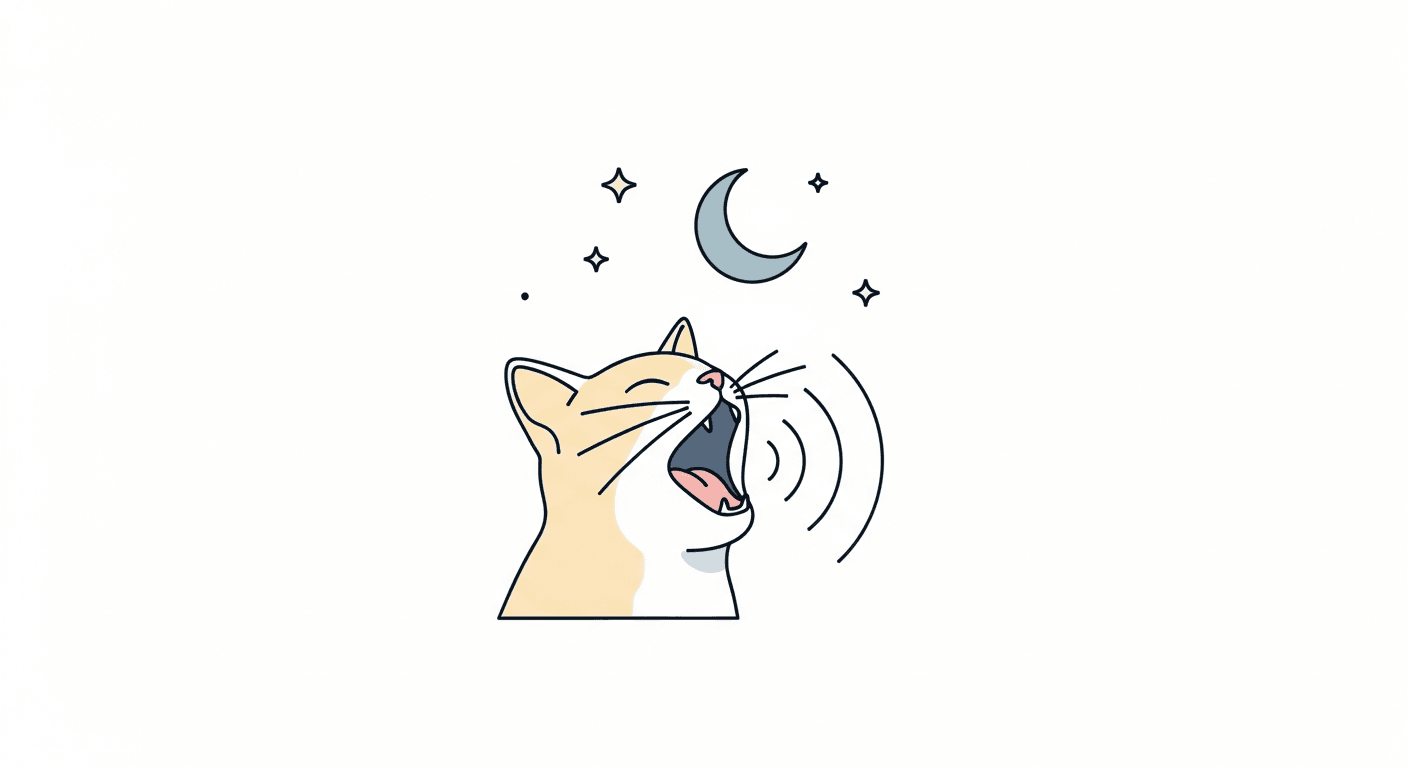
Why Do Cats Yowl at Night?
Cats are crepuscular — most active at dawn and dusk — so some nighttime activity is normal. But persistent yowling, especially if it's a new behavior, almost always has a cause. In younger or intact cats, the most common reason is sexual behavior (heat in females, response to a female in heat in intact males). In middle-aged and senior cats, the most concerning cause is cognitive dysfunction syndrome (CDS) — feline dementia — where disorientation and anxiety increase at night. Medical causes including hyperthyroidism, hypertension, pain (arthritis), and early kidney disease should always be ruled out first.
First 3 Steps to Take at Home
- Rule out medical causes with a vet visit: Any cat that suddenly begins yowling at night should have bloodwork and a physical exam. Hyperthyroidism and hypertension are extremely common in senior cats and both cause nighttime vocalization as a prominent symptom.
- Increase daytime activity: A cat that sleeps all day will be most active at night. Engage in active play sessions in the afternoon and early evening to shift the activity window and tire the cat out before bedtime.
- Review the sleeping environment: Is the cat being shut out of a room it wants access to? Is there a perceived threat (neighbor's cat outside the window at night)? Environmental factors are worth investigating.
When to Go to the Vet Immediately
- Yowling accompanied by disorientation, bumping into things, or seeming "lost" in familiar spaces (CDS)
- Sudden onset in a previously quiet cat — always warrants same-week vet visit
- Yowling with increased thirst, weight loss, or hyperactivity (hyperthyroidism)
Follow-Up Care Checklist
- If hyperthyroidism is treated, yowling often resolves within 2–4 weeks
- For CDS: establish a predictable nighttime routine, use nightlights, and discuss anti-anxiety support with your vet
- For intact cats: spaying or neutering eliminates hormonally-driven yowling
- Consider melatonin (vet-guided dosing) for circadian rhythm disruption in senior cats
Track Nighttime Behavior with TailRounds
Log vocalizing episodes — time, duration, and any preceding events — in the TailRounds Daily Log. Patterns help your vet identify the cause.
Book a Vet Appointment
Persistent nighttime yowling deserves investigation, not just tolerance. Book at Happy Paws for a senior wellness exam and thyroid/blood pressure screening.
Summary for Your Clinic Visit
Note when yowling started, the cat's age, whether it's a new behavior, what time of night it occurs, any other behavioral or physical changes, and the cat's current medical history.
Continue Reading
 ✂️ Cat Care
Cat in Heat: Behaviors, Timeline, and What to Do
Understanding heat cycles in unspayed cats — what behaviors to expect, how long it lasts, and why spaying is the most humane solution.
 ✂️ Cat Care
Cat Stress After Moving: How to Help Your Cat Adjust
Moving is deeply stressful for cats. Learn how to set up a new home, reduce anxiety, and recognize when stress is causing health problems.
 🐱 Cat Health
Cat Hiding More Than Usual: When Is It a Health Warning?
Cats hide when they're scared — but also when they're sick or in pain. Learn how to tell normal hiding from a health red flag.
 ✂️ Cat Care
Senior Cat Care Guide: What Changes After Age 10
Cats are considered senior at age 10 and geriatric at 15. Learn how health needs change, which conditions to watch for, and how to keep senior cats comfortable.