
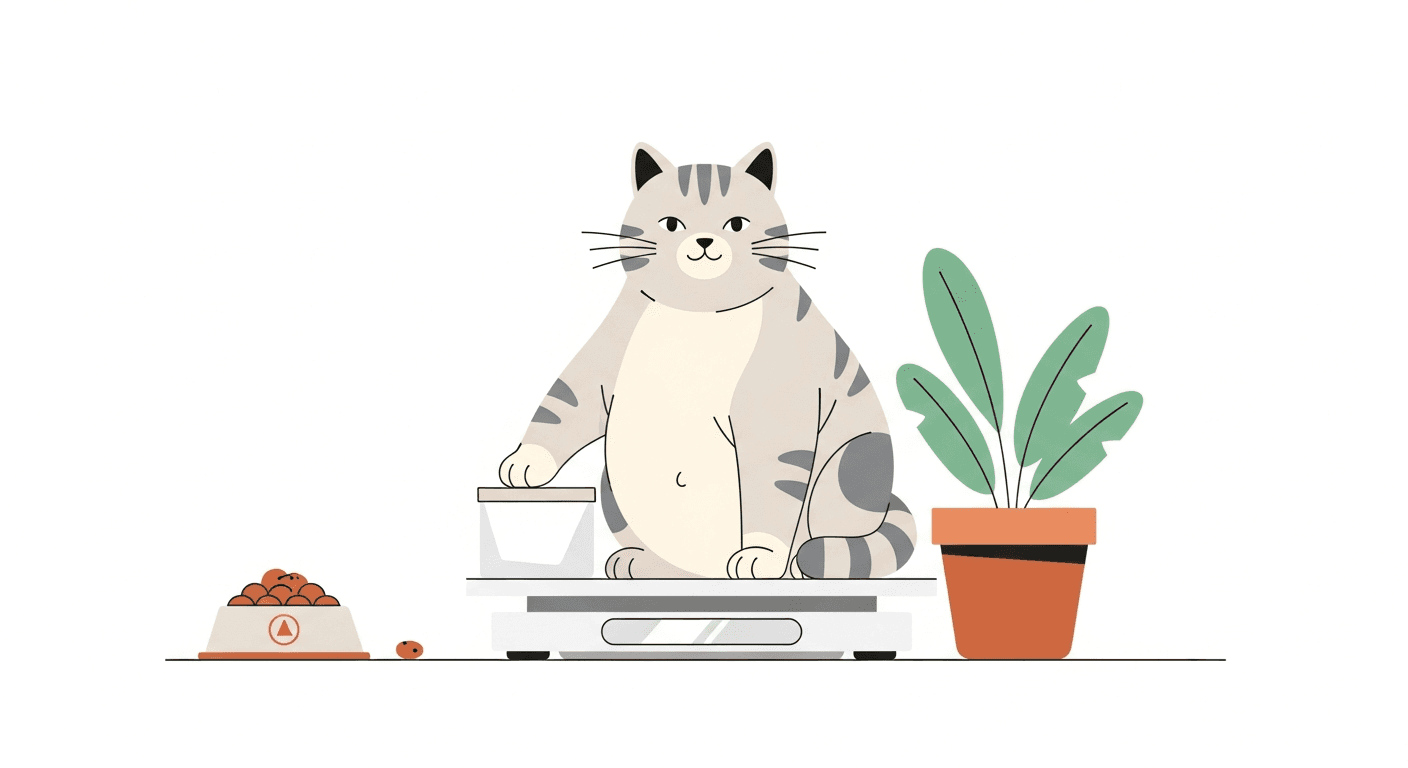
Why Is Cat Obesity Such a Serious Problem?
More than half of pet cats in most Western countries are overweight or clinically obese. Obesity in cats isn't just an aesthetic issue — it's a medical crisis. It significantly increases the risk of diabetes, urinary tract disease, arthritis, hepatic lipidosis, and reduces life expectancy by an estimated 2.5 years. The most dangerous aspect of feline obesity management is the temptation to restrict food dramatically — rapid weight loss in cats causes hepatic lipidosis, which can be fatal. Safe weight loss in cats is always slow and controlled.
First 3 Steps to Begin Safe Weight Loss
- Establish the target weight with your vet: Do not guess an ideal weight — have your vet conduct a body condition score assessment. The goal is typically 1–2% of current body weight lost per week. For a 6 kg cat, that's 60–120 grams per week.
- Switch to a measured, controlled diet: Replace free-feeding (leaving food out all day) with measured meals 2–3 times daily. Use a kitchen scale, not a cup — cups vary enormously. Your vet can calculate the exact daily calorie target.
- Eliminate all extra calories: Treats, table scraps, and high-calorie toppers significantly exceed the carefully calculated daily budget. Treats should be counted within the daily calorie allowance, not added on top.
When to See the Vet
- Before starting any calorie restriction — get a vet-calculated target, not an internet estimate
- If the cat loses more than 1–2% body weight per week
- If the cat stops eating during weight loss — hepatic lipidosis risk
- If weight loss stalls despite strict calorie control — possible metabolic issue
Follow-Up Care Checklist
- Weigh every 2 weeks and adjust portions if needed
- Increase activity through daily play — each 15-minute play session burns meaningful calories and builds muscle
- Consider a prescription weight-loss diet — these are specifically formulated to provide adequate nutrition at reduced calorie intake
- Recheck every 4 weeks initially until the weight loss rate is established
Track Weight Loss with TailRounds
Log the cat's weight every two weeks, along with daily food portions, in the TailRounds Daily Log. A visible downward weight trend over time is the confirmation that the plan is working.
Book a Vet Appointment
Start a supervised weight-loss program rather than guessing at home. Book a weight management consultation at Happy Paws — we'll calculate the right target and check in with you monthly.
Summary for Your Clinic Visit
Tell your vet the current weight, diet and portions, any treats given, activity level, and any medical conditions that may affect metabolism or mobility.
Continue Reading
 ✂️ Cat Care
How to Change Your Cat's Food Without Causing Stomach Upset
Abrupt food changes cause vomiting and diarrhea in cats. Learn the right way to transition between foods, whether for medical reasons or a routine upgrade.
 ✂️ Cat Care
Cat Refusing Wet Food: Reasons and How to Transition Successfully
Many cats raised on dry food refuse wet food initially — but wet food is often medically important. Learn how to make the switch successfully.
 ✂️ Cat Care
Early Kidney Disease in Cats: Signs, Diagnosis, and Management
Chronic kidney disease is the leading cause of death in cats over 12. Learn the earliest signs, how it's diagnosed, and how to slow progression significantly.
 ✂️ Cat Care
Senior Cat Care Guide: What Changes After Age 10
Cats are considered senior at age 10 and geriatric at 15. Learn how health needs change, which conditions to watch for, and how to keep senior cats comfortable.