
Why Gradual Food Transition Matters for Cats
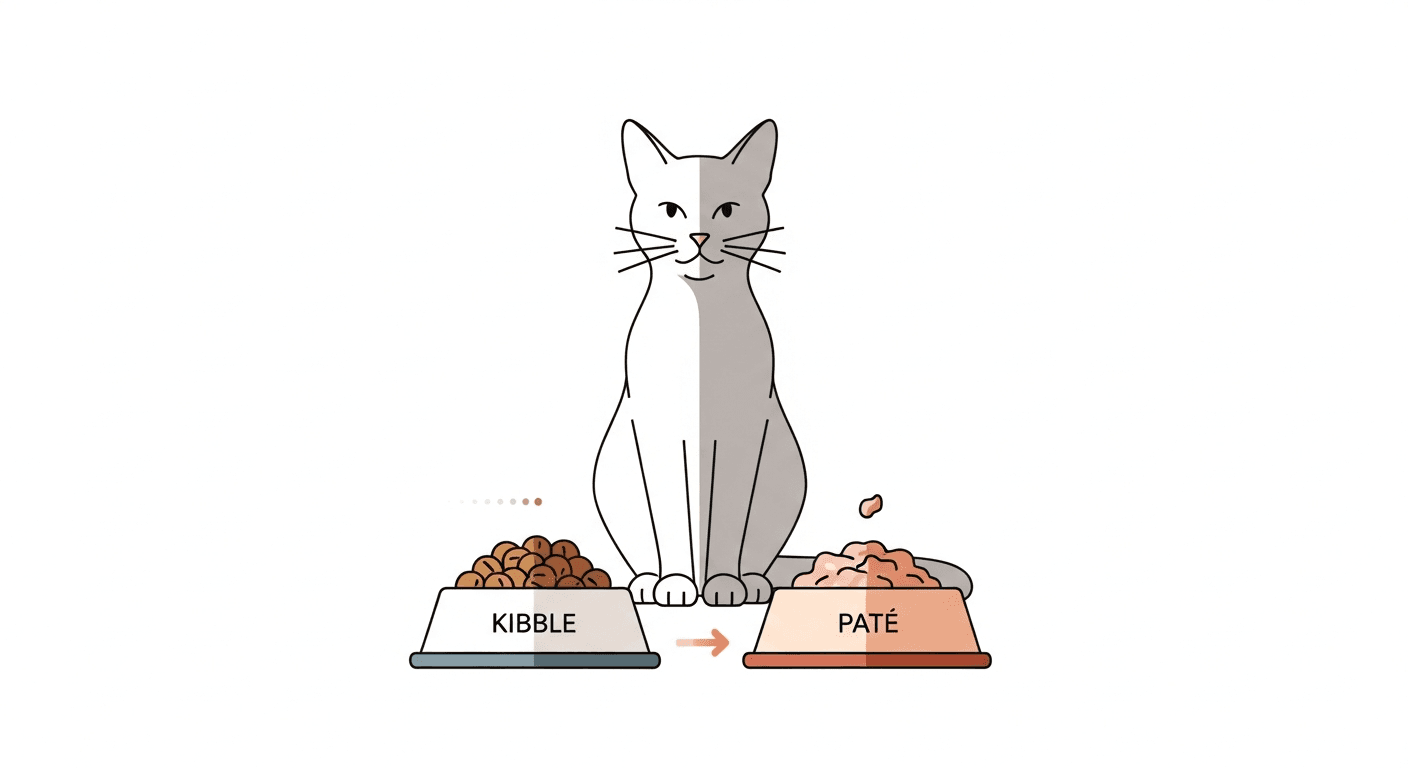
Cats have a relatively simple and specialized digestive system that adapts to a consistent diet. An abrupt food change disrupts the gut microbiome — the bacterial population in the intestines — causing digestive upset within 24–48 hours. Vomiting, diarrhea, or both are common results of switching food too quickly. A 7–14 day gradual transition allows the gut flora to adjust without disruption and gives the cat time to accept the new food's taste and texture.
First 3 Steps for a Smooth Food Transition
- Follow the 75/25 → 50/50 → 25/75 → 100% protocol: Start with 75% old food and 25% new food for days 1–3. Move to 50/50 for days 4–6. Then 25% old to 75% new for days 7–10. Complete the switch by day 10–14.
- Slow down if stomach upset appears: If vomiting or diarrhea occurs at any stage, hold the ratio at the current proportion for an additional 3–5 days before increasing the new food percentage further.
- Keep a consistent schedule: Feed at the same times during transition. Routine is calming for cats and supports digestive regularity.
When to See the Vet
- Diarrhea that has lasted more than 3 days despite slowing the transition
- Vomiting more than twice a day during transition
- Cat not eating any mixture for more than 24 hours
Follow-Up Care Checklist
- Once transitioned, avoid unnecessary food changes — each switch stresses the digestive system
- If multiple prescription diets are needed (e.g., renal + urinary), choose an option that addresses both conditions, or consult a veterinary nutritionist
- Add a probiotic during the transition period to support gut flora stability
Track the Transition with TailRounds
Log daily food ratios, appetite, and any digestive symptoms using the TailRounds Daily Log. This makes it easy to confirm when the transition is complete and identify any problems.
Book a Vet Appointment
If you're transitioning for a medical reason (kidney disease, allergies, crystals), book a dietary consultation at Happy Paws to choose the right target food before you begin.
Summary for Your Clinic Visit
Tell your vet which foods are involved, the reason for the change, how long the transition has been in progress, and any digestive symptoms that have developed.
Continue Reading
 ✂️ Cat Care
Cat Refusing Wet Food: Reasons and How to Transition Successfully
Many cats raised on dry food refuse wet food initially — but wet food is often medically important. Learn how to make the switch successfully.
 🐱 Cat Health
Cat Diarrhea: What to Watch For and When to Act
One loose stool vs. three days of diarrhea — know the difference, learn home care steps, and find out when diarrhea becomes an emergency in cats.
 🐱 Cat Health
Cat Vomiting: Common Causes and What to Watch For
Understand why cats vomit, how to tell occasional vomiting from a medical emergency, and when to call your vet.
 🐱 Cat Health
Cat Not Eating: When Is It an Emergency?
Learn why your cat has stopped eating, which symptoms require immediate vet care, and how to safely encourage appetite at home.