
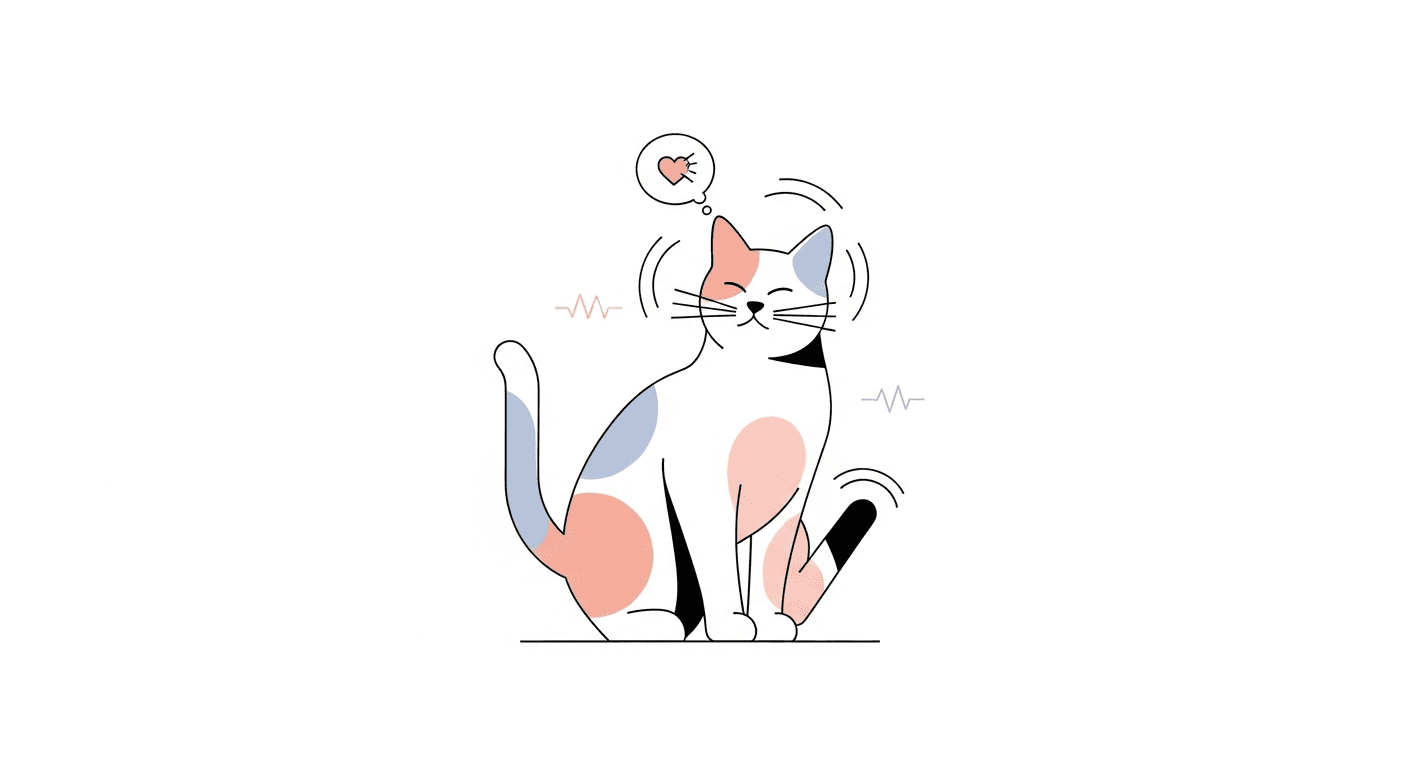
What Is a Cat Heat Cycle?
Female cats that have not been spayed go through estrus (heat) cycles beginning as early as 4–6 months of age. Unlike dogs, cats are induced ovulators — they only release eggs in response to mating. This means if mating doesn't occur, the cat will cycle back into heat every 2–3 weeks throughout the breeding season (typically February through September in the Northern Hemisphere, though indoor cats under artificial lighting can cycle year-round). Each heat cycle lasts 4–10 days.
The behaviors during heat can be alarming if you're not familiar with them — and exhausting for both cat and owner.
First 3 Steps When Your Cat Is in Heat
- Keep her strictly indoors: A cat in heat is highly motivated to escape and find a mate. Even a brief outdoor excursion can result in an unplanned pregnancy. Check all windows and doors for gaps.
- Provide extra attention and comfort: Gentle petting, especially along the spine and at the base of the tail, can help reduce restlessness temporarily. Some cats in heat want constant human contact; others become irritable — follow the cat's lead.
- Schedule a spay consultation: This is the only permanent solution. Contact your vet to discuss timing — cats can be spayed during or between heat cycles, though many vets prefer to wait until between cycles to reduce bleeding risk.
When to Go to the Vet Immediately
- Discharge that is bloody or smells foul — this is not normal for heat and may indicate pyometra (uterine infection), a life-threatening emergency
- Cat seems unwell, lethargic, or stops eating during a supposed heat cycle
- Heat cycles occurring more frequently than every 3 weeks — hormonal abnormality possible
Follow-Up Care Checklist
- Schedule spay surgery — the single most important step for an unspayed cat
- Ensure all exits are secured during heat periods
- If the cat is a registered breeding female, work with a vet knowledgeable in feline reproduction for safe management
Track Cycles with TailRounds
Log the start and end of each heat cycle in the TailRounds Daily Log. This history helps your vet determine the best timing for spay surgery and identify any irregularities.
Book a Vet Appointment
Ready to discuss spaying? Book at Happy Paws for a pre-surgical consultation and to schedule the procedure at the right time.
Summary for Your Clinic Visit
Tell your vet your cat's age, when heat cycles began, how frequent they are, how long each lasts, and any discharge or unusual symptoms you've observed. Bring a record of the last few cycles.
Continue Reading
 ✂️ Cat Care
Spayed Cat Behavior Changes: What to Expect After Surgery
Spaying changes a cat's hormonal profile. Learn what behavioral changes are normal after spaying and how to support your cat's recovery.
 ✂️ Cat Care
Cat Meowing or Yowling at Night: Causes and Solutions
Nighttime yowling is one of the most disruptive feline behaviors. Learn why it happens and what can be done about it — medically and behaviorally.
 ✂️ Cat Care
Pregnant Cat Care: What to Expect and How to Help
Caring for a pregnant cat involves diet changes, monitoring for complications, and preparing for birth. Learn the full timeline and what normal looks like.
 ✂️ Cat Care
New Kitten Care Checklist: Everything You Need in the First Month
A complete first-month guide for new kitten owners: vet visits, vaccinations, feeding, socialization, litter training, and what to watch for.