
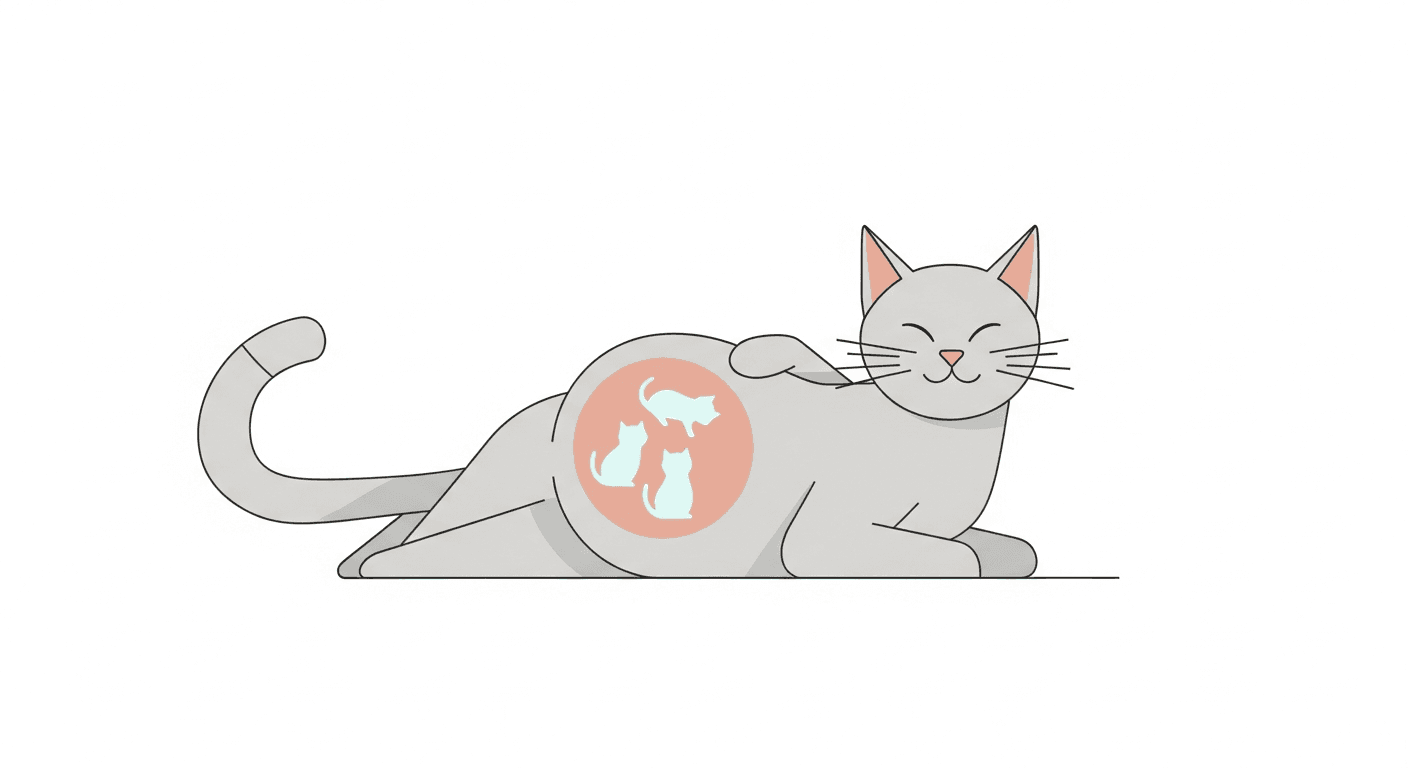
How Long Is a Cat Pregnant?
Feline gestation lasts approximately 63–67 days (9 weeks). Early signs of pregnancy in cats include enlarged pink nipples (around week 2–3, often the first visible sign), increased appetite, weight gain, and behavioral changes (often becoming more affectionate and calm). Around week 5–6, abdominal enlargement becomes clearly visible. X-ray at day 45+ can count kittens by visualizing their skeletons — useful for knowing when birth is complete.
First 3 Steps When You Suspect Your Cat Is Pregnant
- Confirm pregnancy with a vet: Ultrasound can detect kittens as early as day 21. Your vet will also check the mother's overall health and discuss nutrition and prenatal care.
- Transition to a kitten food diet: Pregnant and nursing cats have dramatically higher calorie and protein requirements. Switch to a high-quality kitten formula food (not adult maintenance food) from confirmation through weaning. Free-feed during the last 2 weeks of pregnancy — calorie restriction at this stage is harmful.
- Set up a quiet kittening box 2 weeks before the due date: A cardboard box with low sides (for the mother to step over), lined with absorbent pads or clean towels, placed in a quiet, warm, private location. Let the mother explore and get comfortable with it well before birth.
When to Go to the Vet Immediately
- Labor has started but no kitten delivered after 60 minutes of active straining — possible dystocia (difficult birth)
- Green or black discharge before any kittens are delivered (placental separation without delivery)
- Mother seems exhausted, is in distress, or stops straining mid-delivery
- More than 2 hours between kitten deliveries with obvious continued contractions
Follow-Up Care Checklist
- After birth, ensure all kittens are nursing within 2 hours — colostrum (first milk) provides essential immunity
- Count placentas — one per kitten; a retained placenta causes infection
- Weigh each kitten daily for the first 2 weeks — kittens should gain weight daily
- Discuss spaying the mother after weaning (6–8 weeks postpartum)
Track Pregnancy with TailRounds
Log the due date estimate, weekly weight gain, and any symptoms in the TailRounds Daily Log. During the last 2 weeks, note the mother's restlessness and temperature drops (normal 24 hours before birth).
Book a Vet Appointment
Prenatal care significantly improves outcomes for mother and kittens. Book a pregnancy consultation at Happy Paws as soon as pregnancy is suspected.
Summary for Your Clinic Visit
Tell your vet the date you believe mating occurred, describe the cat's current diet, note any symptoms, and ask for a kitten count X-ray in the last 2 weeks of pregnancy.
Continue Reading
 ✂️ Cat Care
Cat in Heat: Behaviors, Timeline, and What to Do
Understanding heat cycles in unspayed cats — what behaviors to expect, how long it lasts, and why spaying is the most humane solution.
 ✂️ Cat Care
New Kitten Care Checklist: Everything You Need in the First Month
A complete first-month guide for new kitten owners: vet visits, vaccinations, feeding, socialization, litter training, and what to watch for.
 🐱 Cat Health
Cat Not Eating: When Is It an Emergency?
Learn why your cat has stopped eating, which symptoms require immediate vet care, and how to safely encourage appetite at home.
 ✂️ Cat Care
Cat Post-Surgery Care: A Complete Recovery Guide
After any surgical procedure, proper home care determines recovery speed. Learn the key steps, what to watch for, and how to prevent complications.