
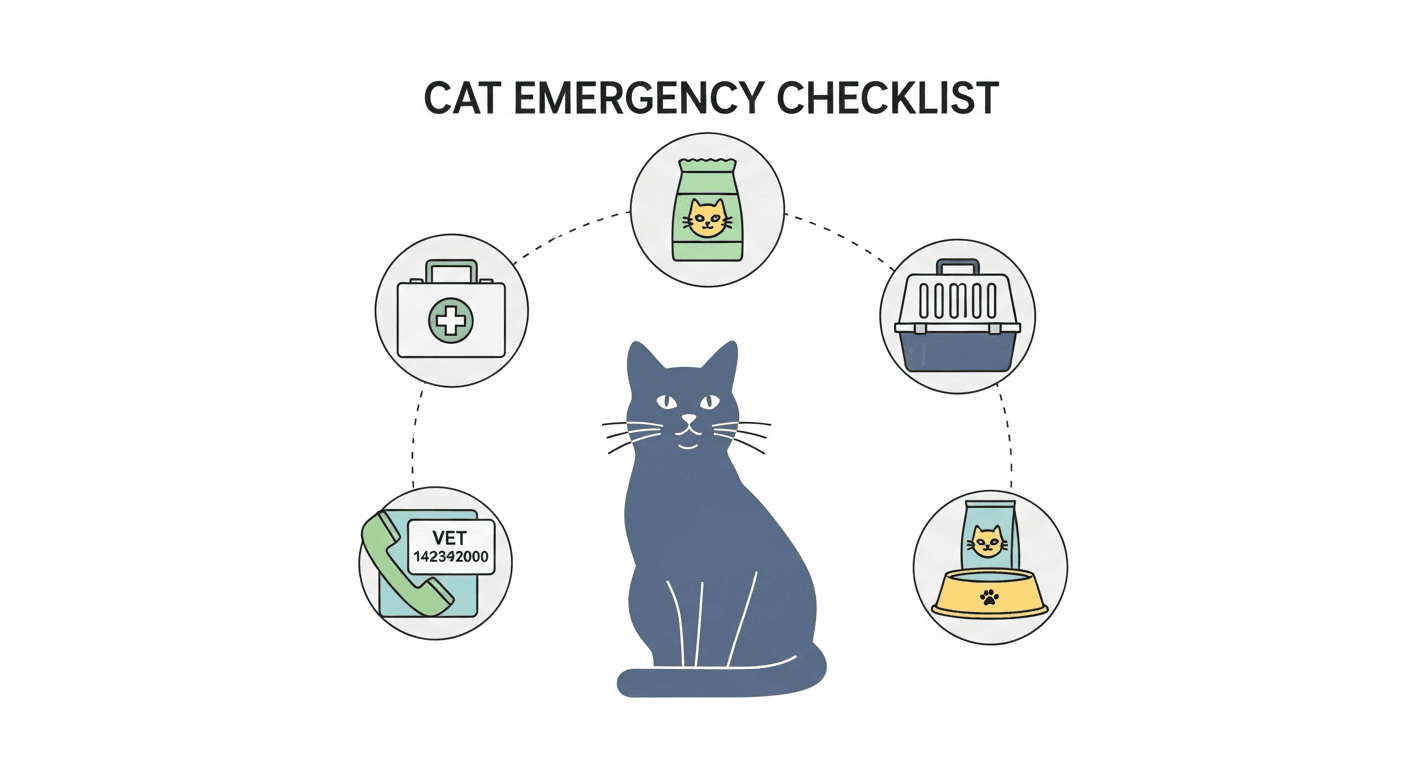
Why Preparation Is Critical for Cat Emergencies
A cat medical emergency is one of the most stressful situations a pet owner can face. Stress impairs decision-making. Having prepared in advance — knowing your emergency vet's address, having a carrier ready, and knowing which symptoms are genuine emergencies versus which can wait — can mean the difference between life and death when time is critical. Take 15 minutes now to prepare the checklist below before you need it.
First 3 Preparation Steps Every Cat Owner Should Take
- Identify and save your emergency vet contact: Find the nearest 24-hour emergency veterinary clinic and save the address and phone number in your phone now. Know the route. If your regular vet has after-hours emergency contact, save that too. In a crisis, searching for this information wastes precious minutes.
- Assemble a cat first aid kit: Include sterile saline, gauze pads, adhesive bandage tape, small blunt scissors, a digital thermometer, styptic powder (for nail bleeding), a feeding syringe, latex gloves, and a blanket. Keep this accessible — not buried in a cupboard.
- Have your cat's medical record accessible: Keep a list of current medications, vaccines, known conditions, allergies, and your regular vet's contact in your phone or a document you can access quickly. Emergency vets need this information fast.
True Emergencies — Go Now, Don't Wait
- Male cat not producing urine
- Any cat with labored breathing or open-mouth breathing
- Collapse or loss of consciousness
- Active seizure or post-seizure disorientation
- Suspected toxin ingestion
- Severe trauma (hit by car, fall from height, dog attack)
- Blue, white, or brown gums
- Sudden paralysis of hindlimbs (suspect aortic thromboembolism)
- Profuse bleeding that won't stop
Urgent — Call Your Vet Same Day
- Not eating for more than 24 hours
- Repeated vomiting (3+ times in 24 hours)
- Blood in urine or stool
- Sudden limping, non-weight-bearing
- Obvious swelling of the face or limb
Follow-Up Care Checklist
- Review your emergency kit every 6 months — replace expired items and restock used supplies
- Update the medical record after every vet visit
- If you have pet insurance, keep the claim hotline saved in your phone
Track Health Baseline with TailRounds
Knowing your cat's normal baseline — weight, appetite, energy — makes changes obvious and helps you communicate clearly with emergency staff. The TailRounds Daily Log builds this baseline automatically over time.
Book a Vet Appointment
Schedule your cat's annual wellness exam to catch problems before they become emergencies. Book at Happy Paws — proactive care is always better than reactive crisis management.
Summary for Your Clinic Visit
In any emergency, tell the vet the cat's age, weight, known conditions and medications, the timeline of symptoms, and anything the cat may have ingested. Bring your prepared emergency card if you have one.
Continue Reading
 ✂️ Cat Care
Cat Poisoning: Common Toxins and Emergency First Aid
Cats are exposed to many household toxins. Learn the most dangerous substances for cats, recognize poisoning symptoms, and know what to do immediately.
 ✂️ Cat Care
Cat Urinary Blockage: A Life-Threatening Emergency — Signs and Action
A blocked cat cannot urinate and will die within 24–72 hours without treatment. Know the signs so you can act in time.
 🐱 Cat Health
Cat Breathing Fast or Labored: When It's an Emergency
Fast, shallow, or labored breathing in cats is never normal outside of extreme heat or stress. Learn what it means and when to seek emergency care.
 🐱 Cat Health
Is Your Cat Too Tired? Signs of Lethargy vs Normal Rest
Cats sleep up to 16 hours a day — so how do you know when tiredness is actually lethargy? Learn the signs that distinguish normal rest from illness.