
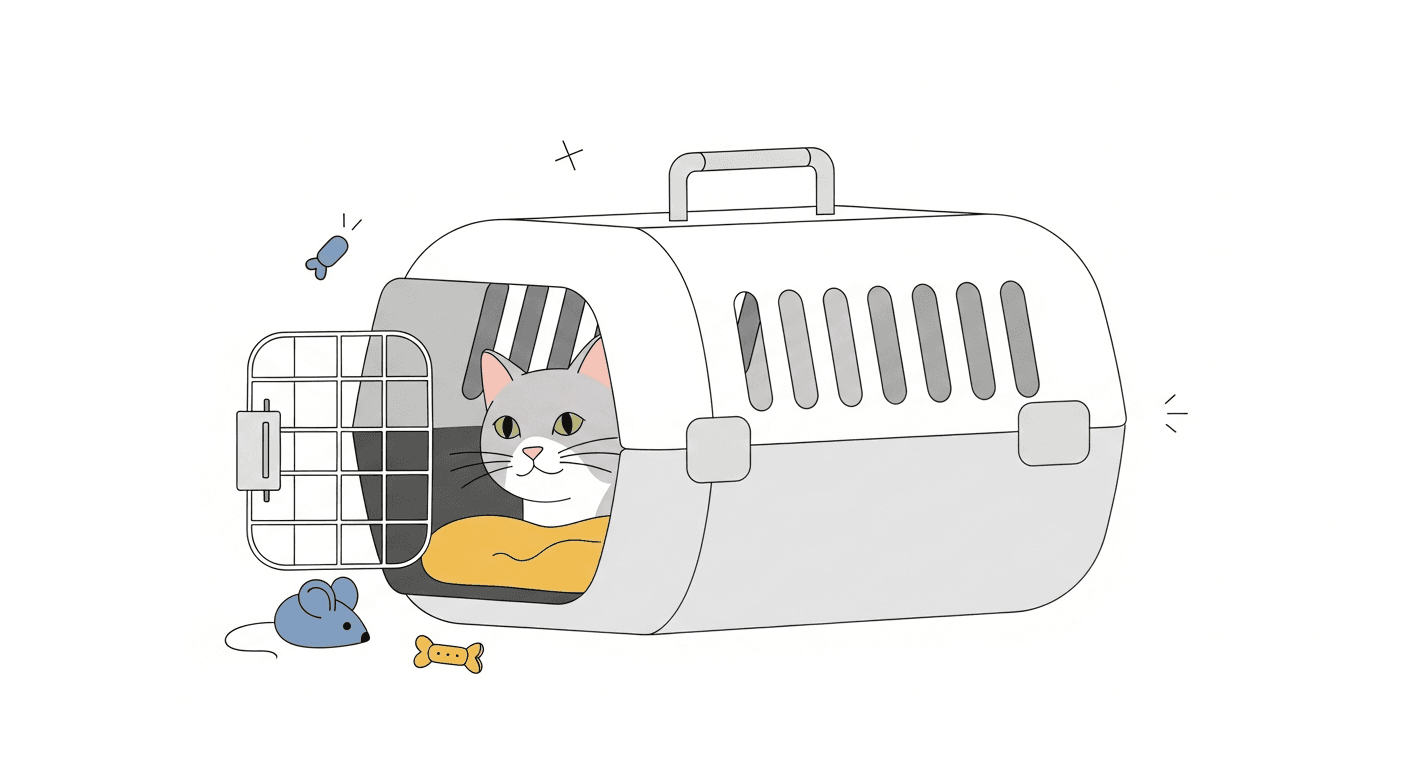
Why Carrier Training Matters
A cat that associates the carrier with fear, vet visits, and loss of control will be stressed before the trip even begins. This stress compounds at the vet clinic, making examination harder, blood pressure higher, and results less reliable. Carrier training — teaching the cat that the carrier is a safe, comfortable space — is one of the highest-value investments a cat owner can make. It takes 2–4 weeks for most cats and requires only patience and consistency.
Step-by-Step Carrier Training Protocol
- Week 1 — Make the carrier a permanent fixture: Place the carrier in a spot where the cat often rests. Remove the door. Line it with familiar bedding. Don't force interaction — let the cat investigate voluntarily. Place treats just inside the entrance daily.
- Week 2 — Feed inside the carrier: Move mealtime inside the carrier. Start with the bowl at the entrance, then gradually move it to the back over several days. Once the cat is eating fully inside, reattach the door but leave it propped open.
- Week 3 — Introduce the door and brief transport: Gently close the door for 30 seconds while the cat is calmly inside. Open it before any sign of distress. Gradually extend to 2 minutes, then pick up the carrier and carry it briefly around the room, then outside to the car for short practice "trips."
When Carrier Training Isn't Progressing
- Cat refuses to enter at any stage despite weeks of positive reinforcement — try a different carrier style (top-loading versus front-loading)
- Cat was severely traumatized — discuss anti-anxiety support with your vet to lower the baseline stress threshold before training
- For planned vet visits during training: use a towel wrapping technique or ask the clinic about "cat-friendly" handling protocols
Follow-Up Care Checklist
- Never store the carrier away — keep it out permanently as an ongoing safe space
- Reinforce carrier comfort monthly: put new treats or catnip inside, refresh bedding
- After a successful vet visit that went calmly, give an especially high-value treat upon returning home — this builds a positive end-association
Track Training Progress with TailRounds
Log each training session and the cat's response level in the TailRounds Daily Log. Tracking week-by-week progress keeps training consistent and shows you how far you've come.
Book a Vet Appointment
If you have a highly fearful cat and an upcoming vet visit, book at Happy Paws and let our team know in advance — we offer Fear Free handling protocols to minimize stress during the visit.
Summary for Your Clinic Visit
Tell your vet that carrier fear is an issue — this allows the team to prepare the right handling approach and consider whether pre-visit anxiolytic medication would help.
Continue Reading
 ✂️ Cat Care
Traveling with Your Cat: Reducing Stress and Staying Safe
Car rides and air travel are stressful for most cats. Learn preparation strategies, carrier training tips, and how to keep your cat safe and calm during travel.
 ✂️ Cat Care
Cat Sudden Aggression: Why It Happens and How to Respond Safely
A cat that suddenly attacks can be responding to pain, fear, overstimulation, or redirected aggression. Learn to identify the cause and de-escalate safely.
 ✂️ Cat Care
Cat Stress After Moving: How to Help Your Cat Adjust
Moving is deeply stressful for cats. Learn how to set up a new home, reduce anxiety, and recognize when stress is causing health problems.
 🐱 Cat Health
Cat Hiding More Than Usual: When Is It a Health Warning?
Cats hide when they're scared — but also when they're sick or in pain. Learn how to tell normal hiding from a health red flag.