
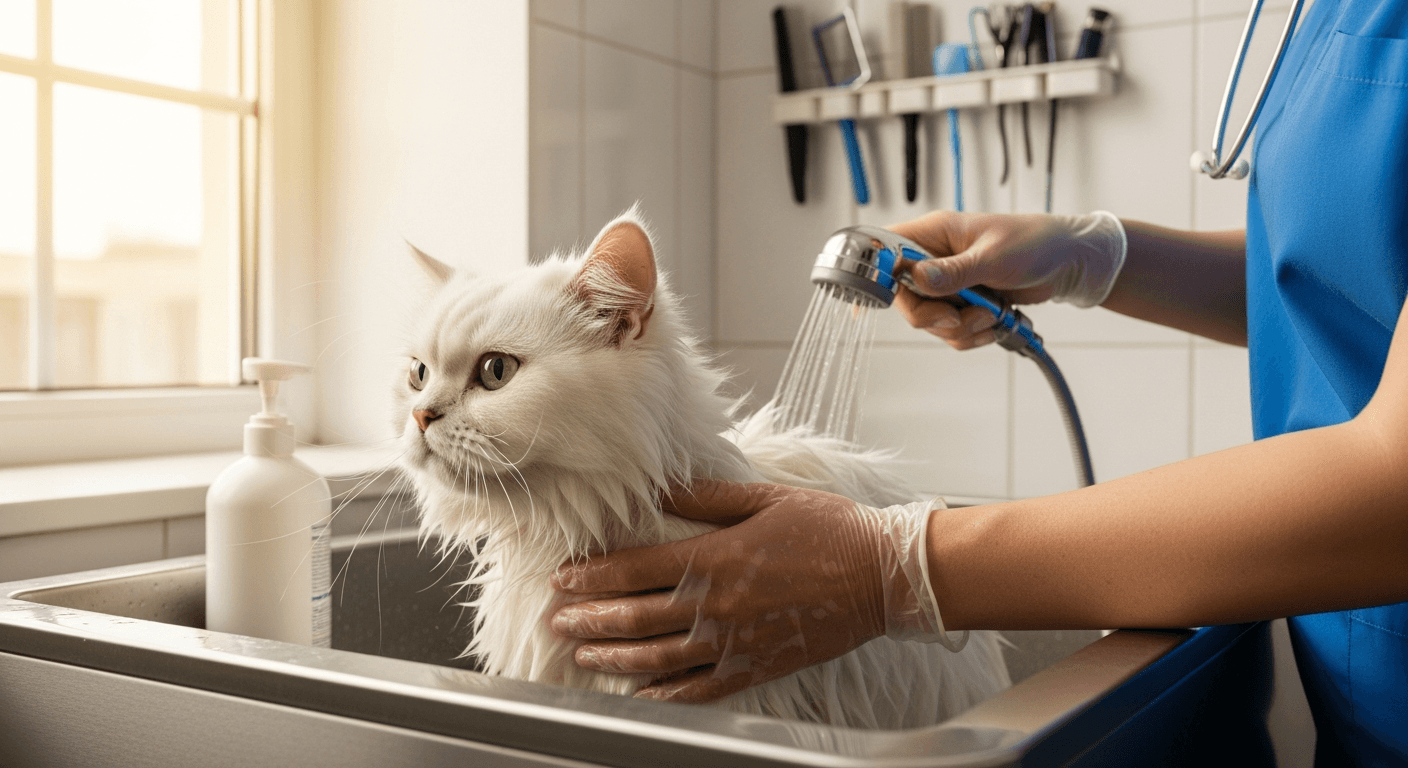
Do Cats Need Baths?
Cats are meticulous self-groomers and in most cases do not require bathing. However, specific situations warrant a bath: contact with a toxic or irritating substance (oils, chemicals, paint), very heavy flea or parasite infestation requiring a medicated shampoo, senior or obese cats unable to groom their hindquarters, and cats with skin conditions requiring therapeutic bathing. Bathing a cat unnecessarily strips natural oils from the coat, causes significant stress, and can lead to hypothermia in cats that aren't dried thoroughly.
First 3 Steps for a Safe Bath
- Prepare everything before bringing the cat into the bathroom: Warm water temperature (just below body temperature), non-slip mat on the tub or sink floor, cat-safe shampoo (never human shampoo or dish soap — these disrupt the skin pH), and multiple large towels. Having everything ready prevents the scramble that spooks cats mid-bath.
- Start with a shower head or cup, not full immersion: Gently wet the coat starting from the neck down (avoid the face and ears — these are cleaned separately with a damp cloth). Keep your movements slow and your voice calm and reassuring throughout.
- Rinse extremely thoroughly: Shampoo residue left in the coat causes skin irritation and a dull coat. Rinse until water runs completely clear. The rinsing step takes longer than most owners expect.
When to See the Vet
- Toxic substance exposure requiring immediate decontamination — call poison control and your vet before bathing to confirm the right approach
- Cat is showing signs of hypothermia after bathing: shivering, lethargy, pale gums
- Skin condition requiring medicated baths — your vet will prescribe the correct shampoo and frequency
Follow-Up Care Checklist
- Dry the cat thoroughly immediately after bathing — a blow dryer on low heat at a safe distance works, but only if the cat tolerates it; towel drying works too
- Keep the cat in a warm room until completely dry
- Offer a high-value treat and positive attention immediately after the bath to create a slightly more positive association for next time
Track Grooming with TailRounds
Log bathing dates and any skin observations using the TailRounds Daily Log. This is especially important for cats with prescribed therapeutic bath schedules.
Book a Vet Appointment
If your cat needs regular medicated baths for a skin condition, book a dermatology consultation at Happy Paws to confirm the diagnosis and the right shampoo protocol.
Summary for Your Clinic Visit
Tell your vet the reason for bathing, what substance the cat was exposed to (if any), and any skin changes you noticed before or after bathing.
Continue Reading
 ✂️ Cat Care
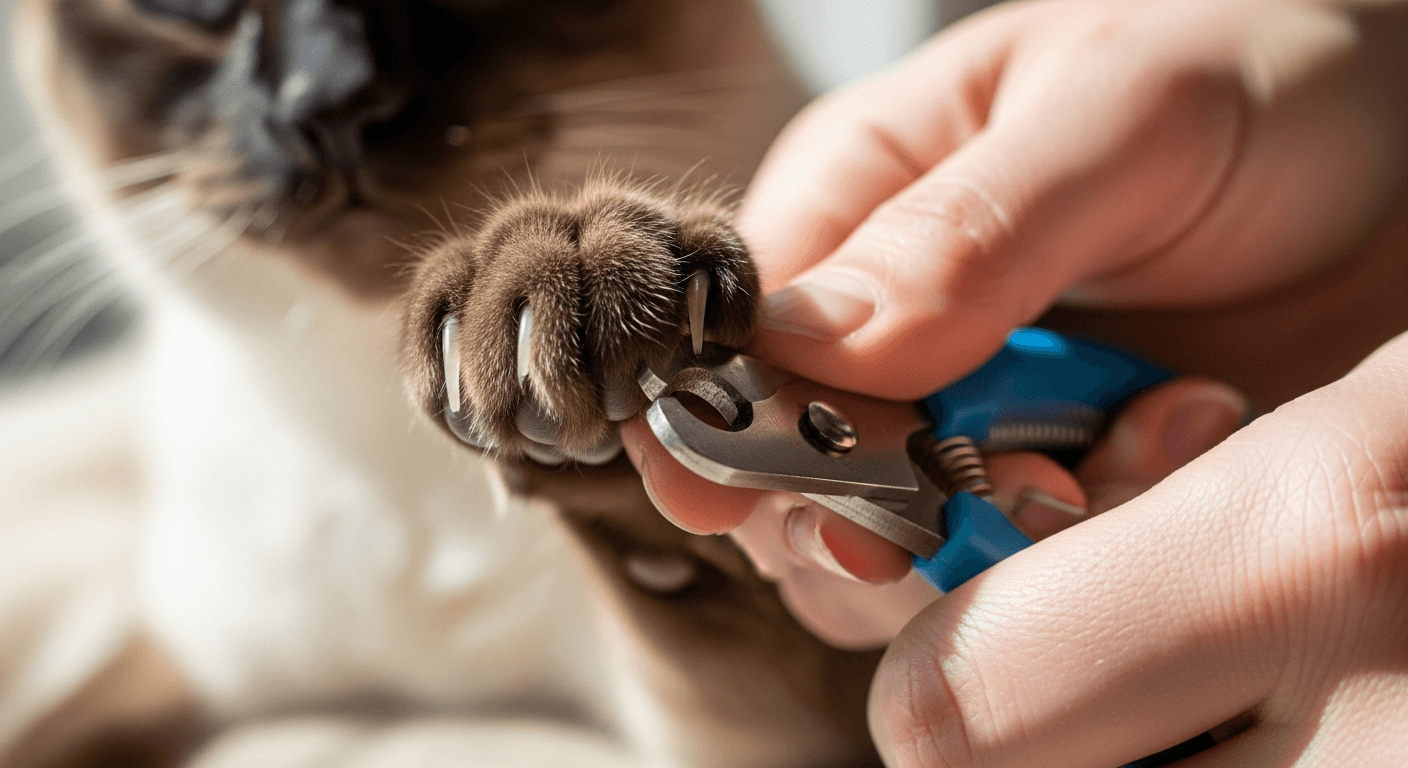
How to Trim Your Cat's Claws: A Step-by-Step Guide
Regular claw trimming prevents scratching injury and ingrown nails. Learn how to do it safely at home without causing your cat distress.
 🐱 Cat Health
Cat Dandruff: Why It Happens and How to Help
White flakes on your cat's coat might be dandruff — or something more. Learn the causes of feline seborrhea and how to improve your cat's skin health.
 🐱 Cat Health
Itchy Cat: Allergies, Parasites, and Skin Disease Explained
An itchy cat scratches, bites, and over-grooms itself. Discover the most common causes of feline pruritus and how each is treated.
 🐱 Cat Health
Cat Flea Treatment: What Actually Works and What Doesn't
Not all flea treatments are equal — some are ineffective, others unsafe for cats. Learn which products work, how to treat the environment, and how to prevent reinfestation.