
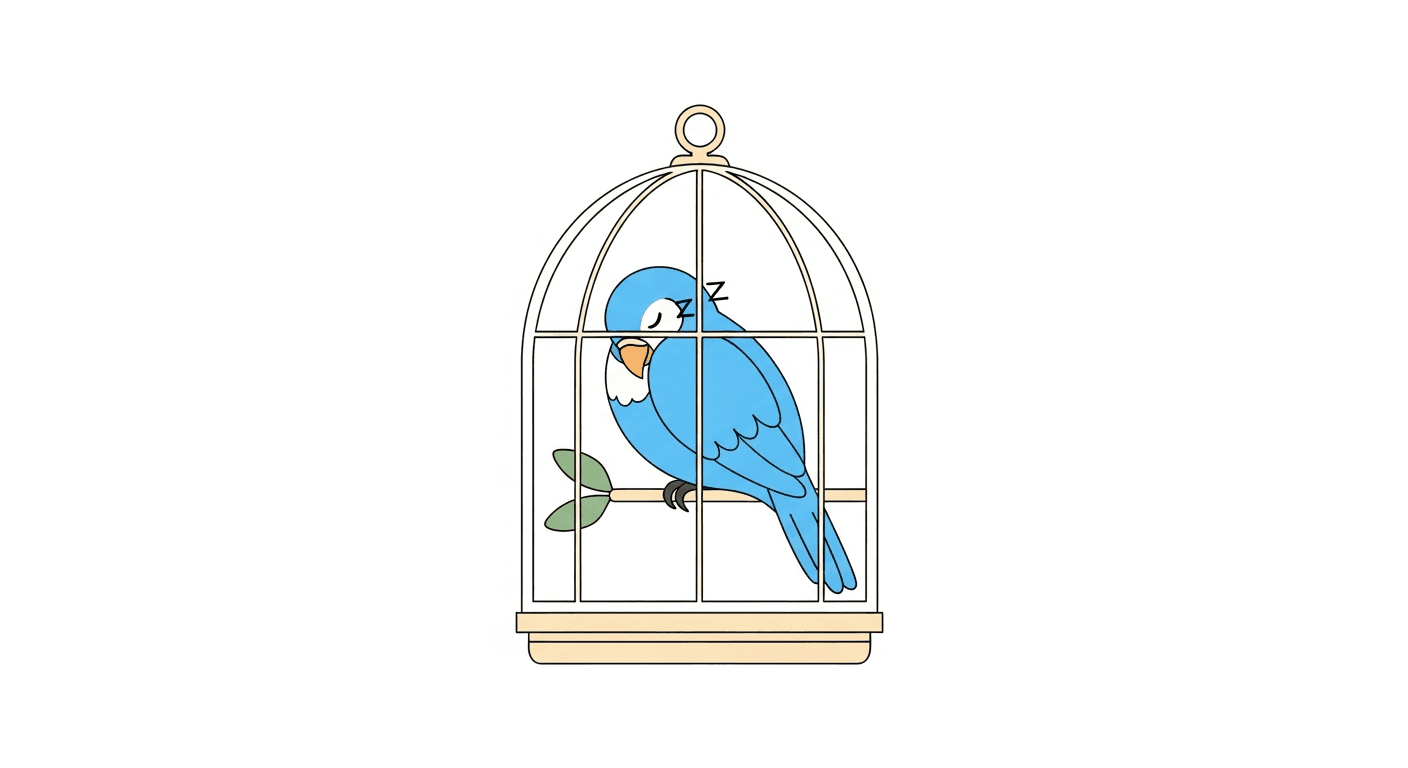
Why Sleep Matters for Birds
Birds require 10–12 hours of uninterrupted darkness and quiet per night. This is not simply a preference — it is a biological requirement. Sleep-deprived birds show measurably suppressed immune function, increased hormonal imbalance, higher stress hormone levels, and dramatically elevated rates of behavioral problems including feather plucking, screaming, biting, and chronic anxiety.
Many birds kept in living rooms are exposed to household light and noise until late in the evening, effectively living in a state of chronic sleep deprivation. This is an underrecognized cause of health and behavioral problems in pet birds.
First 3 Steps at Home
- Establish a consistent sleep schedule: Cover the cage with a dark, breathable cover at the same time every evening — target 9–10 PM at the latest. Uncover at a consistent morning time. This circadian consistency reduces hormonal dysfunction and improves overall health. The specific time matters less than the consistency.
- Create true darkness and quiet: A thin cloth cover does not block enough light. Use a heavy, dark cover that blocks light from screens, lamps, and streetlights. Reduce household noise during sleeping hours — TV and conversation carry through walls. If the bird cannot have quiet where it is, consider moving the cage to a bedroom or quiet room for night hours.
- Watch for night frights: Some birds — cockatiels are particularly prone — experience sudden panic episodes at night when they are disturbed by a sound or shadow in partial darkness. Night frights cause flailing in the cage, injury, and extreme distress. A very dim night light near the cage (not directly illuminating it) can reduce panic while still allowing adequate sleep.
When to Go to the Vet Immediately
- Injury from night fright episode — bleeding, abnormal posture, or wing droop
- Persistent screaming at night despite adequate sleep conditions — possible pain
- Feather plucking that developed or worsened alongside poor sleep management
Follow-Up Care Checklist
- Maintain the 10–12 hours dark period seven days a week including weekends
- Ensure the sleep environment is at a stable temperature — cold drafts at night are dangerous
- Avoid waking the bird for interaction during sleep hours
- Monitor behavioral improvements — most sleep-deprived birds improve within 2–3 weeks of proper sleep
Track Sleep Patterns with TailRounds
Log the time the cage is covered and uncovered, and note any night disturbances or morning behavioral changes in the TailRounds Daily Log. This helps you see the direct relationship between sleep quality and your bird's daytime behavior.
Book a Vet Appointment
If behavioral problems persist despite improved sleep management, book an assessment. Book at Happy Paws — our avian team can evaluate for hormonal imbalance or other medical causes of sleep disruption.
Summary for Your Clinic Visit
Describe the current sleep schedule, when and how the cage is covered, any known night disturbance sources, and what behavioral changes you've observed. Note whether improvements occurred after making sleep changes.
Continue Reading
 🦜 Bird & Parrot Health
Bird Behavioral Problems: Screaming, Biting, and Feather Destruction
Behavioral problems in parrots are often rooted in unmet needs. Learn how species-appropriate care prevents the most common issues.
 🦜 Bird & Parrot Health
Feather Plucking in Birds: Medical and Behavioral Causes
Feather destructive behavior is one of the most complex conditions in pet birds. Learn the range of causes and why a thorough veterinary workup comes first.
 🦜 Bird & Parrot Health
Bird Housing and Cage Setup: Creating a Safe, Enriching Environment
The right cage setup dramatically affects your bird's physical and mental health. Learn about minimum space requirements, perch types, toy safety, and cage placement.
 🦜 Bird & Parrot Health
Daily Bird Care Routine: Essential Health Monitoring for Pet Birds
A consistent daily care routine is the most powerful disease prevention tool available to bird owners. Learn what to observe every day.