
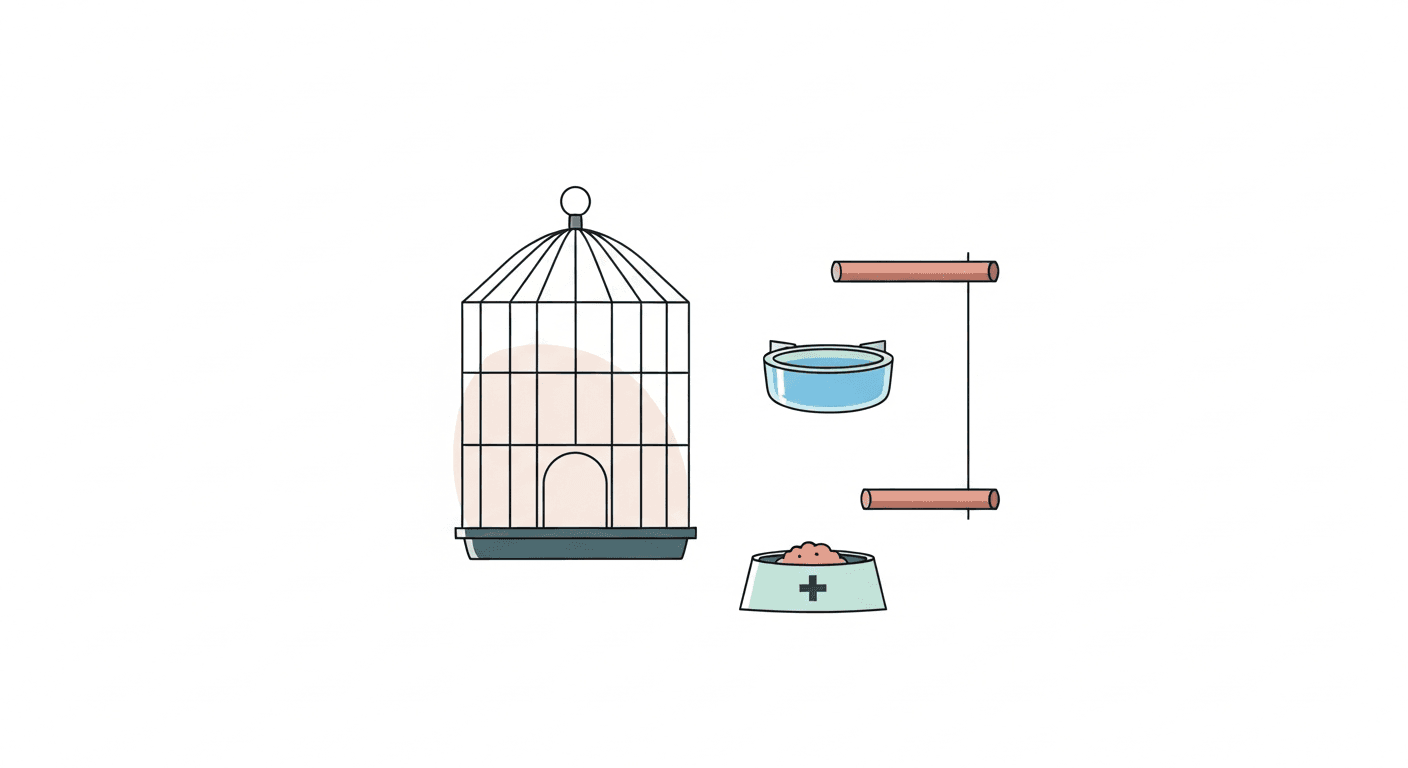
Why Cage Setup Affects Bird Health
A bird spends most of its life in its cage. The size, layout, perch quality, toy selection, and placement of the cage all directly affect physical health, mental health, and behavior. Inadequate space causes physical muscle atrophy and psychological frustration. Wrong perch sizing causes foot problems and joint pain. Poorly placed cages lead to stress from drafts, temperature extremes, or social isolation.
Getting this right is not optional enrichment — it is foundational health care.
First 3 Steps at Home
- Verify the cage size is sufficient: The bird must be able to fully extend both wings simultaneously without touching the cage sides. For most small birds (budgies, cockatiels), a minimum of 60x45x60cm is appropriate for one bird; larger species need proportionally larger spaces. Taller cages are less valuable than wide cages — birds fly horizontally, not vertically. Larger is always better.
- Install varied perch types at appropriate diameters: Uniform plastic or wooden dowel perches cause pressure sores and joint problems because the foot muscle is never exercised differently. Provide at minimum three perch types: natural wood branch (irregular diameter), rope perch, and one harder perch at the primary resting spot. Perch diameter should allow the foot to grip comfortably without fully encircling — toes should not overlap.
- Select cage placement carefully: Position the cage against a wall (not in the center of the room — birds feel exposed) at eye level or slightly above, away from windows in direct sun, away from drafts and kitchen fumes, and in an area of household activity during the day. Complete isolation causes depression; constant exposure without retreat causes chronic stress. The bird should be able to see family activity but also have hiding spots within the cage.
When to Go to the Vet Immediately
- Any foot sore, swelling, or abnormal grip that may have developed from poor perch setup
- Behavioral deterioration (feather plucking, screaming, aggression) that began after a cage move or change
- Signs of respiratory illness that may indicate drafts or air quality issues in the current placement
Follow-Up Care Checklist
- Rotate toys weekly to maintain novelty and mental engagement
- Clean the cage at minimum weekly — full clean with bird-safe disinfectant, replace substrate/paper liner
- Check all toys for unsafe materials: zinc-coated metals, loose parts that could be swallowed, or fraying rope that could entangle toes
- Provide daily out-of-cage time in a bird-safe room — minimum 2 hours for social species
- Cover the cage at night to give 10–12 hours of dark rest
Track Environmental Notes with TailRounds
Log any cage changes or environmental modifications alongside behavioral observations in the TailRounds Daily Log. This helps you see whether changes had the intended positive effect on behavior and health.
Book a Vet Appointment
A new bird wellness exam is the best time to discuss your specific setup. Book at Happy Paws — our avian team can review your setup and make species-specific recommendations.
Summary for Your Clinic Visit
Be prepared to describe your cage dimensions, perch types, toy rotation, out-of-cage time, cage placement, and any recent changes to these elements when discussing behavioral or physical problems with your vet.
Continue Reading
 🦜 Bird & Parrot Health
Bird Behavioral Problems: Screaming, Biting, and Feather Destruction
Behavioral problems in parrots are often rooted in unmet needs. Learn how species-appropriate care prevents the most common issues.
 🦜 Bird & Parrot Health
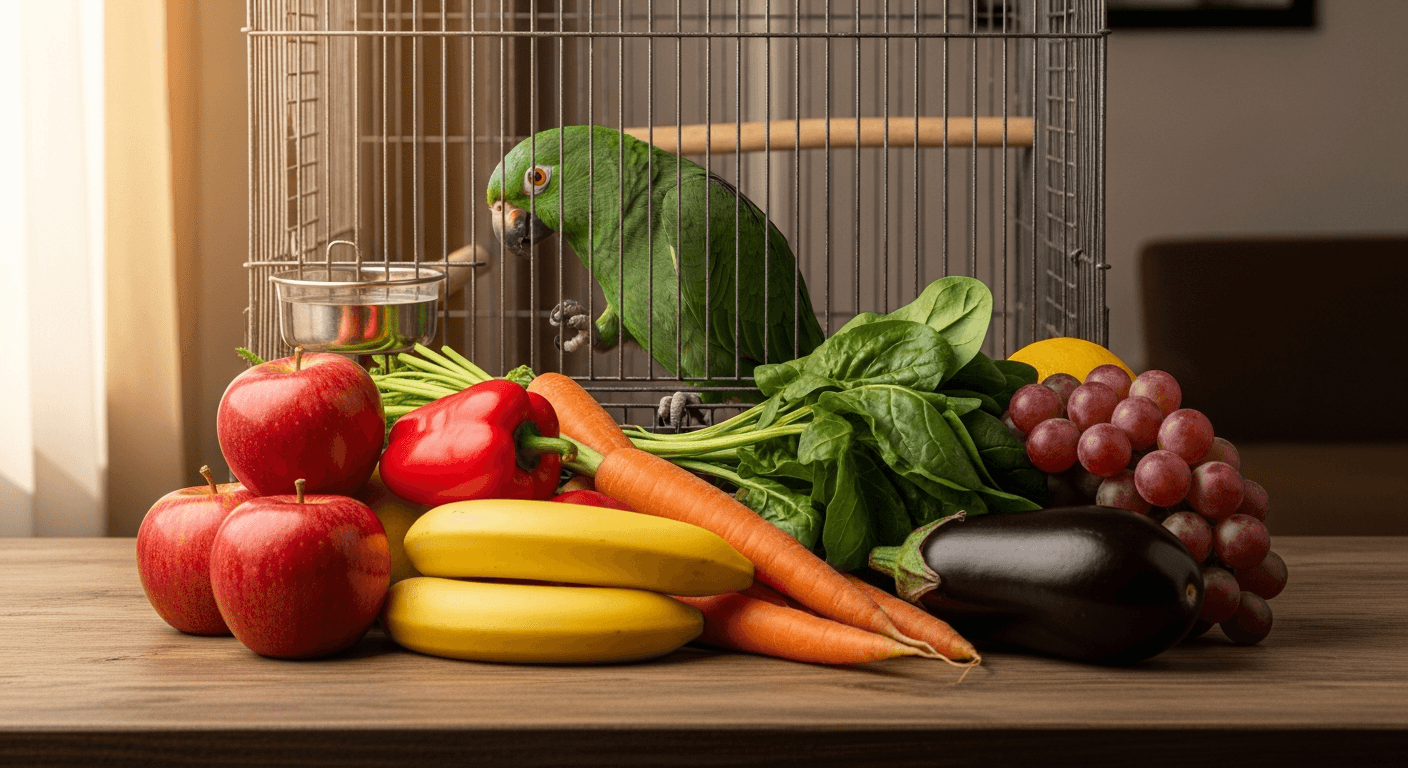
Bird Nutrition Guide: Why Seeds Alone Are Harmful
Seed-only diets cause the majority of preventable disease in pet birds. Learn the correct nutritional approach for common species and how to transition safely.
 🦜 Bird & Parrot Health
Air Quality Dangers for Pet Birds: What Every Bird Owner Must Know
Birds have ultra-sensitive respiratory systems and can die within minutes of exposure to certain airborne toxins. Learn the hidden household dangers and how to protect your bird.
 🦜 Bird & Parrot Health
Daily Bird Care Routine: Essential Health Monitoring for Pet Birds
A consistent daily care routine is the most powerful disease prevention tool available to bird owners. Learn what to observe every day.