
What Makes Post-Surgical Recovery Difficult in Birds
Birds are among the most challenging surgical patients because of their rapid metabolism, temperature sensitivity, and the stress response that accompanies any handling. Anesthesia in birds carries higher inherent risk than in mammals, and the post-operative period requires extremely careful management to prevent hypothermia, aspiration, infection, and self-trauma to the surgical site.
Most avian post-surgical complications are preventable with proper home care in the 72–96 hours following discharge.
First 3 Steps at Home
- Maintain warmth immediately on discharge: Bring a warm, ventilated carrier to the vet appointment for discharge. The car should be pre-warmed. At home, set the bird up in a hospital cage at 28–30°C — a small cage, low perch or even no perch if stability is compromised, easy access to food and water at floor level, and minimal light stimulation. Do not return to the main cage until the vet has confirmed the bird is ready.
- Support eating without forcing: Offer familiar, preferred foods in easy-to-reach positions. Soft foods — cooked sweet potato, soft fruit, well-cooked grain — are easier for a recovering bird to eat. Weigh daily and report any weight loss of more than 5% to the vet promptly. Many post-surgical birds need hand-feeding support in the first 24–48 hours.
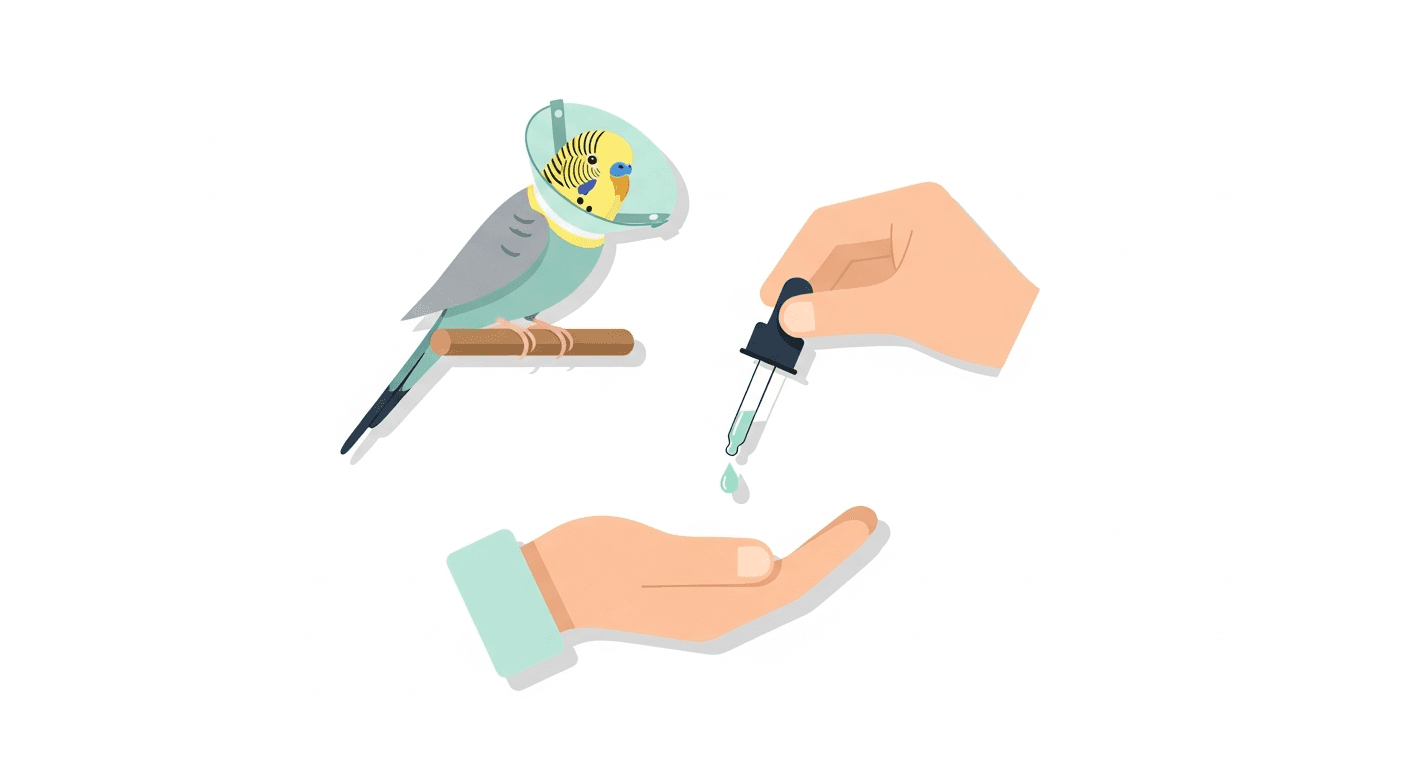
- Prevent wound interference: Birds will attempt to reach and chew surgical sites. Your vet will typically bandage or apply surgical adhesive to incisions, but observe closely for any picking behavior. An e-collar (Elizabethan collar) is sometimes used for birds but requires careful fitting — ask your vet whether this is appropriate for your bird's recovery.
When to Go to the Vet Immediately
- Wound opening or suture removal by the bird
- Any discharge from the wound beyond minimal clear fluid
- Hypothermia — bird cold to touch, not warming despite warming measures
- Complete refusal to eat for more than 24 hours post-surgery
- Worsening lethargy or continued inability to perch after 48 hours
- Respiratory distress at any point post-surgery
Follow-Up Care Checklist
- Administer all medications on schedule — pain control supports feeding, healing, and immune function
- Keep the recovery cage in a quiet, warm room with minimal traffic
- Do not allow flight until the vet has cleared the bird for activity
- Attend all scheduled follow-up appointments for wound assessment
- Gradually reintroduce normal housing and routine only after veterinary clearance
Track Recovery Progress with TailRounds
Log daily weight, food and water intake, wound appearance, activity level, and medication administration in the TailRounds Daily Log throughout recovery. This record is essential information for your vet's follow-up assessment.
Book a Vet Appointment
Follow-up appointments are not optional after avian surgery. Book before discharge and set reminders. Book at Happy Paws — our avian team provides detailed post-operative guidance for every surgical patient.
Summary for Your Clinic Visit
Bring your daily recovery log, note the exact timeline of food and medication administration, describe the wound appearance, and report any behavioral changes or concerns since discharge.
Continue Reading
 🦜 Bird & Parrot Health
Egg Binding in Female Birds: A Life-Threatening Emergency
Egg binding is one of the most common and life-threatening reproductive emergencies in female birds. Learn to recognize it and act within hours.
 🦜 Bird & Parrot Health
Liver Disease in Birds: Signs, Causes, and Management
Liver disease is common in pet birds, particularly those on seed-heavy diets. Learn the signs, which species are most at risk, and how it's treated.
 🦜 Bird & Parrot Health
Bird Weight Loss: Why Regular Weighing Is Essential
Birds hide weight loss under their feathers until it's severe. Daily weighing on a gram scale is the most sensitive early disease detection tool for bird owners.
 🦜 Bird & Parrot Health
Daily Bird Care Routine: Essential Health Monitoring for Pet Birds
A consistent daily care routine is the most powerful disease prevention tool available to bird owners. Learn what to observe every day.