
The First Hours After Surgery
When you pick up your pet after surgery, expect them to still be feeling the effects of anesthesia. Grogginess, wobbly walking, disorientation, and sleepiness are completely normal for the first 12–24 hours. The drugs used for anesthesia are metabolized gradually, and the effects linger well after the pet is awake and able to walk.
Set up a comfortable, quiet recovery space at home — a dog crate or a small room where the pet cannot jump, run, climb stairs, or access furniture. Keep the space warm (pets lose body heat during surgery and anesthesia) and draft-free. Offer water when you get home; offer a very small meal that evening if your pet seems interested — a full meal immediately after anesthesia can cause vomiting. Book a vet appointment at Happy Paws for any follow-up appointments the surgeon recommends.
Managing the Incision Site
Surgical incisions require a clean, dry environment and protection from the pet's own mouth and paws. The biggest threat to healing is self-trauma — licking, chewing, or scratching at the incision can introduce bacteria, break down sutures, and reopen the wound.
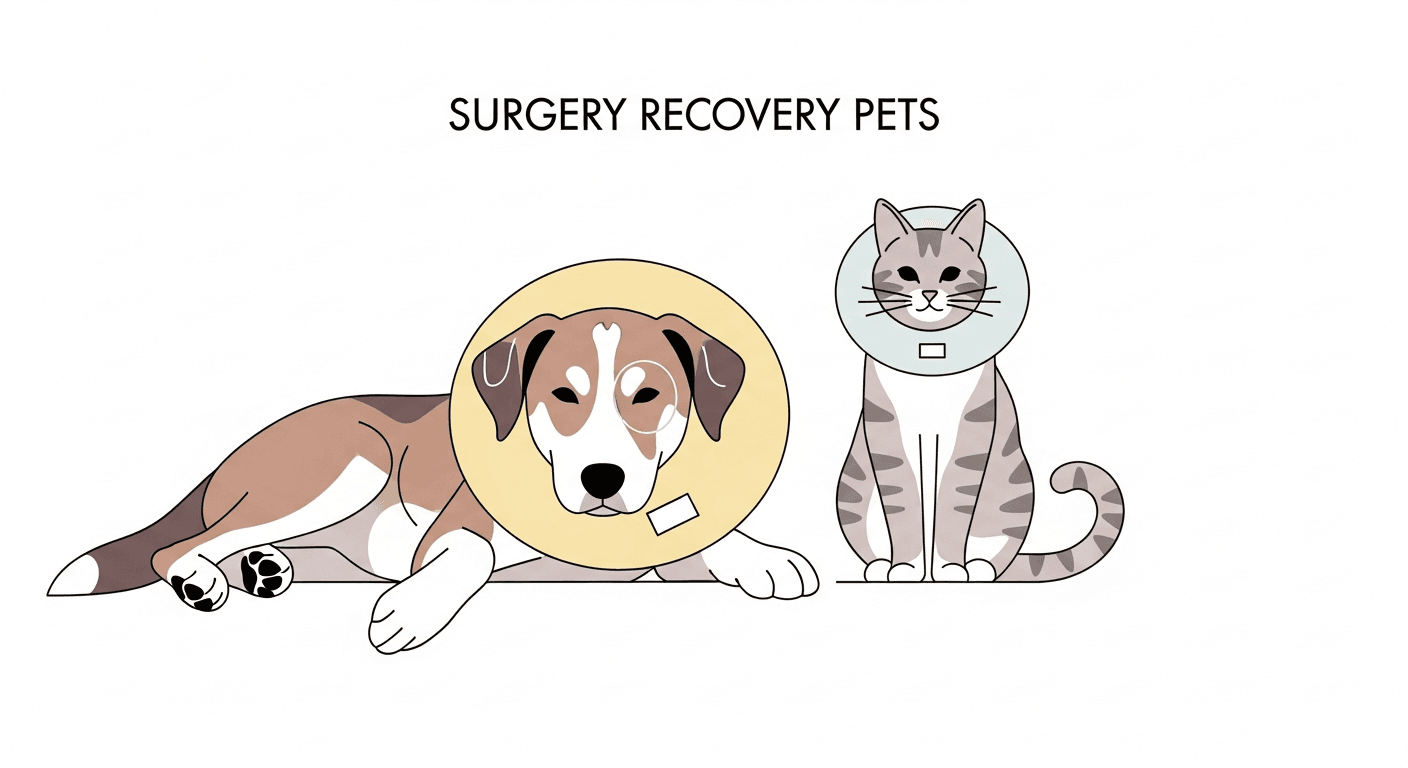
- The e-collar (cone): Your pet must wear the e-collar at all times — even while sleeping — whenever you cannot directly supervise them. It is the single most important tool for preventing self-trauma. Soft e-collars and inflatable donuts are available as alternatives for pets that cannot tolerate hard plastic cones.
- Keep the incision dry: No bathing, swimming, or prolonged exposure to moisture for the duration of healing (typically 10–14 days).
- Do not apply anything to the incision: No antiseptics, hydrogen peroxide, or creams unless specifically instructed by your vet — these can impair healing.
- Check the incision twice daily: Look for signs of normal healing versus complications (see below).
What Normal Healing Looks Like vs. Warning Signs
Normal:
- Some redness immediately around the incision edges in the first 1–3 days
- Mild swelling at the incision site in the first 48 hours
- Small amount of clear or slightly pink discharge in the first 24–48 hours
- A healing scar that gradually shrinks and flattens over 2–4 weeks
Contact your vet immediately if you see:
- Redness that is spreading or darkening beyond the immediate incision edges
- Swelling that is increasing rather than decreasing after 48–72 hours
- Yellow, green, or foul-smelling discharge
- The incision opening — gaps between sutures or tissue visible beneath
- Excessive bleeding
- Your pet in visible distress despite pain medication
Use the TailRounds AI Triage tool if you are unsure whether what you are observing is normal healing or a complication that needs attention.
Activity Restrictions and Pain Management
Activity restriction is one of the most critical — and most difficult — aspects of post-surgical recovery. Most soft tissue procedures require 10–14 days of restricted activity; orthopedic surgeries (TPLO, fracture repair) often require 6–8 weeks of strict rest with gradual reintroduction of activity.
Restrict your pet to:
- Short, leashed bathroom walks only — no running, jumping, playing
- No stairs, furniture, or off-leash time
- Confine to a crate or small room when unsupervised
Give all prescribed pain medications on schedule — even if your pet seems comfortable. Pain is often undertreated in recovering animals because stoic behavior is mistaken for lack of pain. An animal in pain moves less, and restricted movement is exactly what healing incisions and surgeries need. Never give human pain medications. Track all medications and healing progress in the TailRounds Daily Log.
Continue Reading
 🏥 Vet Guide
Is Anesthesia Safe for Pets?
Anesthesia concerns stop some pet owners from pursuing needed procedures. Here is what modern veterinary anesthesia involves and what the real risks are.
 🏥 Vet Guide
Recognizing and Managing Pain in Pets
Pets hide pain instinctively. Learn the subtle signs of pain in dogs and cats, what options exist for management, and how to advocate effectively for your pet.
 🏥 Vet Guide
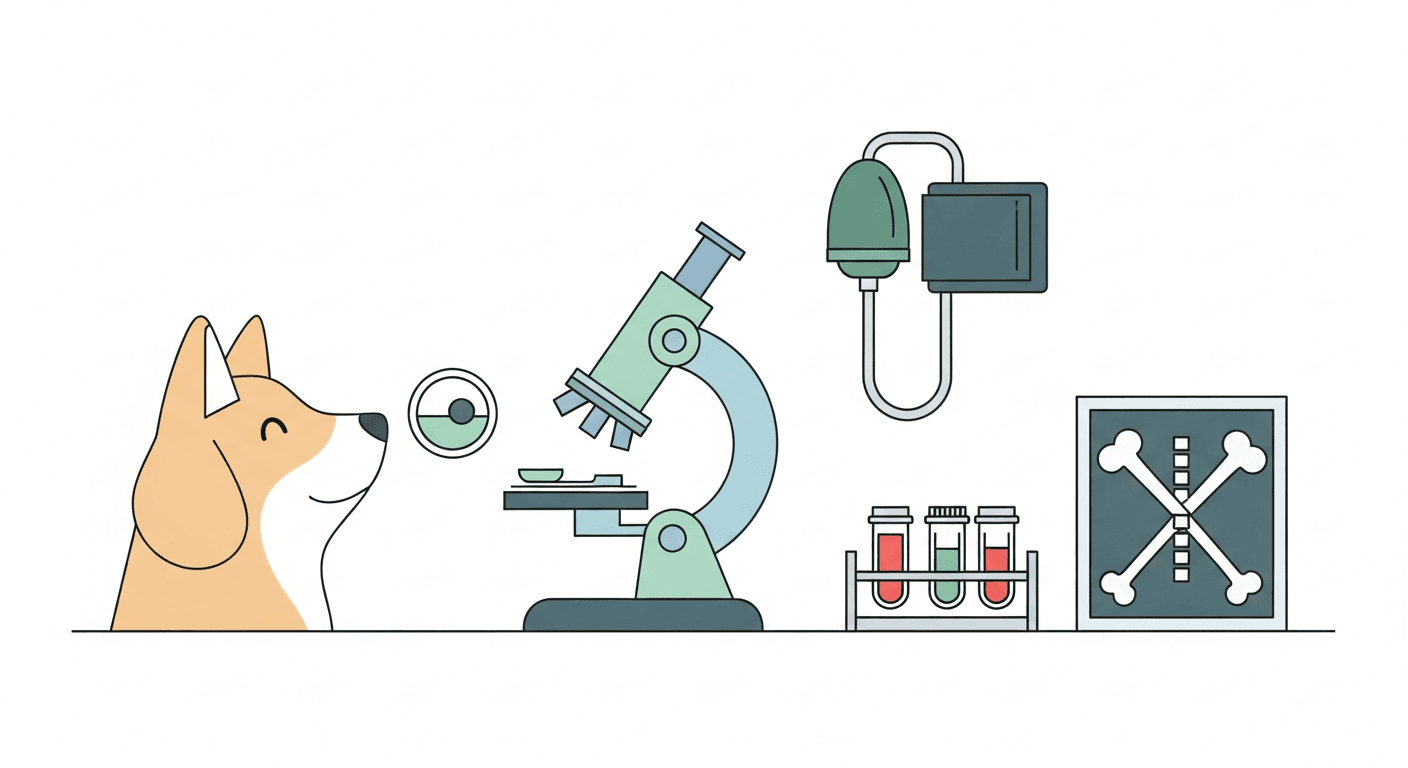
Common Diagnostic Tests: Blood Work, X-Rays, Ultrasound
Understanding what your vet is looking for with each diagnostic test helps you make informed decisions. Here is a plain-language guide to the most common tests.
 🏥 Vet Guide
How to Communicate Effectively With Your Vet
Great communication with your vet leads to better care for your pet. Learn how to describe symptoms accurately, ask productive questions, and advocate confidently.