
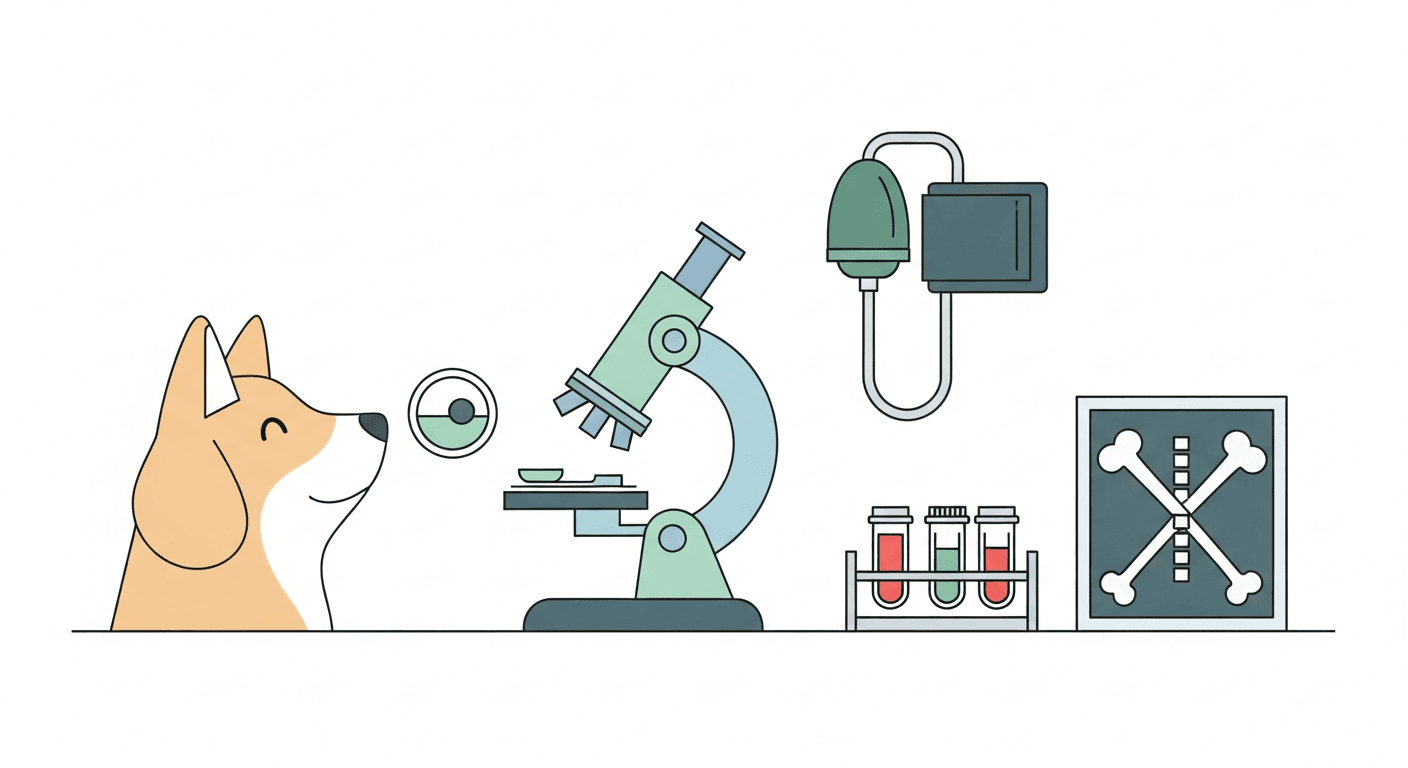
Why Diagnostics Matter
Physical examination is a powerful tool, but it has limits. A vet can feel that an abdomen is painful, but not what is causing the pain. They can hear an abnormal heart sound, but not see exactly which valve is affected or how severely the heart muscle is compromised. Diagnostic tests extend the vet's ability to see inside the body — identifying what is wrong, how serious it is, and how best to treat it.
Understanding what each test looks for helps you participate meaningfully in conversations about your pet's care and make informed decisions about which tests are worth pursuing given your pet's specific situation. Book a vet appointment at Happy Paws whenever you notice concerning symptoms in your pet.
Blood Work: What Each Panel Measures
Complete Blood Count (CBC): Measures the cells in the bloodstream.
- Red blood cells (RBC) and hemoglobin — detects anemia (too few) or polycythemia (too many)
- White blood cells (WBC) — elevated suggests infection or inflammation; very low suggests immune suppression or bone marrow disease
- Platelets — low platelets cause bleeding problems; assessed before surgery
Biochemistry Profile (Chem Panel): Evaluates organ function using substances in the blood.
- BUN and creatinine — kidney function markers; elevated suggests kidney disease or dehydration
- ALT and ALP — liver enzymes; elevated indicates liver stress or disease
- Blood glucose — elevated in diabetes; low in insulinoma or insulin overdose
- Albumin and total protein — markers of nutrition, liver function, and protein-losing diseases
- Electrolytes (sodium, potassium, chloride) — critical for kidney disease, Addison's disease, heart disease management
Thyroid (T4): Evaluates thyroid hormone levels. Hyperthyroidism (high T4) is very common in older cats. Hypothyroidism (low T4) is the most common hormonal disease in dogs.
Urinalysis: A urine sample reveals kidney concentrating ability, signs of infection, crystals, glucose, blood, and protein — often the earliest indicators of kidney disease before blood markers change.
Imaging: X-Ray (Radiography)
X-rays (radiographs) use ionizing radiation to create images of internal structures. Dense structures (bone) appear white; air-filled structures (lungs) appear black; soft tissues appear in intermediate shades of gray.
X-rays are excellent for:
- Bone — fractures, joint changes, bone tumors, hip dysplasia grading
- Thorax (chest) — heart size and shape, lung disease (fluid, pneumonia, masses)
- Abdomen — organ size, foreign body ingestion, gas patterns suggesting obstruction or bloat
- Dental — root disease, bone loss, retained teeth (dental X-rays are a separate specialized equipment)
X-rays provide less detail for soft tissue structures (abdominal organs like the liver or spleen) than ultrasound, but they excel at showing the overall picture and bone structures.
Imaging: Ultrasound
Ultrasound uses high-frequency sound waves to create real-time images of soft tissue structures. The probe is placed on the skin surface (fur may need to be shaved over the area) and bounces sound waves off internal structures to build a moving image.
Ultrasound is excellent for:
- Evaluating abdominal organ internal structure — the liver, spleen, kidneys, adrenal glands, lymph nodes, bladder
- Detecting masses within organs
- Guided fine needle aspiration — using ultrasound to safely guide a needle into a mass or organ to collect cells for analysis
- Cardiac ultrasound (echocardiography) — measuring heart chamber size, wall thickness, valve function, and blood flow
- Detecting free fluid in the abdomen or chest
- Pregnancy confirmation and monitoring
Advanced Imaging: CT and MRI
- CT (Computed Tomography): A series of X-ray slices processed into 3D images. Excellent for bone detail, thoracic disease, and surgical planning. Requires anesthesia in pets. Faster than MRI.
- MRI (Magnetic Resonance Imaging): Uses magnetic fields rather than radiation. The gold standard for brain and spinal cord imaging, soft tissue masses, and complex orthopedic assessment. Requires anesthesia in pets. Takes longer than CT.
These advanced modalities are typically performed by or in consultation with a veterinary radiologist at a referral center. Track all diagnostic results and imaging reports in My Pets on TailRounds for a complete, organized medical record.
Continue Reading
 🏥 Vet Guide
Understanding Your Vet Bill
Vet bills can feel overwhelming and confusing. Learn how to read an itemized invoice, what drives costs, and how to manage veterinary expenses responsibly.
 🏥 Vet Guide
Is Anesthesia Safe for Pets?
Anesthesia concerns stop some pet owners from pursuing needed procedures. Here is what modern veterinary anesthesia involves and what the real risks are.
 🏥 Vet Guide
When Does Your Pet Need a Specialist?
Veterinary specialists provide expert care for complex conditions that go beyond general practice. Learn what specialists do, when your pet needs one, and how referrals work.
 🏥 Vet Guide
Pet Health Insurance: Is It Worth It?
Pet insurance can protect you from financial disaster when your pet gets sick or injured. Here is how it works, what to look for, and how to decide if it is right for you.