
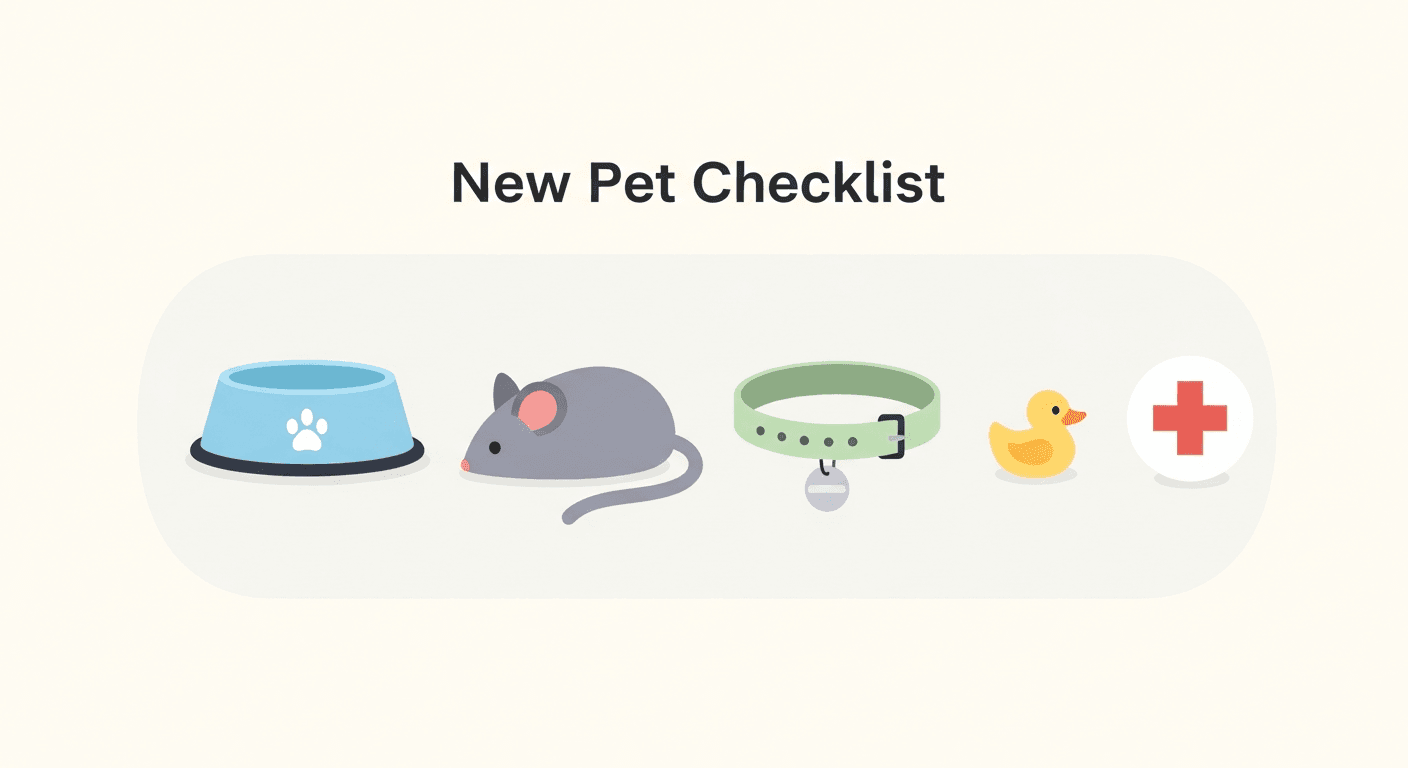
Before Your Pet Comes Home
The best time to prepare for a new pet is before they arrive. Completing these steps in advance significantly reduces the chaos and stress of the first days:
- Find a veterinarian: Research and choose a vet before your pet comes home. Find a clinic near you or book a vet appointment at Happy Paws for the first week after arrival.
- Pet-proof the home: Remove access to toxic plants (lilies for cats, certain household plants for dogs), secure trash cans, put away human medications, cover electrical cords, and block off areas that are not safe or not yet appropriate.
- Gather supplies: Age-appropriate food (ideally whatever the previous owner or shelter was feeding — changing food immediately can cause digestive upset), food and water bowls, collar with ID tag, leash (dogs), litter box and litter (cats), carrier, bed, and age-appropriate toys.
- Create a safe space: A small, secure room or crate where your new pet can decompress before being introduced to the whole home. Overwhelming a new pet with too much too soon is a common mistake.
- Research pet insurance: Enroll before any health issues arise — see our guide on pet health insurance.
Days 1–7: The Adjustment Period
Expect your new pet to be stressed, quiet, or unusually withdrawn in the first few days. This is normal — they have lost everything familiar (scent, routine, companions) and are processing an enormous change. Resist the urge to introduce them to everyone immediately.
- Keep the environment calm and quiet in the first 24–48 hours
- Allow the pet to approach you, not the reverse — let them set the pace of interaction
- Maintain a consistent feeding schedule from day one
- Begin leash and collar conditioning (dogs) or carrier familiarization (cats) immediately
- Schedule the first vet visit for within the first 5–7 days — do not wait
- If you have other pets, introduce them gradually through scent first (exchanging bedding) before visual or physical contact
Start the TailRounds Daily Log from day one — recording appetite, elimination patterns, behavior, and any health concerns establishes an invaluable baseline.
The First Vet Visit: What to Accomplish
The first veterinary appointment should accomplish:
- Complete physical examination establishing baseline health
- Review of previous vaccine records; first vaccines or boosters as needed
- Fecal test for intestinal parasites
- Heartworm test (dogs over 7 months or with unknown history)
- Microchip scan (confirm existing chip) or microchip implantation
- Discussion of nutrition, preventive care, and spay/neuter timing if not already done
- Prescription or purchase of heartworm, flea, and tick prevention products
After this visit, register all information in My Pets on TailRounds to keep organized records from the very beginning.
Days 8–30: Building Routine and Foundation
- Establish feeding times: Consistent meal times build routine and make monitoring appetite easy — deviations from established appetite patterns are meaningful health signals.
- Begin training (dogs): Start basic commands (sit, stay, come, leave it) using positive reinforcement. The first 30 days are the most impactful for establishing expectations.
- Socialization (puppies and kittens): Expose them to a wide range of experiences, people, sounds, and environments during the critical socialization window — the window closes around 12–14 weeks in puppies and earlier in kittens.
- Begin dental care habits: Introduce toothbrushing with pet toothpaste early. A pet accustomed to dental care from youth will accept it as normal — start with a finger brush and very small amounts of paste.
- Establish handling tolerance: Regularly handle ears, paws, and mouth so your pet accepts this for future grooming and veterinary exams.
- Identify a behavior concern promptly: If you see fear-based behavior, aggression, or concerning habits forming, address them early — behavioral problems are far easier to prevent than to reverse. Use TailRounds AI Triage if you have health or behavior concerns between vet visits.
Continue Reading
 🏥 Vet Guide
What to Expect at Your First Vet Visit
New pet? First vet visit does not need to be stressful. Here is exactly what happens, what information to bring, and how to get the most from the appointment.
 🏥 Vet Guide
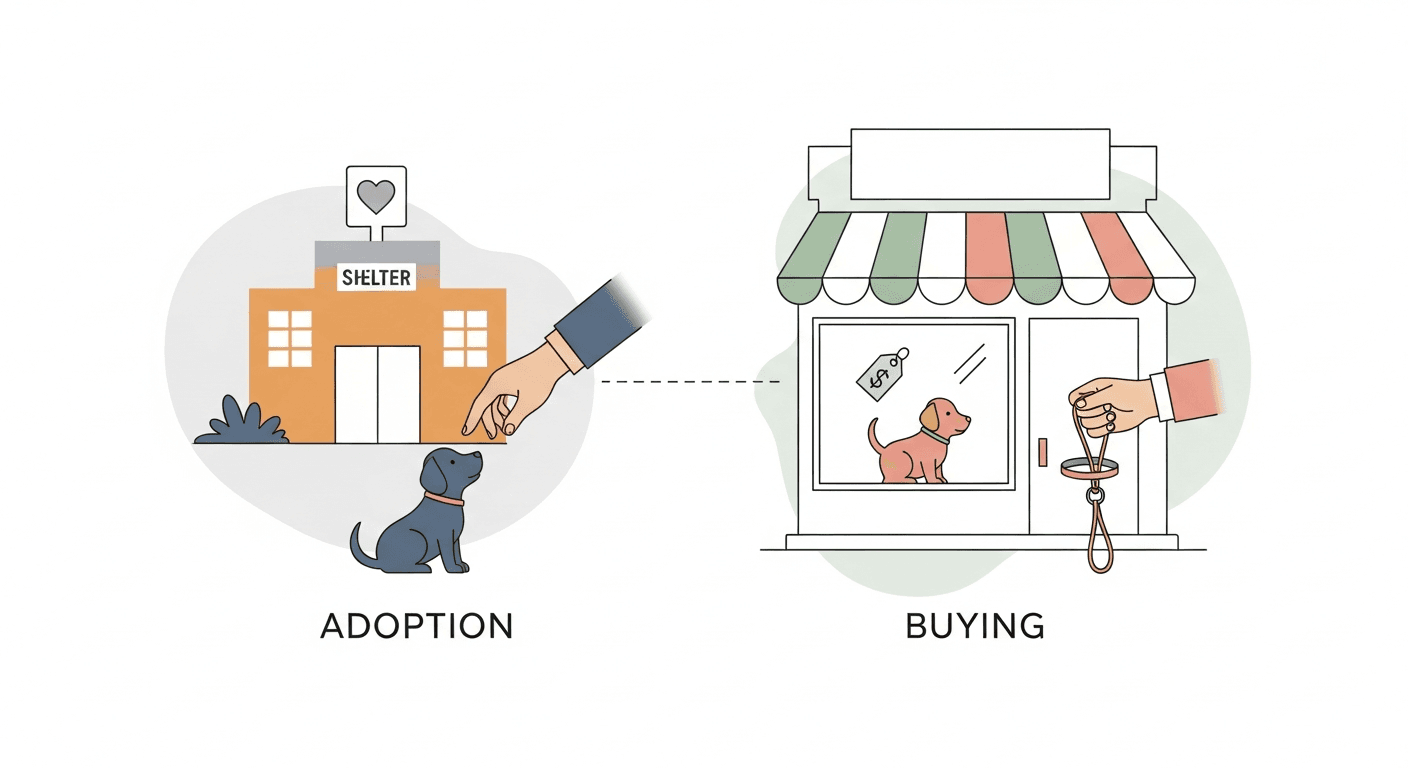
Adopting vs Buying a Pet: Considerations
Both adoption and purchasing from a breeder are legitimate paths to pet ownership. Here is a balanced look at the real considerations, not just the slogans.
 🏥 Vet Guide
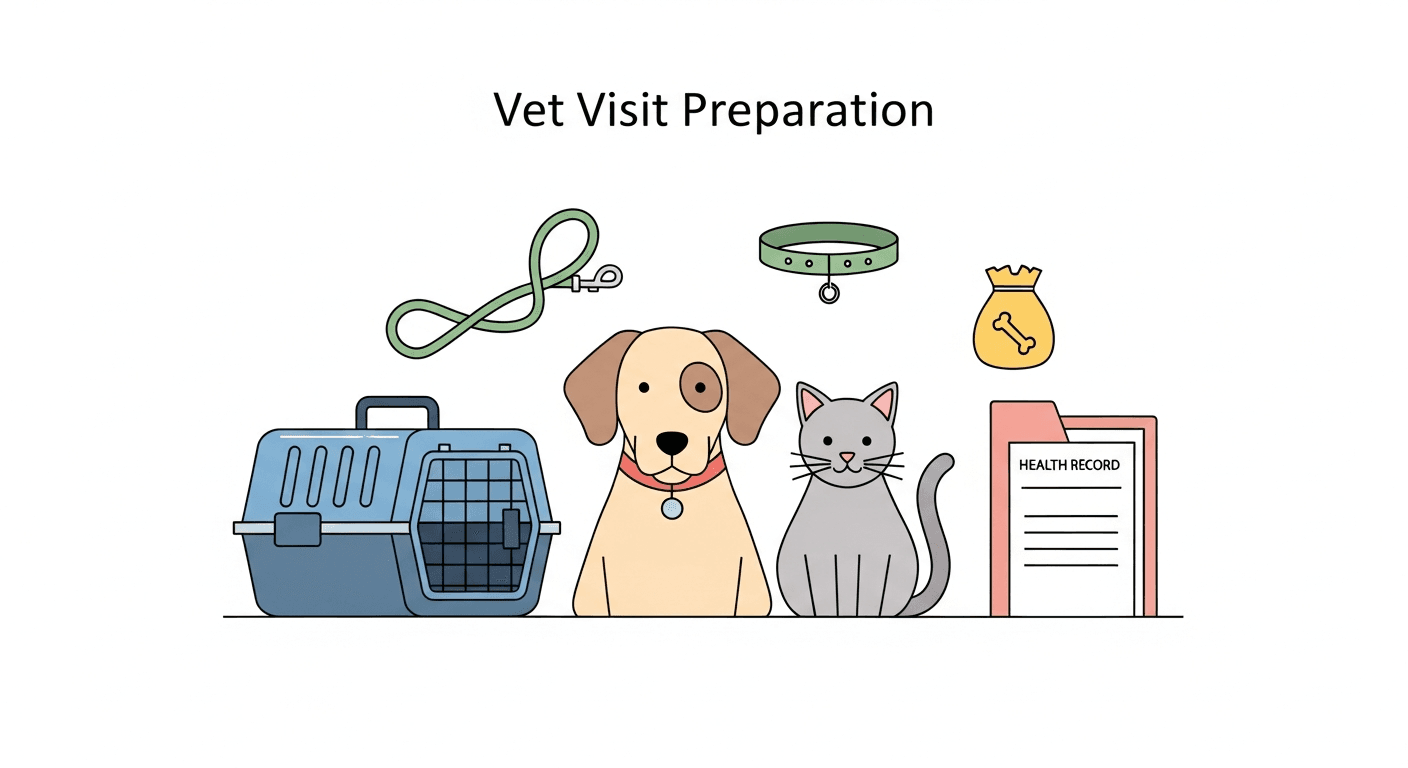
How to Prepare Your Pet for a Vet Visit
Reduce stress for your pet and yourself at every vet appointment. Practical preparation strategies for dogs, cats, and anxious pets of any species.
 🏥 Vet Guide
Pet Health Insurance: Is It Worth It?
Pet insurance can protect you from financial disaster when your pet gets sick or injured. Here is how it works, what to look for, and how to decide if it is right for you.