
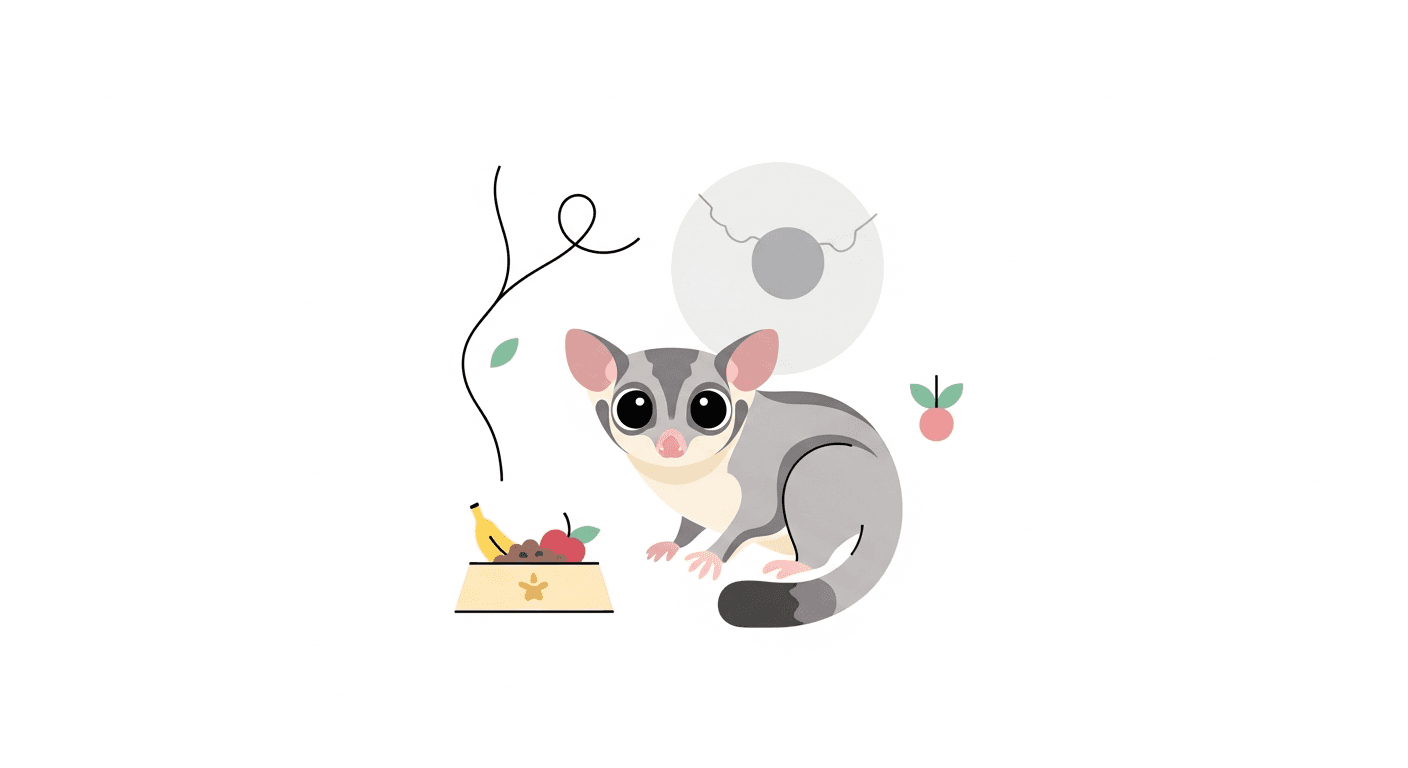
Sugar Gliders: High-Reward, High-Demand Pets
Sugar gliders (Petaurus breviceps) are small marsupials native to Australia, Indonesia, and Papua New Guinea. They are gliding possums — equipped with a patagium (gliding membrane) stretching from wrist to ankle — that can glide up to 150 feet between trees in the wild. They are nocturnal, highly social, and form extremely strong bonds with their owners when properly socialized. They are also illegal in several US states (California, Hawaii, Alaska, and some municipalities) and many countries — check your local exotic pet regulations carefully.
Sugar gliders are not beginner pets. They require specialized diets, extensive socialization, colony or paired housing, and exotic veterinary care. Owners who meet their needs, however, describe them as extraordinarily rewarding companions.
Housing: Space, Height, and Social Groups
- Always keep in pairs or groups: Lone sugar gliders develop severe depression, self-mutilation, and health failure. This is not optional — a single sugar glider is an animal welfare concern.
- Cage: Minimum 24 inches wide × 24 inches deep × 36 inches tall for a pair. Taller is better — sugar gliders are arboreal and live vertically. Bar spacing must be 0.5 inches or less.
- Branches, ropes, and pouches: Fill the cage with climbing opportunities and at least 2–3 sleeping pouches per glider. They sleep in pouches during the day.
- Temperature: 65–80°F (18–27°C). Avoid drafts.
- Bonding pouch: A small cloth pouch worn inside your clothing during the day allows your gliders to bond with your scent and body warmth while they sleep. This is the single most effective bonding technique.
The BML Diet: Meeting Complex Nutritional Needs
Sugar gliders have very specific dietary requirements that are NOT met by pre-packaged "sugar glider food" from pet stores. The most widely recommended diet is the BML (Bourbon's Modified Leadbeater's) diet:
- Homemade mixture of honey, raw egg, yogurt, fruit baby food, Rep-Cal Herptivite supplement, Rep-Cal Calcium supplement, and Gerber Mixed Grain baby cereal
- Served alongside 1/3 cup of fresh fruit and 1/3 cup of fresh protein (insects, cooked chicken, scrambled egg) per pair nightly
- Fresh water always available
A correctly formulated sugar glider diet is essential — deficiencies cause metabolic bone disease, which is common in poorly fed gliders and presents as hind limb paralysis. Research the BML recipe thoroughly and consult an exotic vet before starting.
Common Health Problems
- Metabolic bone disease: Caused by calcium/phosphorus imbalance in diet. Signs: tremors, weakness, broken bones. Largely preventable with correct diet.
- Self-mutilation: Lonely or stressed gliders will chew their own tail, patagium, or genitalia. Always indicates severe stress — usually from isolation, boredom, or inappropriate housing.
- Periodontal disease: Sugar gliders are prone to dental disease. Annual dental check with sedation is recommended.
- Pneumonia: Often secondary to stress or cold drafts. Signs: labored breathing, lethargy.
- Parasites: Mites, pinworms — detected at annual vet check.
Log diet, weight, and behavior daily in the TailRounds Daily Log. Use TailRounds AI Triage when you notice health concerns. Find an exotic-experienced vet via the clinic finder and book an annual wellness exam.
Continue Reading
 🐇 Small Pets
Hedgehog Care Guide: What Every Hedgehog Owner Needs to Know
A complete hedgehog care guide covering housing, diet, wheel exercise, handling, hibernation risks, and common health problems in African pygmy hedgehogs.
 🐇 Small Pets
Ferret Care Guide: Everything First-Time Ferret Owners Need to Know
How to care for a ferret — housing, diet, health care, handling, and the common diseases that every ferret owner should know about.
 🐇 Small Pets
Exotic Pet Ownership Laws: What's Legal and What Isn't
An overview of exotic pet laws in the US, UK, EU, and Australia — which animals require permits, which are banned outright, and how to stay legally compliant.
 🐇 Small Pets
When Does a Small Pet Need a Vet? Signs You Shouldn't Ignore
How to know when a small animal — bird, rodent, reptile, fish, or invertebrate — needs veterinary care, and how to find an exotic-experienced vet near you.