
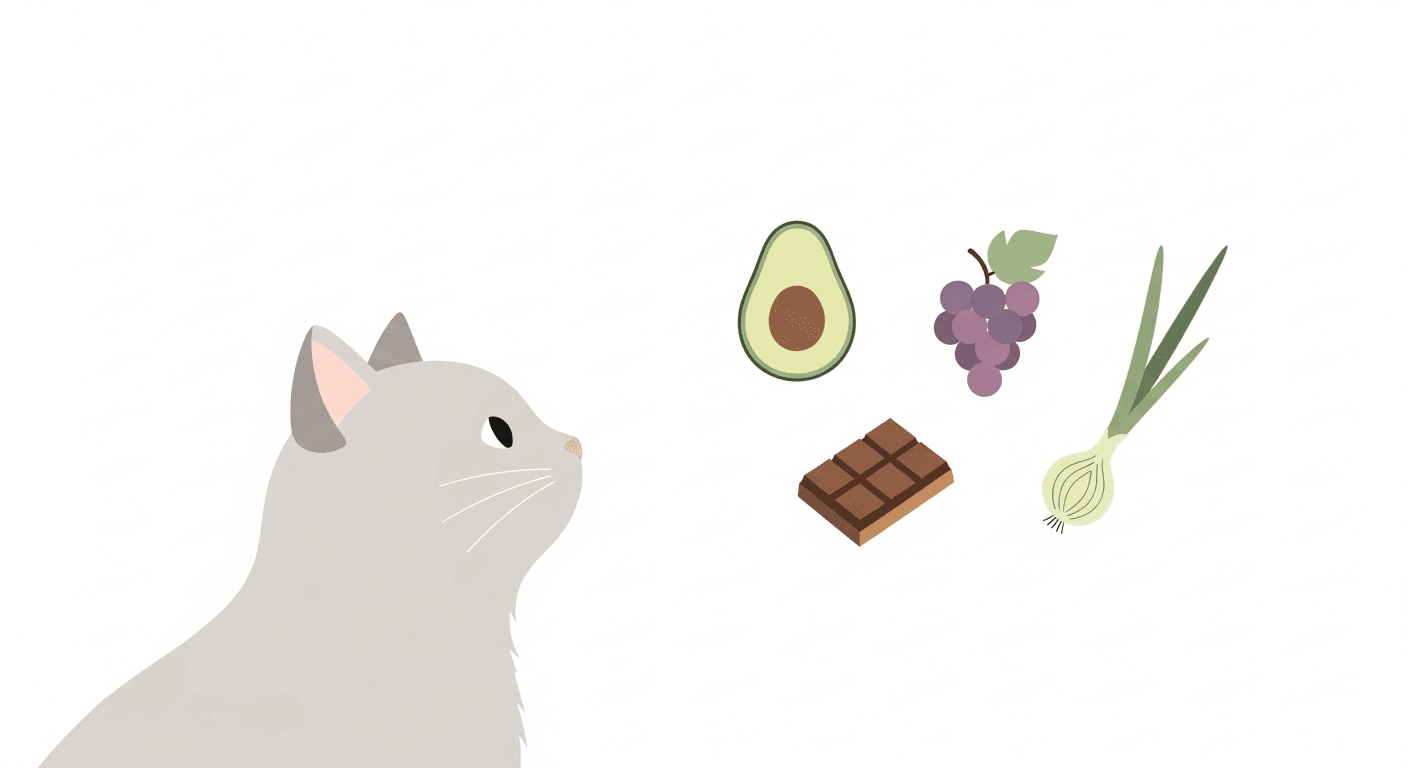
Cats and Food Toxicity: Why Extra Caution Is Required
Cats have a unique metabolic vulnerability that makes them more susceptible to certain food toxins than dogs. Their liver lacks certain enzymes — particularly glucuronyl transferase — that other species use to metabolize and excrete specific compounds. This means that substances metabolized harmlessly by humans and dogs can accumulate to toxic levels in cats.
Cats are also less likely to consume large amounts of toxic foods due to their selective feeding behavior, which can be a double-edged sword — owners may not realize small exposures (like garlic in canned tuna or xylitol in peanut butter treats) are accumulating over time. Track your cat's diet carefully with the TailRounds Daily Log, and Book a vet appointment at Happy Paws if you suspect any toxic exposure.
The Most Dangerous Foods for Cats
| Food | Toxic Mechanism | Key Symptoms | Severity |
|---|---|---|---|
| Onions, garlic, leeks, shallots, chives | Organosulfur compounds → Heinz body anemia | Weakness, pale/yellow gums, vomiting, collapse | Life-threatening |
| Xylitol | Insulin release, liver toxicity | Vomiting, lethargy, jaundice, seizures | Life-threatening |
| Alcohol (ethanol) | CNS and hepatic toxicity | Vomiting, respiratory depression, coma | Life-threatening (minute doses) |
| Grapes and raisins | Unknown nephrotoxin | Vomiting, lethargy, kidney failure | Potentially life-threatening |
| Raw or undercooked fish (consistent feeding) | Thiaminase destroys thiamine | Neurological: seizures, ataxia, blindness | Severe (chronic) |
| Chocolate | Theobromine, caffeine | Vomiting, tremors, arrhythmia | Moderate to severe |
| Caffeine | Methylxanthines | Rapid heart rate, tremors, restlessness | Moderate to severe |
| Macadamia nuts | Unknown | Weakness, vomiting, hyperthermia | Moderate |
Cat-Specific Toxic Risks You May Not Know
Essential oils and liquid potpourri: Cats cannot metabolize phenols found in many essential oils. Tea tree oil, eucalyptus oil, pennyroyal, and cinnamon oil are all dangerous — even diffused in the air or applied topically. Liquid potpourri skin contact causes severe chemical burns and systemic toxicity.
Lilies (Lilium and Hemerocallis species): This is the most dangerous plant toxin for cats. All parts of true lilies (Easter lily, tiger lily, stargazer lily, Asiatic lily) — including pollen, flowers, leaves, and water from the vase — cause acute kidney failure in cats. Even a small nibble is an emergency. Peace lily and calla lily are less toxic but still cause oral irritation and GI upset.
Dog flea/tick products containing permethrin: Permethrin is widely used in canine flea products but is highly neurotoxic to cats. Never apply dog-labelled insecticides to cats, and keep cats away from dogs who have been recently treated until the product has dried completely.
Raw dough and yeast: Expanding CO2 causes painful gastric distension; yeast fermentation produces ethanol — double toxicity risk.
Dairy in large amounts: Most adult cats are lactose intolerant. While not acutely toxic, significant dairy consumption causes chronic GI distress, diarrhea, and dehydration.
Foods That Are Safe for Cats in Moderation
Not everything human is dangerous — these can be offered occasionally in small amounts:
- Plain cooked chicken, turkey, or fish (no seasoning)
- Cooked eggs (avoid raw whites)
- Plain cooked rice or oatmeal (small amounts)
- Plain cooked carrots or peas (small amounts)
- Plain cooked shrimp (no garlic butter)
- Blueberries and watermelon (without seeds/rind)
Emergency Response: If Your Cat Eats Something Toxic
- Immediately call ASPCA Animal Poison Control (1-888-426-4435) or your emergency vet
- Do not induce vomiting in cats without explicit veterinary instruction — the risk of aspiration is high and some compounds cause more damage on re-exposure to the esophagus
- For skin contact (essential oils, liquid potpourri) — wash with mild dish soap and water immediately, then contact your vet
- Bring the label of any ingested product to the vet or have it ready to read over the phone
- Note the time of ingestion — this significantly affects treatment options
- After the incident, Find a Clinic for follow-up bloodwork to check kidney and liver function
Prevention is paramount — keep toxic plants, cleaning products, and human foods secured and out of reach. Log your cat's daily environment and any exposures in the TailRounds Daily Log.
Continue Reading
 🥩 Pet Nutrition
Homemade Cat Food: A Complete Safety and Nutrition Guide
Learn how to prepare nutritionally complete homemade cat food safely, including essential nutrients, safe ingredients, what to avoid, and supplementation needs.
 🥩 Pet Nutrition
Food Allergies in Cats: Symptoms, Diagnosis, and the Right Diet
Understand how food allergies affect cats, what symptoms to look for, how to perform an elimination diet trial, and which foods are best for allergic cats.
 🥩 Pet Nutrition
Cat Treats: How Many Are Too Many and What to Look For
Learn how many treats are safe for cats daily, which treats are nutritionally sound, what ingredients to avoid, and healthier natural alternatives for feline snacking.
 🥩 Pet Nutrition
How to Read Pet Food Ingredient Labels: A Complete Owner's Guide
Decode pet food labels with confidence. Learn what AAFCO statements mean, how ingredients are listed, what marketing terms actually mean, and red flags to avoid.