
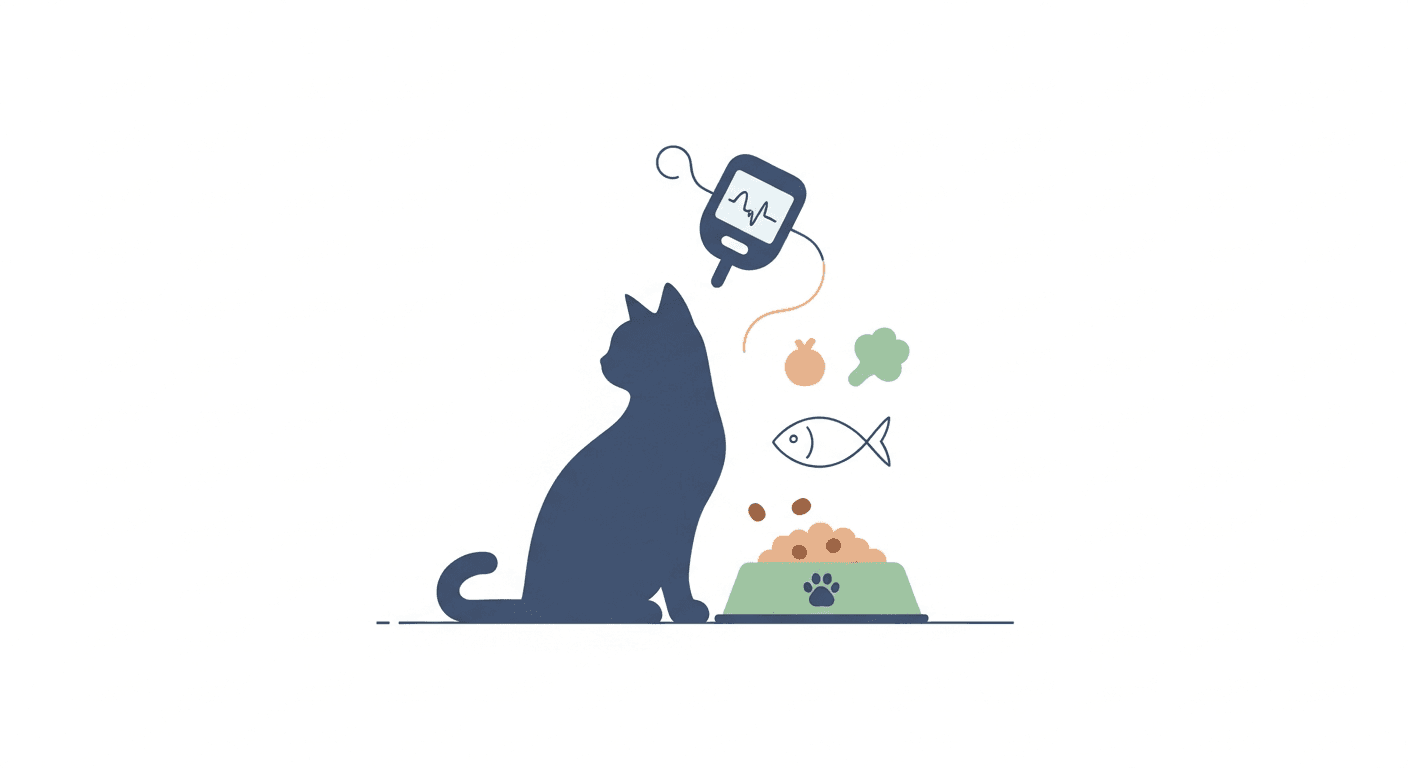
Feline Diabetes: The Case for Dietary Remission
Feline diabetes mellitus — predominantly Type 2 in cats — occurs when cells become resistant to insulin (often due to obesity and high-carbohydrate diets) and/or when pancreatic beta cells begin failing. The critical difference between cats and dogs: many cats can achieve diabetic remission — a state where insulin injections are no longer needed — through appropriate dietary management combined with proper insulin therapy and weight normalization.
Studies show that 15–40% of diabetic cats achieve remission within 6 months when transitioned to a low-carbohydrate, high-protein diet alongside insulin therapy. This makes dietary choice enormously consequential for feline diabetics. The right food could, for some cats, mean the difference between lifelong injections and complete remission.
Always make dietary changes in diabetic cats under veterinary supervision — insulin doses must be adjusted as diet changes affect glucose levels. Book a vet appointment at Happy Paws before changing your diabetic cat's food. Log every meal and insulin dose in the TailRounds Daily Log.
Why Low-Carbohydrate Diet Is the Gold Standard for Diabetic Cats
Cats have limited ability to metabolize carbohydrates — they lack salivary amylase, have reduced hepatic glucokinase activity, and have intestinal disaccharidase levels far lower than omnivores. Every gram of carbohydrate eaten contributes directly to post-meal blood glucose spikes that a diabetic cat's failing insulin production cannot handle.
The logic is straightforward: reduce dietary carbohydrate → reduce post-meal glucose excursions → reduce the insulin demand → potentially allow remaining beta cells to recover. This is not just theoretical — it is supported by multiple clinical studies and is the recommendation of the American Association of Feline Practitioners (AAFP) Diabetes Management Guidelines.
Target carbohydrate levels for diabetic cats:
- Ideal: Under 10% of calories from carbohydrate (or under 10% DM)
- Acceptable: 10–15% DM carbohydrate
- Avoid: Any diet over 20% DM carbohydrate — most dry cat foods fall in the 30–50% range
Wet Food vs Dry Food in Diabetic Cats
This is not a nuanced debate for diabetic cats — wet food is strongly preferred, and dry food is best avoided as a primary diet. Here's why:
| Factor | Dry Kibble | Wet/Canned Food |
|---|---|---|
| Carbohydrate content | 30–50% DM (very high) | 5–15% DM (much lower) |
| Protein content (DM) | 30–40% | 40–60% |
| Moisture | 8–10% | 70–80% |
| Post-meal glucose impact | High and rapid | Lower and slower |
| Remission potential | Low | Significant |
| Weight management | Harder (calorie-dense, overfeeding easy) | Easier (lower caloric density, high satiety) |
Recommended Foods for Diabetic Cats
High-protein, low-carb wet foods (check that carbohydrates are under 10% DM):
- Most pâté-style canned cat foods with meat as the first ingredient and no added grains or starch
- Hill's Prescription Diet m/d (specifically formulated for feline diabetes)
- Royal Canin Diabetic dry (if wet food truly unavailable — still significantly higher carb than wet)
- Purina DM Dietetic Management
Many non-prescription wet foods with meat as the primary ingredient and no potato, corn, or rice are appropriate. Check the guaranteed analysis and calculate carbohydrate by subtraction: 100% minus protein% minus fat% minus moisture% minus ash% = approximate carbohydrate%.
Feeding Schedule and Insulin Timing
Timing is critical: In cats receiving twice-daily insulin, feed immediately before each injection. Never give insulin to a cat that hasn't eaten — this risks dangerous hypoglycemia.
Meal or free-feeding? For diabetic cats on twice-daily insulin, twice-daily meals timed to injections is standard. Some vets accept measured free-feeding for cats on long-acting insulin, but only after glucose regulation is achieved.
Warning signs requiring immediate vet contact:
- Cat refuses to eat before insulin time — skip the injection and call your vet
- Sudden lethargy, weakness, or unsteadiness — possible hypoglycemia (give corn syrup on gums, call vet immediately)
- Drinking and urinating dramatically more or less than usual
- Weight loss despite eating
Log every meal, glucose reading if monitored at home, and insulin dose in the TailRounds Daily Log. Find a Clinic near you for glucose curves, fructosamine testing, and remission monitoring.
Continue Reading
 🥩 Pet Nutrition
How Much to Feed Your Cat: A Complete Portion Sizing Guide
Calculate the right daily food portions for your cat by weight, age, and activity level. Prevent obesity and undernutrition with this vet-informed guide.
 🥩 Pet Nutrition
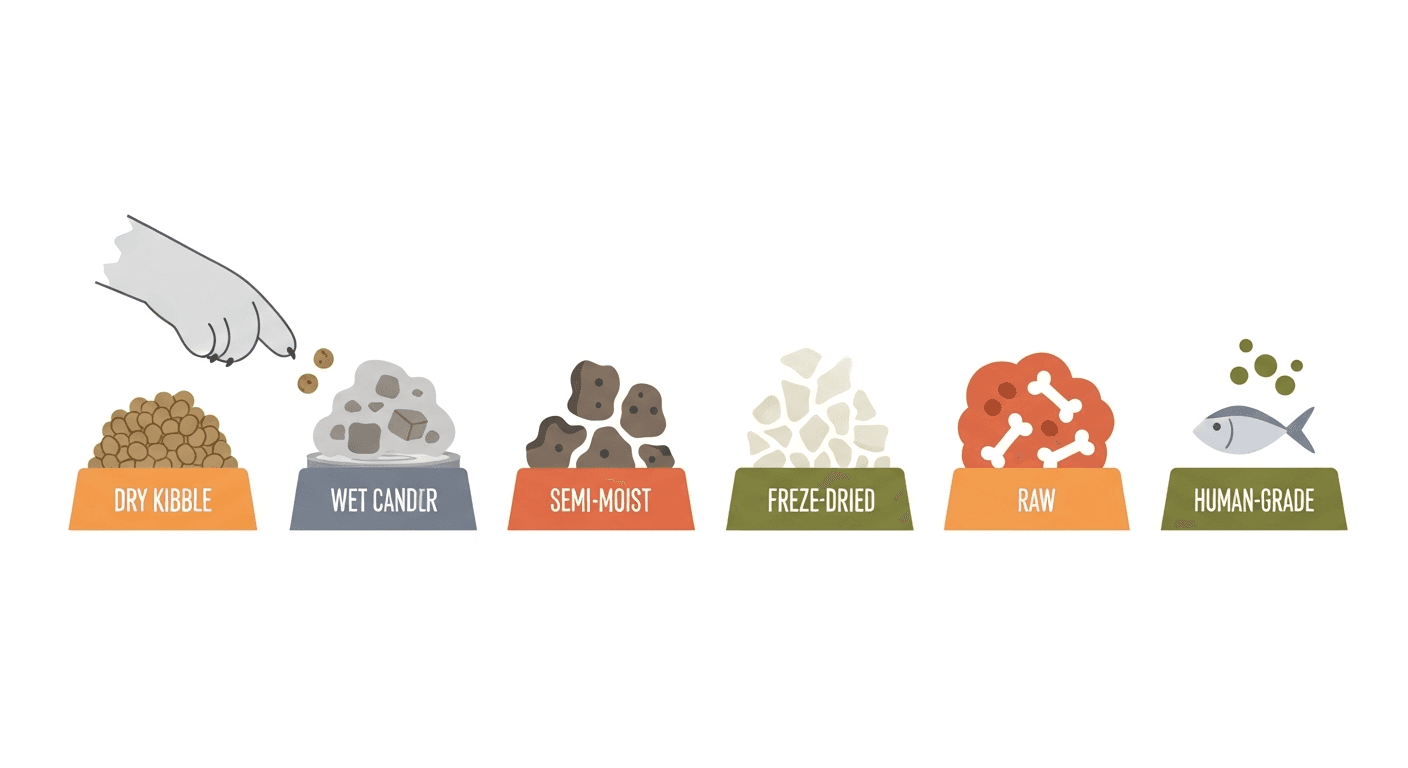
Dry vs Wet vs Raw Cat Food: What's Best for Your Cat?
Explore the differences between dry, wet, and raw cat food formats. Learn which diet suits your cat's health needs, hydration, and life stage.
 🥩 Pet Nutrition
Diet Changes for Senior Cats: Nutrition After Age 7
Discover how to adjust your cat's diet as they age, covering protein needs, hydration, kidney protection, and weight management for cats over 7 years old.
 🥩 Pet Nutrition
Weight Loss Diet for Overweight Cats: Safe and Effective Strategies
Guide your overweight cat to a healthy weight safely. Covers calorie targets, food choices, feeding schedules, and why slow cat weight loss is critical.