
The Danger of Fasting Cats: Hepatic Lipidosis
Before diving into cat weight loss strategies, there is one critical, life-saving fact that every owner must understand: cats must never be forced to lose weight too rapidly, and must never skip meals entirely. Unlike dogs and humans, cats are uniquely susceptible to a condition called hepatic lipidosis (fatty liver disease).
When a cat does not eat enough — whether from caloric restriction, illness-related anorexia, or stress — the body mobilizes fat from stores and sends it to the liver for energy. Cats' livers cannot process this sudden fat influx efficiently, and it accumulates, causing liver failure. This can occur within 48–72 hours of anorexia and is potentially fatal. A safe maximum weight loss rate for cats is 0.5–2% of body weight per week — significantly slower than dogs.
Never start a cat weight loss program without veterinary supervision. Book a vet appointment at Happy Paws to assess your cat's current health and design a safe plan. Track daily food intake in the TailRounds Daily Log.
Is Your Cat Overweight? How to Tell
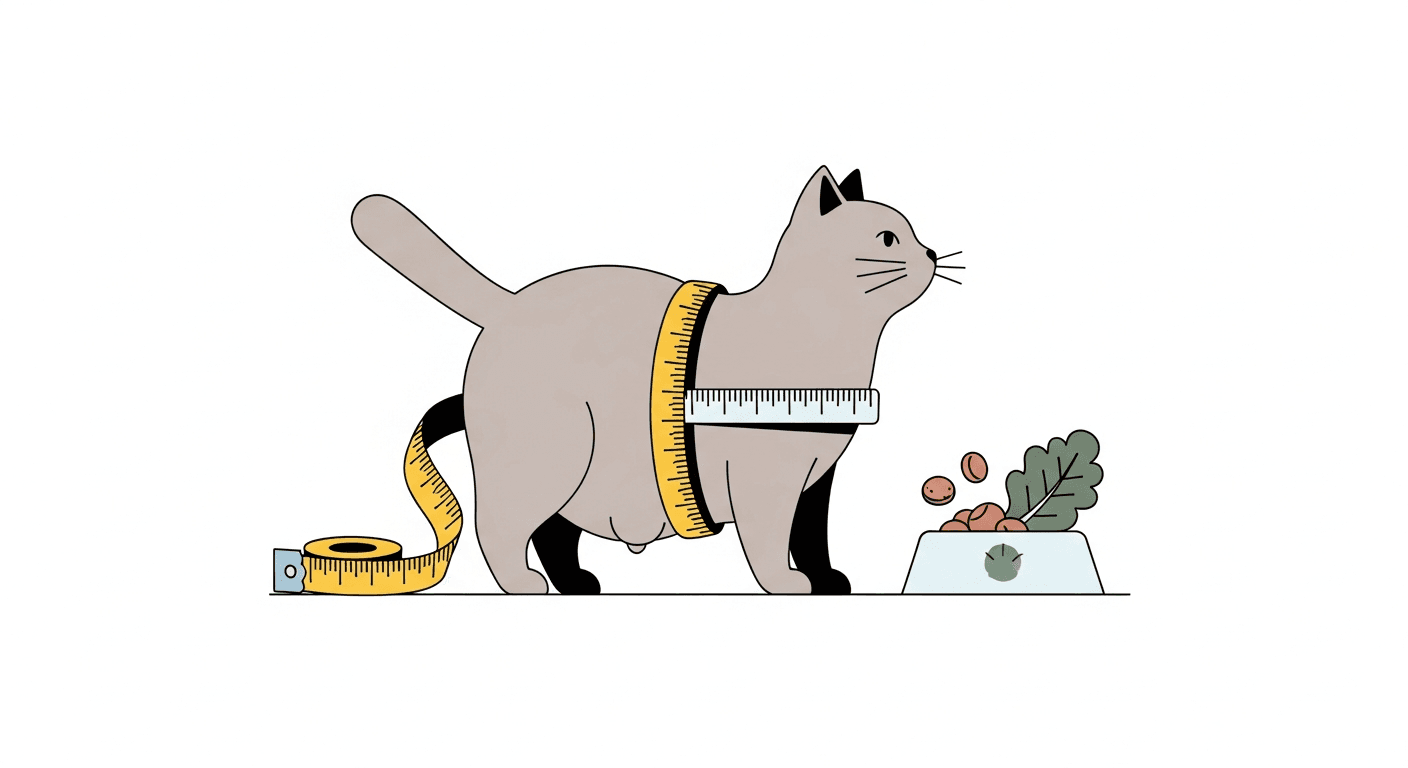
The Body Condition Score (BCS) scale is the most practical assessment tool:
- Ideal (4–5/9): Ribs easily felt with light pressure; visible waist from above; abdomen tucked up from the side
- Overweight (6–7/9): Ribs felt with firm pressure only; rounded belly; minimal or no waist visible from above
- Obese (8–9/9): Ribs impossible to feel through fat; prominent fat deposits over back, limbs, and belly; no waist
A 5 kg cat (11 lb) assessed at 7/9 BCS might have an ideal weight of 4 kg. Even that 1 kg difference represents a 25% excess body weight — equivalent to a human carrying 25 extra pounds.
Calculating Safe Calorie Targets for Cat Weight Loss
Use the target ideal weight — not current weight — for calculations:
Weight loss DER = 70 × (ideal weight in kg)^0.75 × 0.8
Example: Cat with ideal weight of 4 kg: RER = 70 × (4)^0.75 = 70 × 2.83 = 198 kcal/day. Weight loss DER = 198 × 0.8 = 158 kcal/day. This should be split across 2–3 meals — never less than 2 meals per day, and never skip meals even if the cat has eaten poorly at the previous one.
Monitor weight weekly. If losing faster than 1% per week, increase calories by 10%. If no loss after 3 weeks, decrease by 5–10%.
The Best Foods for Cat Weight Loss
| Food Type | Why It Works | Considerations |
|---|---|---|
| High-protein, low-carb wet food | High satiety; supports muscle mass; high moisture | Must be precisely portioned; higher cost |
| Prescription weight control diet (Hill's Metabolic, Royal Canin Satiety) | Clinically proven; high fiber and protein; reduces begging | Requires vet prescription; some cats resist transition |
| Grain-free, low-carb canned food | Low carbohydrate load; high protein | Still needs calorie counting; verify against DCM concerns in cats |
Weight Loss Strategies That Work for Cats
- Switch from free-feeding to scheduled meals: The number one change for most obese cats. Free-feeding makes calorie control impossible. Transition to 2–3 measured meals per day.
- Use wet food as the primary diet: The high water content and lower caloric density make it easier to achieve satiety within the calorie budget.
- Eliminate treats or switch to low-calorie options: Most cat treats are calorie-dense. Freeze-dried chicken, small pieces of cooked chicken, or commercial low-calorie treats should account for no more than 10% of daily calories.
- Puzzle feeders and food-dispensing toys: Extend meal time, provide stimulation, slow food intake — particularly useful for cats that eat too quickly and then beg.
- Increase activity: Interactive play sessions (wand toys, laser pointers) for 10–15 minutes twice daily burn additional calories and improve lean muscle mass. This is especially important because muscle burns more calories at rest.
- Separate multi-cat households at mealtime: Ensure no cat is overeating another's portion.
Weight loss in cats requires patience — expect 4–8 months for meaningful results. Find a Clinic near you for monthly weight checks and plan adjustments. Document everything in the TailRounds Daily Log to stay on track.
Continue Reading
 🥩 Pet Nutrition
How Much to Feed Your Cat: A Complete Portion Sizing Guide
Calculate the right daily food portions for your cat by weight, age, and activity level. Prevent obesity and undernutrition with this vet-informed guide.
 🥩 Pet Nutrition
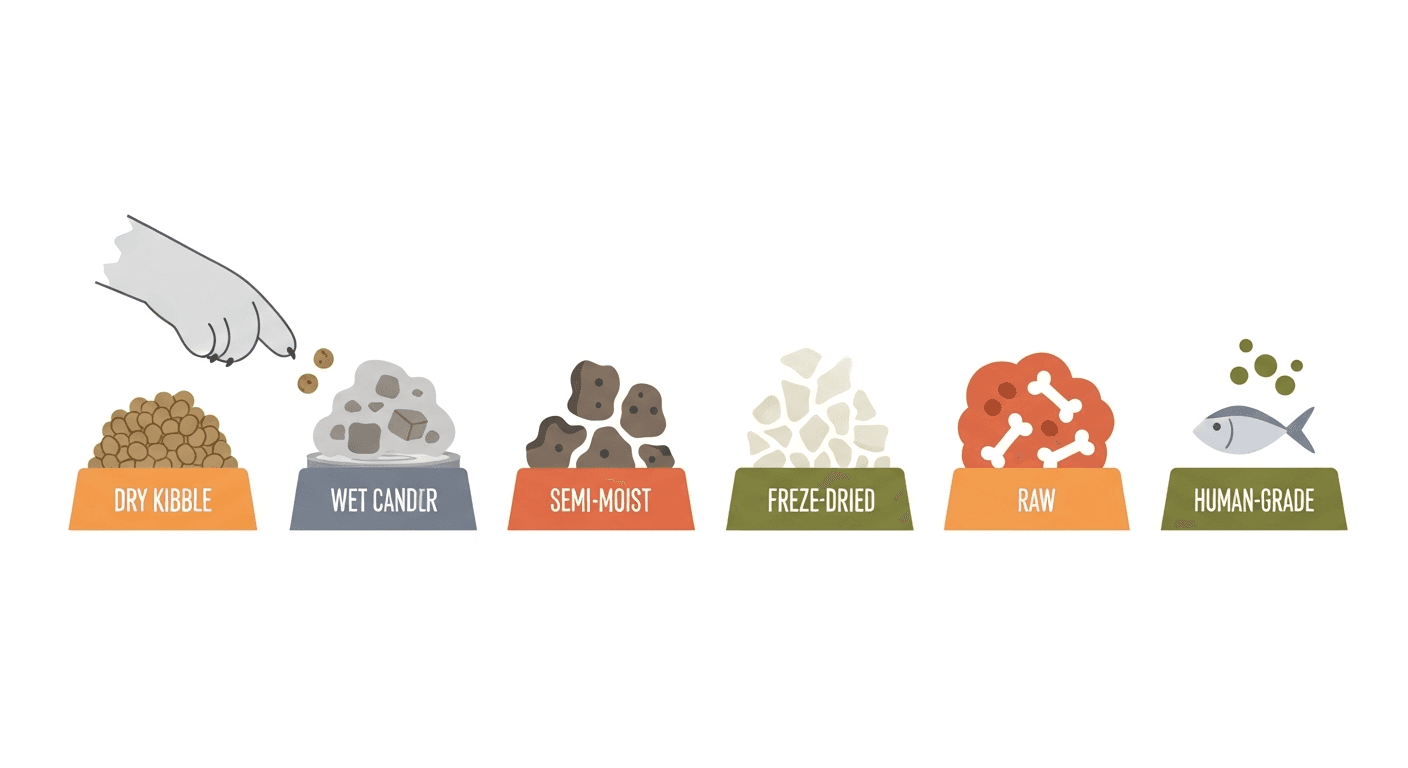
Dry vs Wet vs Raw Cat Food: What's Best for Your Cat?
Explore the differences between dry, wet, and raw cat food formats. Learn which diet suits your cat's health needs, hydration, and life stage.
 🥩 Pet Nutrition
Diet Changes for Senior Cats: Nutrition After Age 7
Discover how to adjust your cat's diet as they age, covering protein needs, hydration, kidney protection, and weight management for cats over 7 years old.
 🥩 Pet Nutrition
Diet for Diabetic Cats: Why Low-Carb Wet Food Can Change Everything
Discover why a low-carbohydrate, high-protein wet diet is the gold standard for diabetic cats, and how the right food can help achieve diabetic remission.